

We’re no strangers to unusual hardware failures around these parts, but even so, a swarm of jellyfish clogging up the works is a new one to us. That’s exactly what happened to the cooling system at the Gravelines nuclear power plant in France earlier this week, resulting in three reactors having to be shut down. This isn’t even an isolated incident, as POLITICO points out that the same thing actually happened last year around this same time.
So why are jellyfish staging an annual protest against nuclear power? A warming of the North Sea has extended breeding seasons and produced larger populations of the plankton that the jellyfish feed on. This is great for the gelatinous sea creatures, but not exactly ideal if you’re trying to pump the water they live in through a complex cooling system. The French installed filter screens and monitoring systems after this happened in 2025, but clearly they’re going to need to keep working on the problem.
From a new problem to a very old one, a BBC investigation has revealed that the UK’s National Health Service (NHS) Blood and Transplant department was inadvertently leaking private patient data by sending it in the clear over the pager network. Sniffing pager messages was fairly trivial decades ago, and is even easier these days thanks to the proliferation of cheap software-defined radios and open source decoding software. Given the fragility of the underlying communication network they use, the NHS announced they were going to stop using pagers by 2021, but clearly not everyone got the memo.
 As an aside, we were amused to see that the BBC had to devote a section of the article to explaining what a pager is and why they became popular in the medical field. Of course, it makes perfect sense. Many — perhaps even most — of the people reading the article would never have seen one of the devices in the real world, let alone actually used one. Just a sign of the times, and a great reminder of how old some of us are getting.
Speaking of getting old technology, we came across this web-based emulator for the Flight Data Subsystem used by the Voyager spacecraft. The website lets you write your own assembly code or load up some example programs and watch it execute at a blistering 806.4 kHz. The site also features a real-time display of how far Voyager 1 is from Earth, the current communications delay, and a trove of original Jet Propulsion Laboratory documentation, so even if you’re not interested in writing assembly code for a 1970s computer, it’s worth checking out.
On the subject of running old code in the modern web, you can now play DONKEY.BAS in the browser. The game, now 45 years old, was written by Bill Gates and Neil Konzen to demonstrate the graphics and sound capabilities of BASIC on DOS. For the uninitiated, despite what you might think from the name, the game actually tasks the player with controlling a race car. The donkeys are standing in the road for some reason, and you need to avoid them by switching lanes. With the way the industry is now, we wouldn’t be surprised to hear somebody is working on a gritty origin story film to expand the lore.
Finally, turning our attention to slightly more recent history, [Marcin Wichary] has written a fascinating retrospective on Apple’s Touch Bar. The thin touch screen was introduced in 2016 as a replacement for the top row of the keyboard on the MacBook Pro, and was the subject of some impressive reverse engineering efforts by hackers that wanted to use the unique high-resolution display in their own projects. Apple quietly abandoned the feature in 2023, and [Marcin] makes the case that the problem was never the hardware itself but rather how the feature was implemented in software.
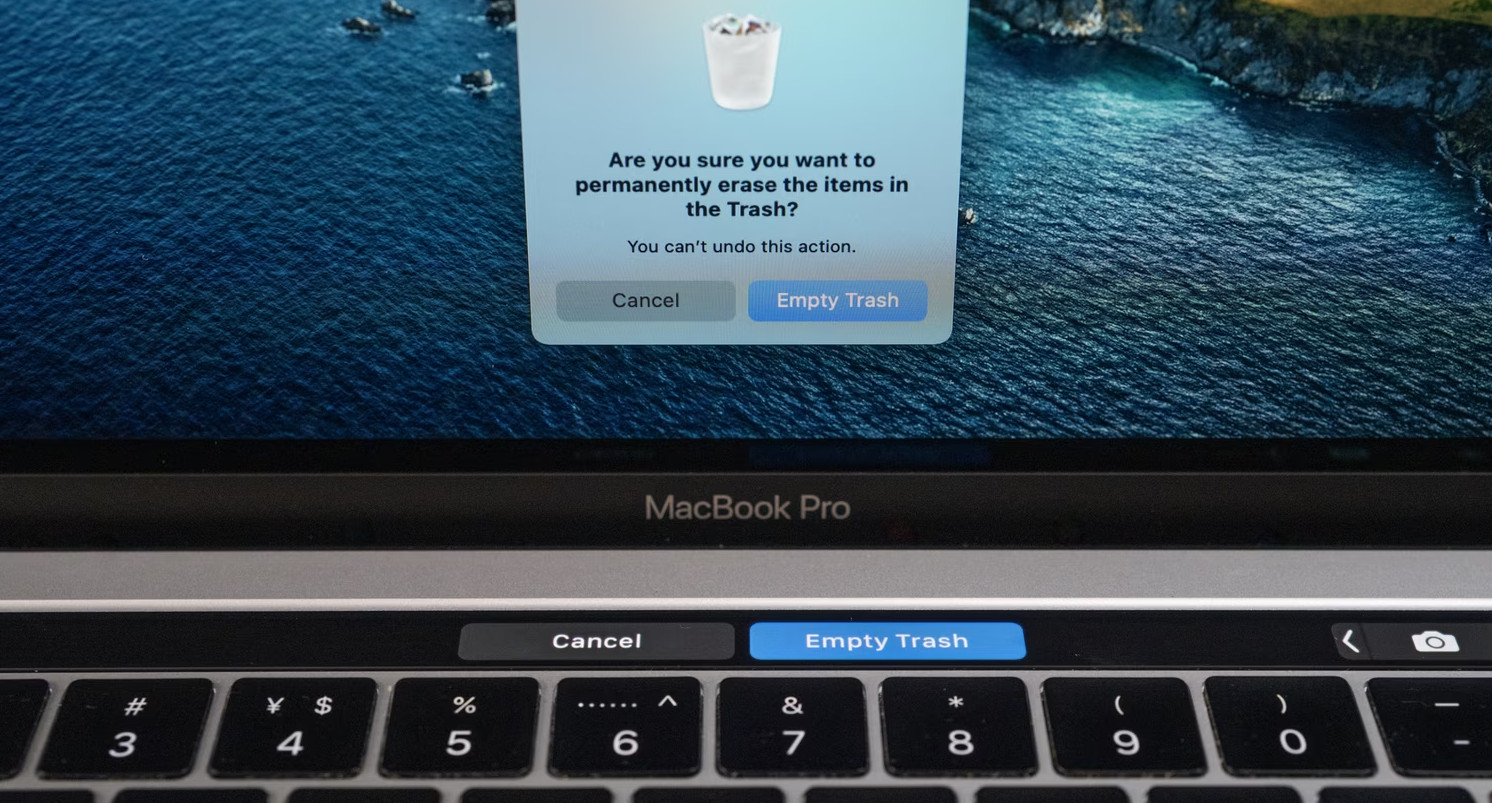
The article includes numerous examples of the redundant and at times downright bizarre user interface elements that would pop up on the Touch Bar, made all the more perplexing given Apple’s usual panache for such things. Although we’re not necessarily convinced the feature ever made a whole lot of sense, given the examples [Marcin] has collected here, it certainly seems like the poorly implemented software side of the equation wasn’t doing it any favors.
See something interesting that you think would be a good fit for our weekly Links column? Drop us a line; we’d love to hear about it.












The bitter irony is that nowdays you could stick a basic clone of PIC16F84 into a Voyager probe and have more capability than anyone even desired, for 1/3 the power consumption of the real thing.
But would the PIC survive being in space for 49 years? That’s a lot of radiation exposure.
The PIC wouldn’t even survive that long on earth due to bit rot in it’s EPROM or Flash memory. Fowler-Nordheim tunneling isn’t for eternity. Maybe a mask ROM version made with 3µm silicon-on-sapphire technology could take it.
That’s not true though.
PIC16F84 has 68 bytes of RAM, Voyager has 16kB, and more IO capabilities. When it comes to computation speed, the difference is not that huge, with Voyager running 400kIPS of 16-bit instructions and PIC doing 5000kIPS of 8-bit instructions.
In power consumption modern chips of course beat it, but still most of the power is consumed by instruments and not the processor. PIC16F84 probably wouldn’t survive the radiation either.
What about STM32?
STM32F407VGT6 has 1 MB flash, 192 kB RAM and 168 MHz CPU. I think it could boot MS-DOS. Intel 486 had like 50-100 MHz and it was already the GOAT of early retrocomputing in the 1990s.
Yeah, it should not be a surprise that there are more capable chips now, 50 years later, than the Voyager FDS. PIC16F84 just isn’t one of them :)
Why restrict yourself to STM32 in this comparison? A smartphone SoC + stacked RAM doesn’t take much more space or power, but has much more memory and computational speed.
That 1MB of flash would probably lose its charge much sooner than PIC16’s.
And my understanding is that a significant portion of the available power goes to heating systems that keep the butter cold from just wrecking the thing.
Reminds me of an interaction with a customer on site once:
Question to a customer: “How clean is your cooling water?”
Customer reply: “We have Zebra Mussels.”