
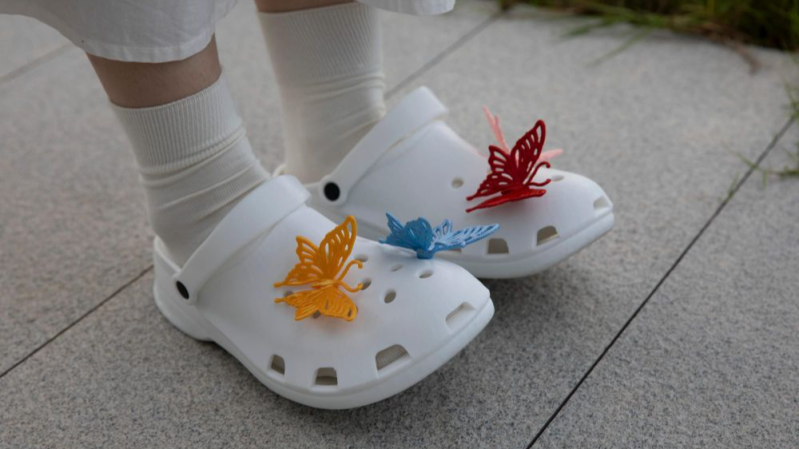
Printed footwear is an intriguing idea, but as far as projects go it is somewhat more complex than it first appears. This guide to 3D printing your own clogs not only provides a solid process, but also acts as a list of the challenges and pitfalls involved. After all, a piece of footwear is actually a fairly large object. Failed prints can be costly and time-consuming, so a guide like this is a valuable resource.
First of all, a 3D printer that can handle multi-material printing is called for. The footwear itself will be printed in TPU 90A as a sweet spot for hardness, but the print will require supports and those supports will need to peel away cleanly. The solution is a shoe printed in TPU with a rigid support structure of PLA. Using two different materials in the same print with anything remotely resembling efficiency calls for either a dual-nozzle print head, or a multi-toolhead printer.
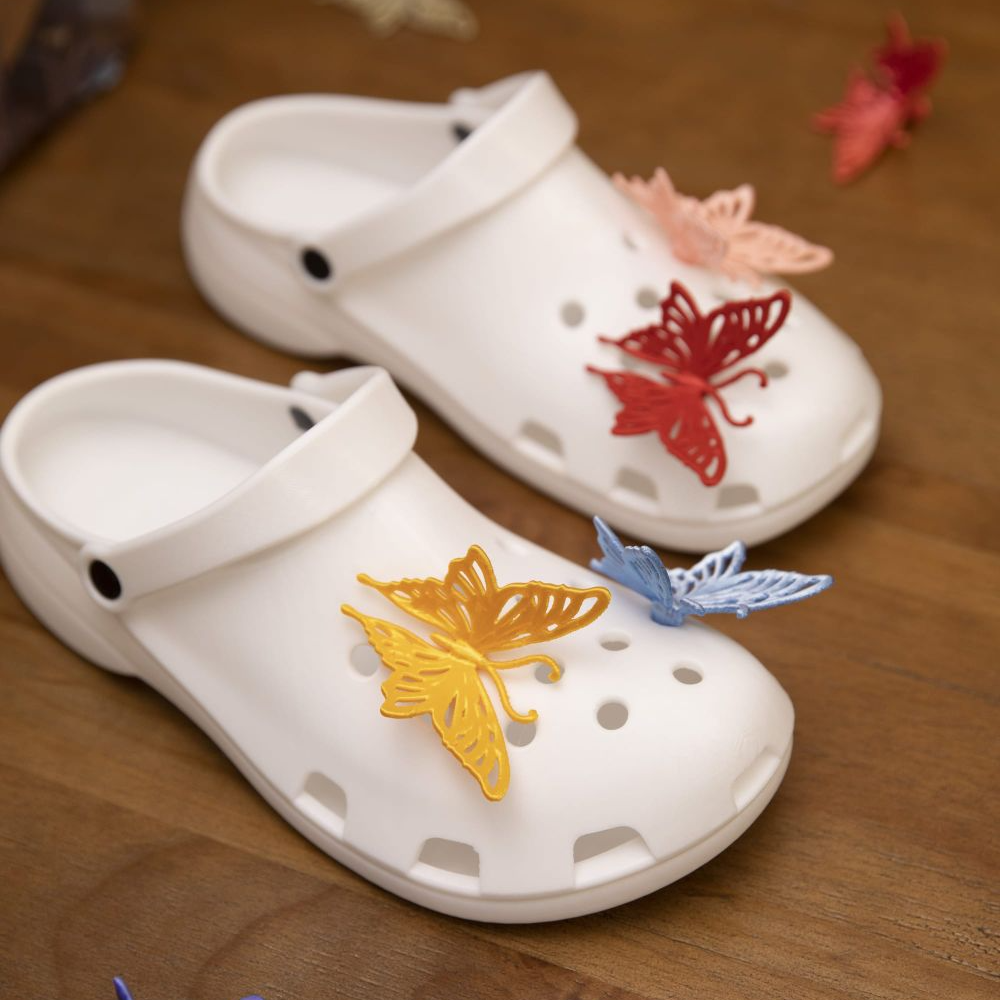
Here we want to take a moment and say that while the guide itself suggests PETG is also a suitable support structure, we suspect this might only be true for the exact filament formulations used in the guide. The safer approach is to use PLA. Why? As we’ve seen in other tests, PETG has been observed to stick extremely well to flex filaments in general, whereas PLA doesn’t really want to stick to anything other than PLA. The exact formulations of TPU and PETG used in the guide might be compatible with one another, but in general we recommend sticking to PLA as a rigid support for flexible filament.
Assuming a capable printer and suitable materials are nailed down, one also needs to worry about keeping the TPU dry. It is very sensitive to moisture, which directly affects print quality. You’ll also need to dial in the settings — a gyroid-patterned infill of 15% provides the right amount of “squish”, which is most effectively fine-tuned by changing the infill pattern rather than the density.
Is it worth the time and effort and filament cost to print one’s own pair of slip-ons versus simply buying a pair of Crocs®? Maybe not, but it can still be rewarding and this guide will help minimize any failed prints in the process. And if you do get a nice print but the TPU is sticking a little too well to the build plate, reach for the isopropyl alcohol.












I live in a country where it is nearly impossible to find my actual shoe size. The sizes typically top out a size and a half too small. I’ve considered taking up cobbling just so I can have ANYTHING to wear. Online purchases have proven to be extremely unreliable. I’ve wasted far more money buying shoes that were not as advertised than any pair of printed shoes should could cost in filament. This is a real option for me. My only concern is durability as I tend to walk 5+km a day.
I think there’s a few companies which will mail you a kit to do imprints of your soles and then you mail it back and they produce a shoe that actually fits. Idk if cowboy boots are your thing: https://beckboots.com/products/free-sizing-kit
I (and my father and grandfather) have a similar problem. My feet are wide at the toe, but not particularly large or long.
There is no accurate foot sizing system that can properly get shoes for me without trying them out in person. Smaller shoes are too small, the ones that fit are to right on the sides and large one are too large to fit properly
I think durability would be less of an issue simply because you can just print out a new pair in a few days for $50CAD ish… it’s not exactly cheap but it’s not that bad if you’re completely out of commercial options. I actually printed out half a shoe in tpu before I had an issue with running out of filament because I was just messing around. the part that printed feels like I could easily get many months out of it at least at a 7k step per day.
zellerfeld.com makes custom shoes based on 3D scans, mine were pretty accurate.
I wish there was a website to print insoles. I got very difficult feet and I get these handmade insoles. But the prices… I have to pay 400 euro’s a year for insoles. I’m not the best designer, but if I can do things like, widen it a tiny bit here, add a bit of extra damping here, remove a bit here, it would be easy enough for most people to print their own insoles.
yeah the last thing i want to do is experiment with tpu or silicone molds or whatever but printing insoles is obviously where it’s at. it makes sense because it actually needs to be customized. bonus, it’s a reasonable amount of material and it doesn’t need support either.
i fear i’ll be driven to it by necessity…at the moment i’m just wearing aftermarket mass-produced insoles but who knows how long my feet will last like this
I was going to try printing another pair of insoles for my wife. Stupid benefits only ever cover one pair (for life!) and new ones were >$200. I tried modelling the existing ones in Blender based on some reference photos, but a 3D scan of them would probably work a lot better.
I have orthotic insoles I would like to duplicate. It isn’t clear that printing is the best option. I’ve been musing about making a mold of the current ones and casting a new pair or even making dies and pressing a sheet of material between the dies.
Sandpaper vs human foot
As someone with nonstandard feet, this appeals to me, but not Crocs please. I’ve long thought of doing this, or at least insoles.
I’ve seen a lot of 3d printed crocs/sandals/slippers/flip-flops and not one has required supports to print.
that said the layer lines make dirt collect in them way too easily unless you use a foaming tpu.
I’ve heard of making sandals out of old tires.
Ive used petg for supports with a 0mm interface with siraya tech tpu-gf and they peeled away without a mark. Its really the only option as it prints at 270c, way outside of what pla will play with on a multiplexer (ive tried as i read the same about tpu and petg, and clogged 2 heat breaks trying to use pla at those temps because the printer cant cool the nozzle down fast enough in between filament swaps)
My suggestion is try a small sample piece with supports first to see if your particular filaments will bond or not.