Full-Color Looks Great On 3D Printed Sliding Puzzles

[Angus] of [Maker’s Muse] shows off both a parametric, print-in-place sliding puzzle design he created, and the results of UV printing full-color designs on the same. The results look beautiful, and there was a whole lot of trial and error involved in the process.
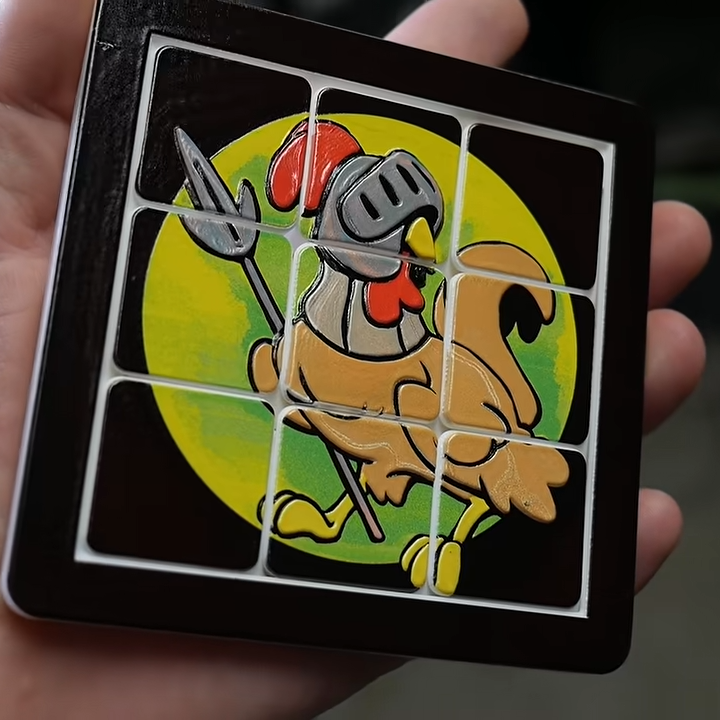
The design includes a pop-out tile, which can be re-inserted to a finished puzzle.

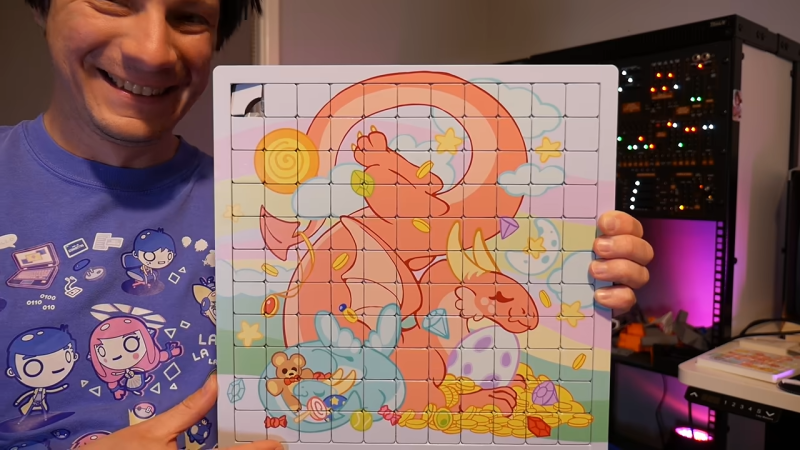
Creating a good print-in-place sliding puzzle depends a lot on tolerances. Today’s 3D printers are much more capable in this regard than they were ten or so years ago, but getting the right feel to the pieces was still a long learning process. It’s not at all easy to get all the different characteristics in the right balance. On one hand, if the pieces are too tight they won’t slide easily. But if they are too loose, the puzzle can bind because the pieces have too much play. It may also flex enough to pop apart. And of course, the shape of the pieces and their mating surfaces are constrained to angles and shapes that 3D print reliably. [Angus] persevered and succeeded, and shows off everything from cute 3 x 3 units to a massive scaled-up 11 x 11 puzzle, printed on his Prusa XL.

Getting the color onto the print is the work of a desktop UV ink printer, the same model our own Tom Nardi had a hands-on look at last year. [Angus] shows how printing a single color image onto the puzzle is pretty easy and looks great, but what’s even better is a textured relief image with some real tactile depth to it. Expect a lot more work to do for that, because thick layers of ink gum the puzzle up with overspray unless one avoids printing over the gaps in the tiles.

Watch both the puzzles and the color printing in action in his video, embedded just below.

Continue reading “Full-Color Looks Great On 3D Printed Sliding Puzzles” →
Round AMOLED Badge Does All Kinds Of Cool Stuff

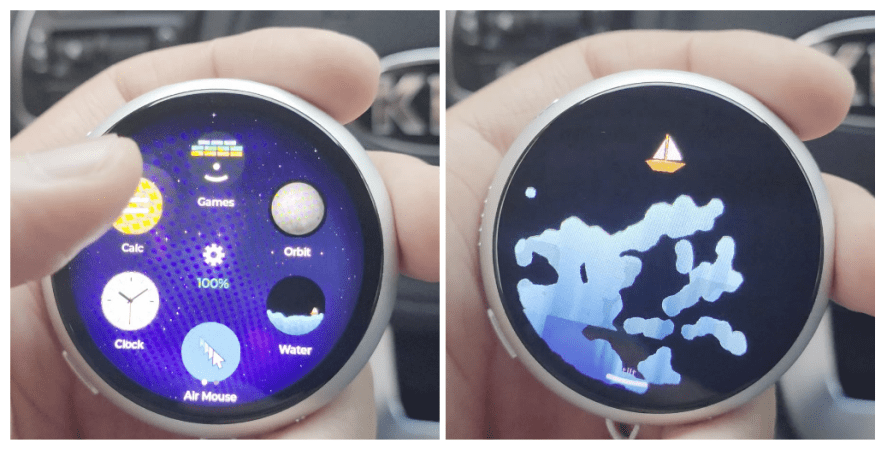
[curisama] has put together a project simply entitled The Badge. It’s simple enough, being a little round screen that you wear. Only, it does a wide variety of rather interesting things.

The build is based on the Waveshare ESP32-S3-Touch-AMOLED-1.75C. It’s not a very fun part number, but it describes a device which combines a 466×466 round display with a milled aluminium case and an ESP32-S3 to drive everything.

Neat, right?

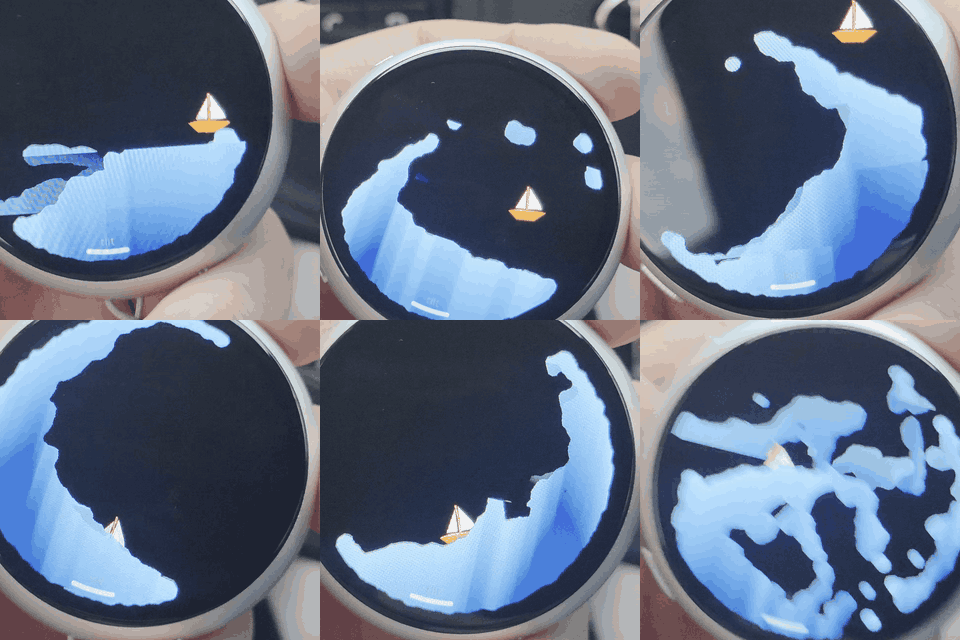
[curisama] started building a custom firmware for the device, intending to use it as an air mouse. Soon enough it had a touchpad, too, a bunch of extra keys, as well as a clock and some games. It was given the ability to record audio too, up to 52 minutes in WAV format. From there, it also gained a rather fetching liquid simulation, with water sloshing around the round display with a little boat riding around on it. This took some optimization, with [curisama] pushing the animation from 3 FPS all the way up to 18 fps, making it much more fluid and satisfying to watch. There were other optimizations too, with [curisama] figuring out how enabling the CONFIG_PM_ENABLE flag and some other tweaks could push standby battery life from 11.9 to 19.6 hours. Not a bad gain at all.

If you need a handy yet unassuming round object to act as a human interface device and some other stuff besides, consider buying the Waveshare part and flashing it yourself. You can do so right from your browser. We’ve featured plenty of other interesting projects with Waveshare parts in recent years, too. The integrated-display-and-microcontroller market is booming for makers right now, and it’s one we’ll continue to follow with interest. If you’re doing innovative stuff in this space, be sure to notify the tipsline!