Transcranial magnetic stimulation is one of those things that seems too wacky to be true. Depression not responding to treatment? Let’s smack you upside the head with strong magnetic fields! As odd as it sounds, it’s actually very well studied and works often enough that it has been approved by regulatory agencies as real evidence based medicine.
It’s also now open source, thanks to the OpenTMS project by [Zach McGinty]. Though since its not approved by the FDA or your local authority, be very aware of [Zach]’s disclaimer that this is not a medical device and if you do build something based on the extensive data on his GitHub, you do so at your own risk.
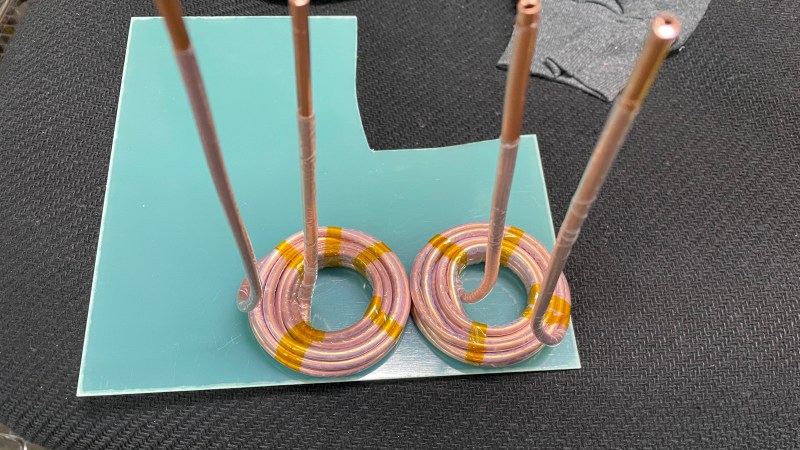
He’s got plans for the coils that go next to your head — made of hollow copper pipe to carry coolant, just like the pros do it — and the power supply to pulse them with mind-altering amounts of electricity. That might be literal in this case, but it’s also a hefty power supply: a pair of microwave oven transformers, switched through IGBTs in a flyback configuration. We’re talking kiloamps here, so make sure you know what you’re about before you try putting that kind of power right next to your skull.
[Zach] did, and he’s still here. Though to be fair, we’re not sure if he’s a very good engineer or just very lucky. Given he’s isolated the IGBT gate controls with fiber optics, and seems to follow other best practices, we’re going to guess the former, but it might still be both.
Either way, this one is going firmly into the “don’t try this at home” bucket. Even so we’re happy to see more medicine go open source, be it assistive sip-and-puff pointing devices, or ESP32 electroencephalograms. If nothing else, it keeps the big boys on their toes, and that’s what hacking is all about.

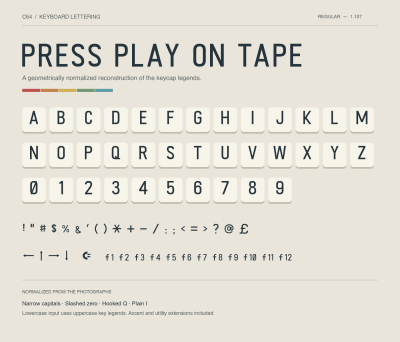 As you might expect, it’s an uppercase font only, as the hardware never sported lower case letters. But it doesn’t stop there, because it also contains the various punctuation and other marks, all the PETSCII glyphs, and the function keys. There’s even a Commodore logo for that key down in the left hand corner, but we’re guessing you’ll have to assemble CLR HOME yourself. We can’t help noticing the cursor arrows are solid in contrast to the outlined ones on our 64 here, but we’re guessing there may be some minor differences between models.