In A World Without USB…

It is easy to forget that many technology juggernauts weren’t always the only game in town. Ethernet seems ubiquitous today, but it had to fight past several competing standards. VHS and Blu-ray beat out their respective competitors. But what about USB? Sure, it was off to a rocky start in the beginning, but what was the real competition at that time? SCSI? Firewire? While those had plusses and minuses, neither were really in a position to fill the gap that USB would inhabit. But [Ernie Smith] remembers ACCESS.bus (or, sometimes, A.b) — what you might be using today if USB hadn’t taken over the world.

Back in the mid-1980s, there were several competing serial bus systems including Apple Desktop Bus and some other brand-specific things from companies like Commodore (the IEC bus) and Atari (SIO). The problem is that all of these things belong to one company. If you wanted to make, say, keyboards, this was terrible. Your Apple keyboard didn’t fit your Atari or your IBM computer. But there was a very robust serial protocol already in use — one you’ve probably used yourself. IIC or I2C (depending on who you ask).

Continue reading “In A World Without USB…”

DaVinci’s New Threads

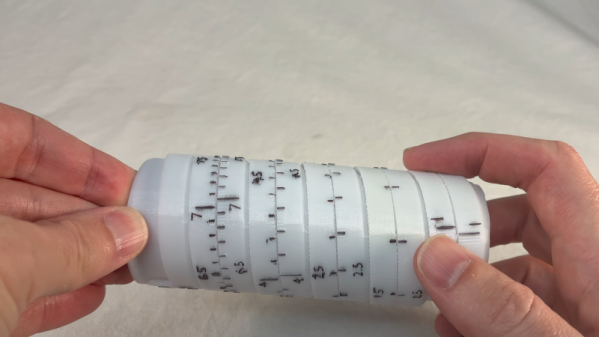
Last year, we saw [How To Make Everything’s] take on [DaVinci’s] machine for cutting threads. However, they stopped short of the goal, which was making accurate metal screw threads. After much experimentation, they have a working solution. In fact, they tried several different methods, each with varying degrees of success.

Some of the more unusual methods included heating a bar red hot and twisting it, and casting a screw out of bronze. The last actually worked well with a normal screw as the mold, although presumably, a good wood or wax shape would have resulted in a workable mold, too.

Continue reading “DaVinci’s New Threads”

How Hard Is It To Write A Calculator App?

How hard can it be to write a simple four-function calculator program? After all, computers are good at math, and making a calculator isn’t exactly blazing a new trail, right? But [Chad Nauseam] will tell you that it is harder than you probably think. His post starts with a screenshot of the iOS calculator app with a mildly complex equation. The app’s answer is wrong. Android’s calculator does better on the same problem.

What follows is a bit of a history lesson and a bit of a math lesson combined. As you might realize, the inherent problem with computers and math isn’t that they aren’t good at it. Floating point numbers have a finite precision and this leads to problems, especially when you do operations that combine large and small numbers together.

Indeed, any floating point representation has a bigger infinity of numbers that it can’t represent than those that it can. But the same is true of a calculator. Think about how many digits you are willing to type in, and how many digits you want out. All you want is for each of them to be correct, and that’s a much smaller set of numbers.

Continue reading “How Hard Is It To Write A Calculator App?”

Piano Gets An Arduino Implant

[Paul] likes his piano, but he doesn’t know how to play it. The obvious answer: program an Arduino to do it. Some aluminum extrusion and solenoids later, and it was working. Well, perhaps not quite that easy — making music on a piano is more than just pushing the keys. You have to push multiple keys together and control the power behind each strike to make the music sound natural.

The project is massive since he chose to put solenoids over each key. Honestly, we might have been tempted to model ten fingers and move the solenoids around in two groups of five. True, the way it is, it can play things that would not be humanly possible, but ten solenoids, ten drivers, and two motors might have been a little easier and cheaper.

The results, however, speak for themselves. He did have one problem with the first play, though. The solenoids have a noticeable click when they actuate. The answer turned out to be orthodontic rubber bands installed on the solenoids. We aren’t sure we would have thought of that.

Player pianos, of course, are nothing new. And, yes, you can even make one with a 555. If a piano isn’t your thing, maybe try a xylophone instead.

Continue reading “Piano Gets An Arduino Implant”

Understanding The Miller Effect

As electronics rely more and more on ICs, subtle details about discrete components get lost because we spend less time designing with them. For example, a relay seems like a simple component, but selecting the contact material optimally has a lot of nuance that people often forget. Another case of this is the Miller effect, explained in a recent video by the aptly named [Old Hack EE].

Put simply, the Miller effect — found in 1919 by [John Milton Miller] — is the change in input impedance of an inverting amplifier due to the gain’s effect on the parasitic capacitance between the amplifier’s input and output terminals. The parasitic capacitance acts like there is an additional capacitor in parallel with the parasitic capacitance that is equivalent to the parasitic capacitance multiplied by the gain. Since capacitors in parallel add, the equation for the Miller capacitance is C-AC where C is the parasitic capacitance, and A is the voltage gain which is always negative, so you might prefer to think of this as C+|A|C.

Continue reading “Understanding The Miller Effect”

What The Well-Dressed Radio Hacker Is Wearing This Season

We’ve seen a lot of interest in Meshtastic, the license-free mesh network for small amounts of data over the airwaves. [Ham Radio Rookie] was disappointed with his Meshtastic node’s small and inefficient antennas. So he decided to make what we suspect is the world’s first Meshtastic necktie.

We assume the power is low enough that having it across your thorax is probably not terrible. Probably. The tie is a product of a Cricut, Faraday cloth, and tiny hardware (the Xiao ESP32S3 and the WIO SX1262 board). The biggest problem was the RF connector, which needed something smaller than the normal BNC connector.

Continue reading “What The Well-Dressed Radio Hacker Is Wearing This Season”

On The Original Punched Cards

If you mention punch cards to most people, they’ll think of voting. If you mention it to most older computer people, they’ll think of punching programs for big computers on cards. But punched cards are much older than that, and [Nichole Misako Nomura] talks about how the original use was to run looms and knitting machines and — thanks the Internet Archive — you can still find old cards to drive modern machines.

According to the post, a dedicated group of people own old commercial knitting machines, and with some work, they can use archived punch cards with patterns that predate the computerized world. The Jacquard loom was famously the first machine to use cards like this, and it is no secret that they were the inspiration for Hollerith’s use of cards in the census, which would eventually lead to the use of cards for computing.

Continue reading “On The Original Punched Cards”