Tuesday Mini-extra

[Jon] noted that this guy is using his Prius as backup UPS for his house. [It’s been around, but’s it’s worthy.]

If you’re having issues with Eagle for the contest, [weirdguy] suggests this tutorial.

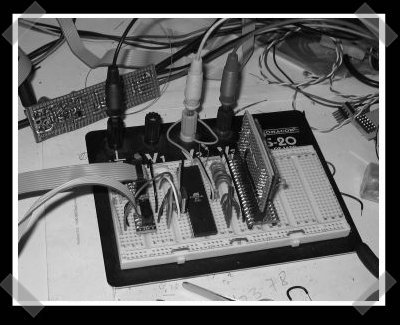
[Lain Sharp] sent in his three blind mice project. This is his version of the 3D mouse. with an AVR to send the data to windows via serial port.

[Michael] added an aux ‘input’ to his car stereo in a unique fashion – he wired it directly to the car speakers and drives them from his iPod. [I’m not recommending this, but it’s certainly a different approach.]

Finally, [oliverjenks] sent in this table saw finger jig hack – using some random power transistors, light bulbs and a laptop to drive a stepper motor.

If you haven’t already, check out our Design Challenge contest. I finally got some fedex shipping notifications today, so I should be able to officially announce more prizes very soon.
Questions For The Podcast / Contest Update

The next podcast is coming… In the meantime, if you want to ask a question in the podcast, record it as a mp3 and email it to podcast [at hackaday dot com]. If you’re wondering, I will do the next edition in mp3 – no more m4a stuff.

Now, to answer a few questions about the Design Challenge.
What kind of circuit should it be?
Anything from a personal massage speed controller to a miniature omelet maker. Whatever you can fit on the board, ok.

Will you extend the deadline?
No. If you want to send us something later, we’ll still take it. [but you’ll be a bit late to win any prizes]

How many entries can we submit?

No limit, but don’t go nuts, ok?

How big can it be?

The board will be credit card dimensions, but a standard thickness (think FR-4 or something) No, we don’t care how big the components are.

Do the components need to be available from somewhere like mouser/digikey?

I’d hope so. We don’t want to have to reclaim parts from sunken Russian submarines to build the circuit.

How can I submit it?

Put it online and send in a tip, or ask where to send it via the tips line. Either way, use the tips line.

Homemade Cathode Ray Tubes


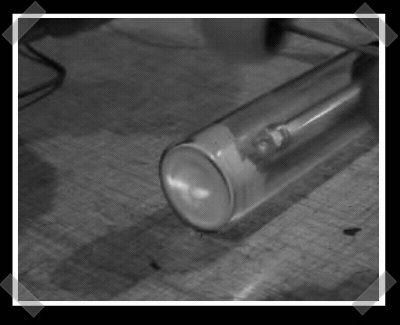
[dylan] tipped us to [Nyle Steiner] who’s been making his own cathode ray tubes Not satisified with that, he made an even smaller one[youtube] and he built an oscilloscope[youtube].

Once I noticed that he’s an amateur radio operator, I started digging around his site. His propane lawnmower is a great idea, his diy photocell makes me think of mr. wizard. If you dig tube amps, you’ll definitely be interested in his vaccum tube building experiments.

[Got a cool circuit? Lay it out on a PCB and enter the Design Challenge.]

Screen Saver Power Switching


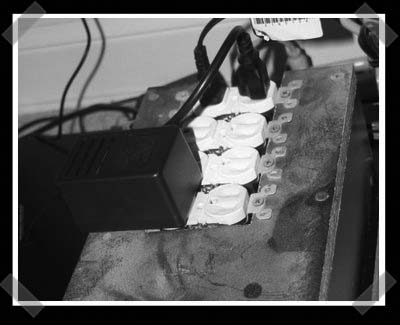
This is another power control hack along the lines of the serial controlled power outlet. Instead of only managing a printer, [Brent] uses the IO lines of the parallel port to drive some SSRs in order to turn off all of his peripheral devices – think lamps, speakers, scanners, etc. He posted the whole thing over on instructables.

[Want to show off your skills? Send us a tip with your latest – or enter the Hackaday design challenge. I should have some more prizes to announce later this week. I’m just waiting for them to arrive.]

Mp3 Flash Recovery


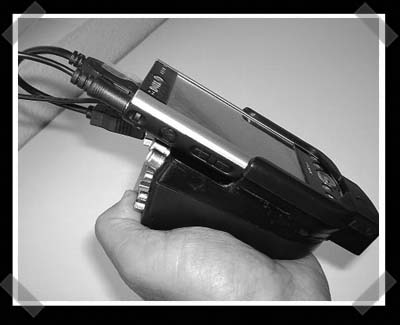
[Bart] sent in his efforts to recover the flash data on a mysterious mp3 player he found laying about. He successfully built an interface using a AVR/ATmega setup to get access to the data. This could be a viable way to recover data from broken thumbdrives – but it’s probably easier to swap the flash chip onto another drive. The Chipquik stuff sounds interesting – cold SMD chip desoldering. Given the cost, I’m not sure just how cost effective it is compared to buying a rework station.

[If you haven’t already, check out the Hackaday Design Challenge Fabienne’s nano is one prize and I’ll be announcing more prizes as soon as I’ve got them in hand.]