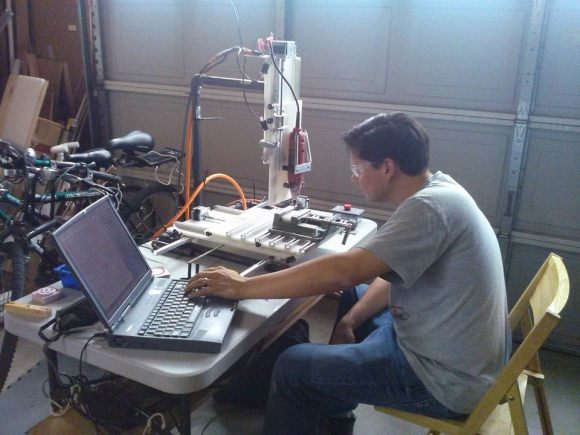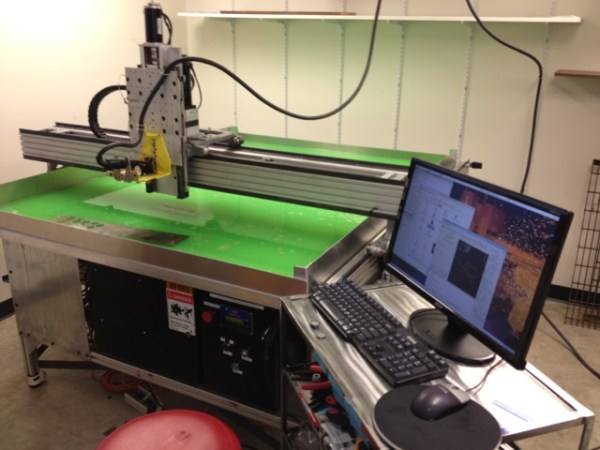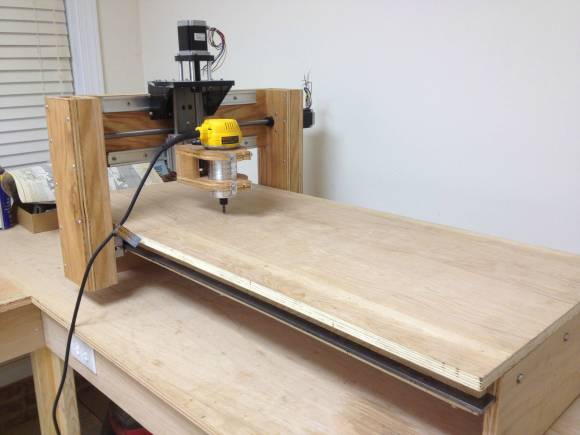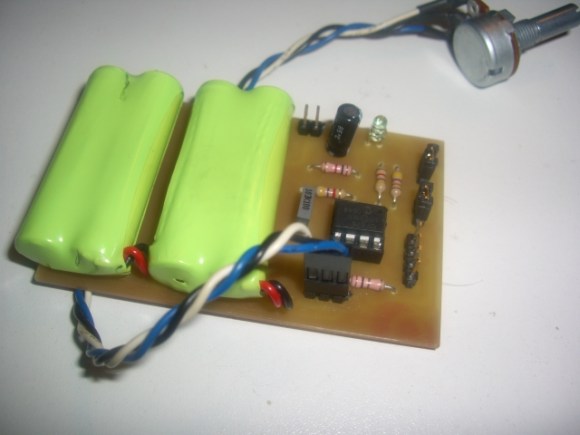
Stepper motors are great for a bunch of projects; CNC machines, clocks or robots for example. Sometimes when working on a project that does include a stepper motor and driver, it would be nice to test that part of the build without hooking everything up. A pulse generator could be used to complete such a task and [CuteMinds] has put together a DIY friendly version tailored specifically for stepper motors. This device makes quick and easy work for testing out those stepper motors.
At the heart of the pulse generator is a 12F675 microchip which looks to the resistance value of a potentiometer to adjust the square wave step signal output from 20hz to 3khz. Just having the step signal would pretty cool but this project goes a little farther. There are 3 sets of headers on the board that allow you to connect either a jumper or switch in order to: 1) turn the power on, 2) enable the stepper driver and 3) select the direction the motor turns. The on-board batteries make this unit portable for remote usage.
If you are itching to make one for yourself, the Eagle schematic and board files are available for download at the above link.
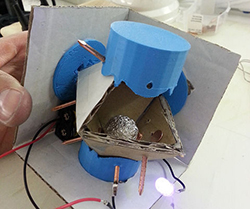 If you’re trying to detect the orientation of an object, sometimes you really don’t need a 6DOF gyro and accelerometer. Hell, if you only need to detect if an object is tilted, you can get a simple “ball in a tube” tilt sensor for pennies. [tamberg] liked this idea, but he required a tilt sensor that works in the X, Y, and Z axes. Expanding on the ‘ball in a tube’ construction of simple tilt sensors,