Keurig Hack Runs A Water Supply Line To Your Coffee Maker

We were skeptical about Keurig machines when we first heard about them. Although we still scoff at the added waste of throwing away a plastic container of used grounds for each cup of coffee made, we tried one at the in-laws and it does brew a great cup of Joe. One of the draws of the machine is that it does it pretty much automatically as long as you fill it with water first. [Joseph Collins] is even taking the work out of that by adding a water supply line to his Keurig.

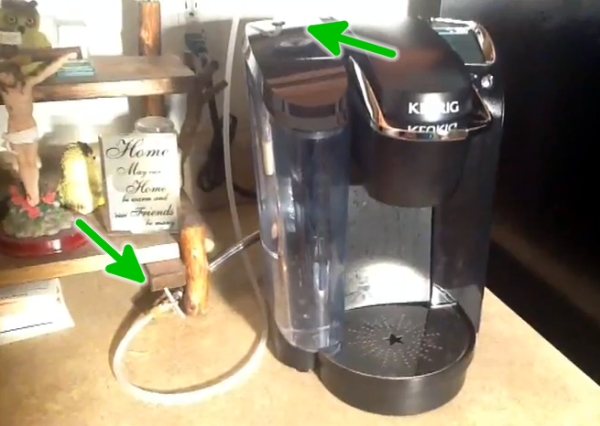
His coffee maker sits right next to the fridge, which has its own water supply. So one day he thought, why not run a line to the coffee maker as well? As far as plumbing projects go it’s very simple. He pulled out the refrigerator and added a T-fitting to split the water supply line. From there he ran an extension next to the coffee maker that terminates with a valve being pointed to by the arrow in the lower left. The plastic supply line leaving the valve passes through a rubber grommet in the lid of the water reservoir pointed to by the other arrow.

[Joseph] figures the whole project came in at under $30 and shows how he did it in the clip after the break.

Continue reading “Keurig Hack Runs A Water Supply Line To Your Coffee Maker”

Used Hard Drive Repurposed As A Cotton Candy Machine

hard-drive-cotton-candy-machine

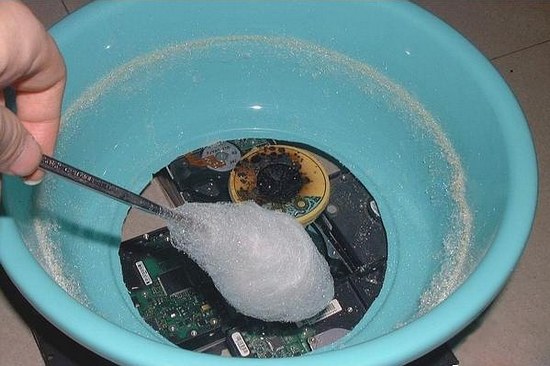
If you’re reading this website, you’re probably someone who likes to take things apart. As such, you probably also have one or more old computer hard drives just sitting around in a parts bin.  Of all the projects you could have for an old drive, here’s an interesting one – A Chinese engineer who operates a hard drive repair and data recovery center decided to turn a used drive into a cotton candy machine.

Possible sanitary concerns set aside, his creation is very cheap and easy to build. Most hackers probably have all the necessary gear just sitting around already. The only parts he used were: a hard drive that still powered up, a generic plastic basin, an aluminum can, a flat round metal tin, and six bicycle spokes.

It might not be pretty, but it works. If you want to create your own, be sure to check out the above link. There’s a full DIY guide complete with step-by-step photos.

[Thanks Fabien]

Low-resolution Toaster Prints On Slices Of Bread

low-resolution-bread-toaster

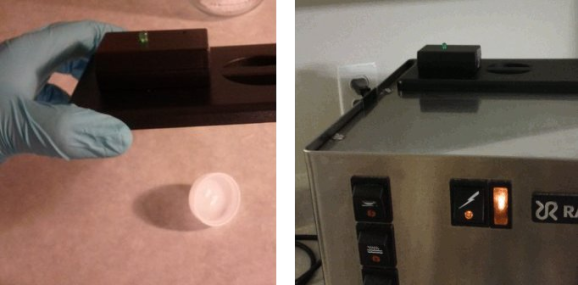
Why toast your bread evenly when you can burn low-resolution images instead? Meet the Super Mega Mega Toaster, a University project created by [Scott van Haastrecht] for his Creative Technology course.

Now you may be thinking that this has been done before. And indeed, a bit of searching will lead you to a post about toasting Jesus.  But that is a one-shot toaster hack which simply used a stencil to block heat to create a certain pattern. This is a mechanical overhaul for the toaster concept. It uses one row of six heating elements. Each is connected to a servo motor which moves the element next to the bread or away from it based on the pattering being printed. A stepper motor then moves the bread up so that the next row can be printed. All of this is mounted in a laser-cut wood frame which makes us just a bit nervous because the purpose of the elements is to burn stuff.

See a demo of the toaster, as well as its internal components in the clip after the jump.

Continue reading “Low-resolution Toaster Prints On Slices Of Bread”

Bakery Automation Mixes Single Cookies

bakery_automation

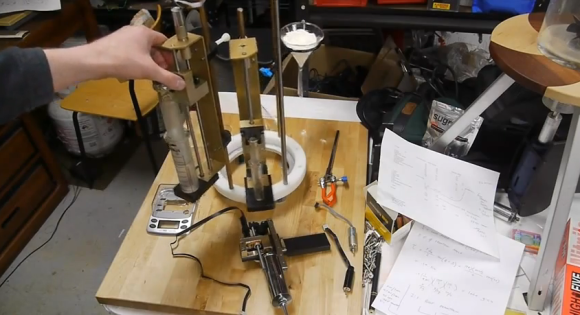
[Ben Krasnow’s] latest project is a delicious one. In the image above he’s showing off the beginnings of his cookie dispenser. No, it’s not another take on a way to eat Oreo cookies. It actually comes much earlier in the production chain. His device is akin to a 3D printer for baked goods in that it will be able to automatically combine raw ingredients to form production runs as small as a single serving of cookie dough.

When we first heard about it we wondered why you would want to bake just one cookie? But of course that’s not the purpose at all. The machine will allow you to bake a full sheet of cookies, but provides the option of making each one of them with a different recipe. As with all baking, combining ingredients in the proper proportions is paramount. In the post linked at the top he’s working on a butter dispenser. But in an earlier post he hacked an electronic scale to help weigh other ingredients. You can watch both video clips after the break.

Imaging a dozen cookies with slightly different amounts of flour in them. A few test sheets and he should be able to dial in the very best recipes.

Continue reading “Bakery Automation Mixes Single Cookies”

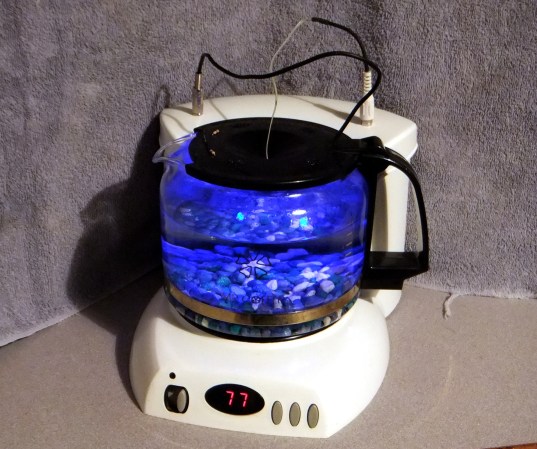
Coffee Pot Aquarium Keeps Fish Warm Without Cooking Them (hopefully)

coffee-pot-aquarium

Beta fish are one of the easiest pets to care for. So when [Derek] gave his girlfriend one for Valentine’s day he thought the job was done. Turns out these tropical pets want 75-80 F water and that’s not going to happen in a plain old bowl when you keep your home thermostat in the mid sixties during the winter. While looking for a simple heating solution he stumbled across the idea of using a cheap drip coffee maker as an aquarium.

The two main components are already in place: a clear glass vessel for the water and a way to heat it. The real trick is to use the heating element to gently warm the water to the appropriate temperature. Perhaps the key piece of the project is that the device already had a timer that shut off the heating element. This translates to easy control with his MSP430 microcontroller as it means there’s a relay present. He also patched into the two seven-segment displays to give him feedback on the temperature currently being read by the RL1003 thermistor which is submerged in the water. You’ll also note that he added a few LEDs to the lid to give the aquarium some inner glow.

Oil Truck Transforms Into Giant Mobile Grill

Oil-truck-transforms-into-mobile-grill

When the truck rolls up, everything seems normal enough. It’s a generic oil tanker. But when the theme from “2001: A Space Odyssey” begins to play and the side of the tank starts to open, you suddenly realize things are not what they seem. This is no mere tanker truck, it’s a massive meat cooking monster dubbed the “X Grill”.

[Ken Foster], owner and creator of this $40K+ beast, worked with welder [Gary Webb] to custom design and fabricate every component of the vehicle, from hinges to hydraulic systems. They claim not a single part came from a box. The cooking area, complete with speakers and spotlights, has storage cabinets, stainless steel prep counters, a four burner stove, and a 42 inch grill. If that’s not enough, there are three more grills you can set up beside the truck and hook into the system. All the appliances are run off a 65 gallon propane tank that’s mounted to the side of the truck.

Although the “X Grill” is available to rent for private parties, [Ken] says they spend most of their time at community and charitable events. He donates his equipment and cooking services, and the host group supplies the food and gets to keep any profit.

Good work guys!

[via Neatorama]

Quick And Easy Rocket Stove

[Simon], a gardener in the United Kingdom, created this super cheap and easy to build rocket stove. The great thing about this little guy is that the methods and materials used to create it are so basic, anyone should be able to quickly make their own for just a few bucks. If nothing else, this is a good introductory project for people wanting to experiment with these stoves.

The only materials required are a metal 5 gallon cooking oil drum, a few scrap pieces of chimney liner pipe, and some sand. That’s it.

[Simon] cut off the top of the oil drum and made a hole in the front to fit the pipe. He then trimmed the scrap pieces of pipe to form a 90 degree elbow and positioned that in place inside the drum.  Sand poured around the pipe acted as the insulator. Finally, he cut and flattened a scrap piece of pipe to use as a front loading tray for the wood.

Simple as that. Party on.

[via The Flying Tortoise]