Publish Or Perish: Data Storage And Civilization

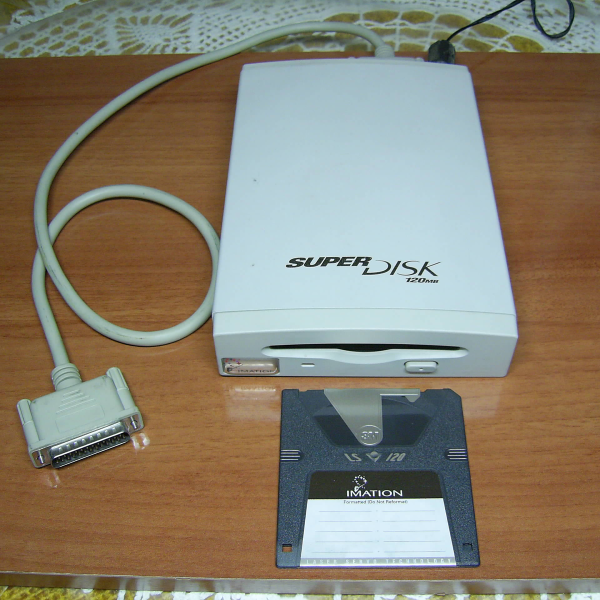
Who do you think of when you think of ancient civilizations? Romans? Greeks? Chinese? India? Egyptians?  What about the Scythians, the Muisca, Gana, or the Kerma? You might not recognize that second group as readily because they all didn’t have writing systems. The same goes, to a lesser extent, for the Etruscans, the Minoans, or the inhabitants of Easter Island where they wrote, but no one remembers how to read their writing. Even the Egyptians were mysterious until the discovery of the Rosetta stone. We imagine that an author writing in Etruscan didn’t think that no one would be able to read the writing in the future–they probably thought they were recording their thoughts for all eternity. Hubris? Maybe, but what about our documents that are increasingly stored as bits somewhere?

Continue reading “Publish Or Perish: Data Storage And Civilization”

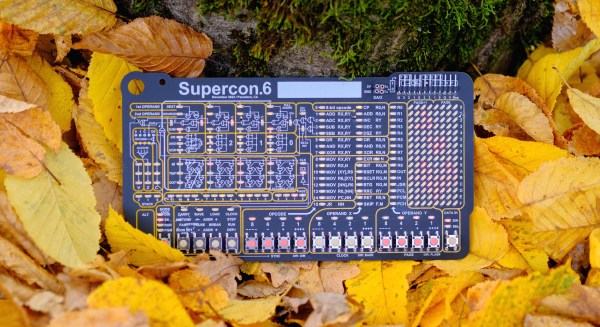
The 2022 Supercon Badge Is A Handheld Trip Through Computing History

Over the last several years, there’s been a trend towards designing ever more complex and powerful electronic event badges. Color displays, sensors, WiFi, USB, Bluetooth — you name it, and there’s probably a con badge out there that has packed it in. Even our own 2019 Supercon broke new ground with the inclusion of a Lattice LFE5U-45F FPGA running a RISC-V core. Admittedly, observing this unofficial arms race has been fascinating. But as we all know, a hacker isn’t defined by the tools at their disposal, but rather the skill and imagination with which they wield them.

So this year, we’ve taken a slightly different approach. Rather than try and cram the badge with even more state of the art hardware than we did in 2019, we’ve decided to go back to the well. The 2022 Supercon badge is a lesson in what it means to truly control a piece of hardware, to know what each bit of memory is doing, and why. Make no mistake, it’s going to be a challenge. In fact, we’d wager most of the people who get their hands on the badge come November 4th will have never worked on anything quite like it before. Folks are going to get pulled out of their comfort zones, but of course, that’s the whole idea.

Continue reading “The 2022 Supercon Badge Is A Handheld Trip Through Computing History”

2022 Supercon: More Talks, More Speakers!

Round two of the 2022 Supercon talks is out, and it’s another superb lineup. This round is full of high voltage, art, and science. If you’ve ever dreamed of starting up your own hacker company, making your own refrigerator, teaching your toaster to think, or just making your breath glow, then Supercon is where you want to be Nov. 4-6!

Supercon will sell out, so get your tickets now before it’s too late. And stay tuned for the next and final round of talk reveals next week! Plus the keynote speaker reveal. Plus workshops. Oh my. Continue reading “2022 Supercon: More Talks, More Speakers!”

RF Hacking Hack Chat

Join us on Wednesday, October 12 at noon Pacific for the RF Hacking Hack Chat with Christopher Poore!

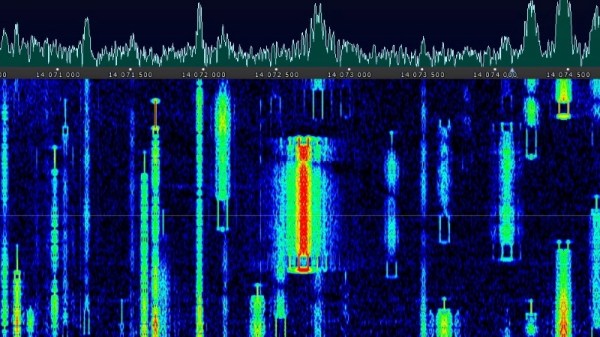
On the time scale of technological history, it really wasn’t all that long ago that radio was — well, boring. We’re not talking about the relative entertainment value of the Jack Benny Show or listening to a Brooklyn Dodgers game, but about the fact that for the most part, radio was a one-dimensional medium: what you heard was pretty much all there was to a signal, and radio was rarely used for anything particularly hackable.

Not so today, of course, where anything electronic seems to have at least one radio stuffed into it, and the space around us is filled with a rich soup of fascinating RF signals. For hackers, this is where radio gets interesting — listening in on those signals, exploring their nature, and figuring out how to put them to use are like red meat for most of us.

join-hack-chatHacking and reverse engineering opportunities abound in the RF realm, but can sometimes be a bit difficult. What’s needed is a framework for pulling those signals out of the ether and putting them into some kind of context. Fortunately, there are plenty of tips and tricks in this space; we talked about one of them, FISSURE, not too long ago. The acronym — “Frequency Independent SDR-Based Signal Understand and Reverse Engineering” — about sums up what this framework is all about. But to bring it into further focus, we’re lucky enough to have Chris Poore, a Senior Reverse Engineer at Assured Information Security, drop by the Hack Chat. We’ll talk about RF reverse engineering in general and FISSURE in particular. Be sure to stop by with your RF hacking and reverse engineering questions and war stories!

Our Hack Chats are live community events in the Hackaday.io Hack Chat group messaging. This week we’ll be sitting down on Wednesday, October 12 at 12:00 PM Pacific time. If time zones have you tied up, we have a handy time zone converter.


Hackaday Links Column Banner

Hackaday Links: October 9, 2022

Don’t you just hate it when you walk out of the bathroom with toilet paper stuck to your shoe? That’s a little bit like what happened when the Mars helicopter Ingenuity picked up a strange bit of debris on one of its landing pads. The foreign object was spotted on the helicopter’s down-pointing navigation camera, and looks for all the world like a streamer of toilet paper flopping around in the rotor wash. The copter eventually shed the debris, which wafted down to the Martian surface with no further incident, and without any apparent damage to the aircraft. NASA hasn’t said more about what the debris isn’t — aliens — than what it is, which of course is hard to say at this point. We’re going to go out on a limb and say it’s probably something we brought there, likely a scrap of plastic waste lost during the descent and landing phase of the mission. Or, you know, it’s getting to be close to Halloween, a time when the landscape gets magically festooned with toilet paper overnight. You never know.

Continue reading “Hackaday Links: October 9, 2022”

Mommy, Where Do Ideas Come From?

We wrote up an astounding old use of technology – François Willème’s 3D scanning and modeling apparatus from 1861, over 150 years ago. What’s amazing about this technique is that it used absolutely cutting-edge technology for the time, photography, and the essence of a technique still used today in laser-line 3D scanners, or maybe even more closely related to the “bullet time” effect.

This got me thinking of how Willème could have possibly come up with the idea of taking 24 simultaneous photographs, tracing the outline in wood, and then re-assembling them radially into a 3D model. And all of this in photography’s very infancy.

But Willème was already a sculptor, and had probably seen how he could use photos to replace still models in the studio, at least to solidify proportions. And he was probably also familiar with making cameos, where the profile was often illuminated from behind and carved, often by tracing shadows. From these two, you could certainly imagine his procedure, but there’s still an admirable spark of genius at work.

Could you have had that spark without the existence of photography? Not really. Tracing shadows in the round is impractical unless you can fix them. The existence of photography enabled this idea, and countless others, to come into existence.

That’s what I think is neat about technology, and the sharing of new technological ideas. Oftentimes they are fantastic in and of themselves, like photography indubitably was. But just as often, the new idea is a seed for more new ideas that radiate outward like ripples in a pond.

Hackaday Podcast 188: Zapping Cockroaches, Tricking AIs, Antique 3D Scanning, And Grinding Chips To QFN

It’s déjà vu all over again as Hackaday Editor-in-Chief Elliot Williams gets together with Staff Writer Dan Maloney to look over the best hacks from the past week. If you’ve got a fear of giant cockroaches, don’t worry; we’ll only mention the regular ones when we talk about zapping them with lasers. What do you need to shrinkify an NES? Just a little sandpaper and a lot of finesse.

Did you know that 3D scanning is (sort of) over a century old? Or that the first real microcomputer dates all the way back to 1972 — and isn’t one of those blinkenlight deals? And watch out for what you tell GPT-3 to ignore — it might just take you very seriously. We’ll touch on solar-powered cameras, a compressor of compressors, and talk about all the unusual places to find lithium batteries for your projects. It’s an episode so good you might just want to listen to it twice!

(In case you’re wondering about all this “twice” stuff — Elliot forgot to hit record on the first take and we had to do the entire podcast over again. Oh, the humanity!)

Check out the links below if you want to follow along, and as always, tell us what you think about this episode in the comments!

Direct download here!

Continue reading “Hackaday Podcast 188: Zapping Cockroaches, Tricking AIs, Antique 3D Scanning, And Grinding Chips To QFN”