Automated Cat Feeder And Large Plastic Screws

We’ve seen automated food dispensers for pets, but none that go so far as to build large plastic screws for dispensing kibble.

This isn’t [Mathieu]’s first automatic cat feeder; an earlier version used a wheel to dispense cat food in excessively large version. To improve upon his first build, [Mathiu] decided to use an Archimedean screw to dispense food in 5 gram increments. There was a problem, though: a proper industrial screw cost about $1500 and the ‘consumer’ versions of what he wanted were trash. He though about casting one in epoxy but didn’t want to poison his cat with strange chemicals. He ended up using PolyMorph for his screw, a plastic that melts at 60º C and is also used in medical devices.

The electronics of the build are an Arduino, a  DS1307 real-time clock, LCD display, and a relay board powering an electric screwdriver motor. From the video demo below, we’re going to say [Mathieu] put together a pretty nice automated cat feeder.

Continue reading “Automated Cat Feeder And Large Plastic Screws”

Just Put Your Lips Together To Turn On A Lamp

whistler-lamp-control

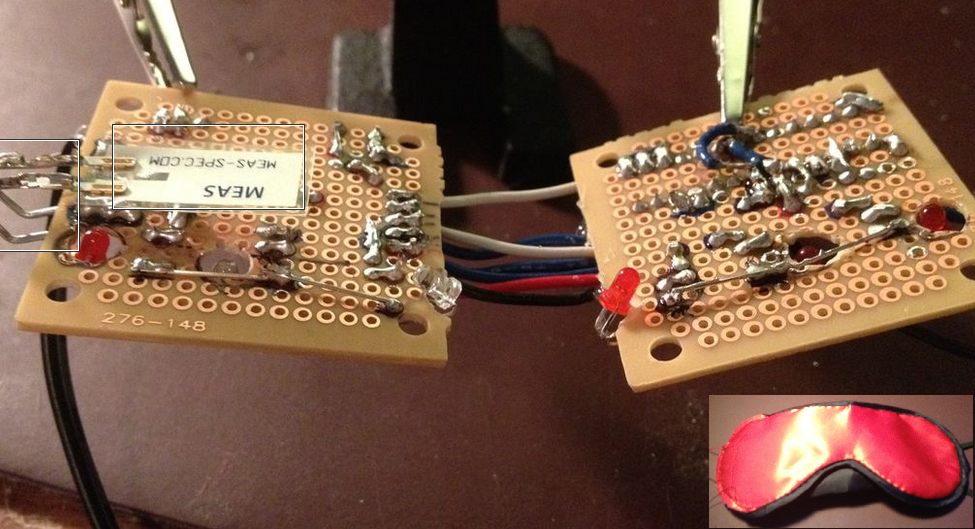
The inlaid image is a controller board which [Limpkin] developed to add whistle control as a home automation option. It has an effective range of around fifteen feet and does a good job of detecting whistles from many different people. Here is one of the test subjects (captured with a hidden camera) whistling to the white LED lamp in order to switch it on.

The board is quite small. [Limpkin] holds it up in the beginning of his test video, which gives a good sense of scale. One end has a barrel jack through which the board gets power. The other end has a two conductor screw terminal which is used for switch your devices. An N-channel MOSFET protects the circuit when a heavy external load is connected. It is capable of driving a respectable 90 watts. If you’re looking to switch mains rated devices you’ll need to bring your own relay to the party.

Audio processing is handled by the Freescale ARM Cortex M4 chip at the center of the board. The Serial Wire Debug (SWD) clock and data pins are both broken out to solder pads so the thing is hackable. [Limpkin] posted the schematic, gerbers, and a code template. But he didn’t release the algorithms he uses for processing so if you want to make this at home you’ll need to figure that out for yourself. If you need help you should check out this whistle-based remote control.

http://www.youtube.com/watch?v=1eIxAMKNphw

Converting A Bottle Style Water Cooler To Self-fill From The Tap

water-cooler-water-line-conversion

[Roy Bean] thought it was pretty silly for the Milwaukee Makerspace to keep buying bottles of water for their water cooler. He rigged up a system that automatically fills the refrigerated reservoir in their water cooler. It’s a functional hack that also provided an excuse for him to learn about a couple of different sensors.

What you see above is the meat and potatoes of the hack. The well is where water from a bottle drains into the cooler. This has been covered with a sheet of acrylic to keep the drinking water clean. There is a copper pipe which has been plumbed into the tap water supply. The other two bits are redundant level sensors to make sure the water valve shuts off without overflowing. One of them is a capacitive proximity sensor, the other is a conductivity sensor hacked together using stainless steel hardware submerged in the pool.

If you’re worried about the taste or odor of your tap water just add in a single or multiple stage under-counter filter system when plumbing in the water line. The filters are easy to find and we’d bet they cost less than a contract with a bottled water company.

[Thanks Pete]

Winch Hack Lets Your Change Chandelier Light Bulbs At Ground Level

We’ve seen a lot of hacks from [Lou] and his latest continues the tradition of excellence. The entryway of his home is a couple of stories high and features a chandelier. Unfortunately he doesn’t have a ladder tall enough to use when changing light bulbs. Even if he did have a way to get up there it would be nice if the light fixture could come to him instead. This hack makes that happen by adding an electric winch to lower the light fixture.

Watching the installation process makes us think that [Lou] might be a little reckless. He’s up in the attic mounting a winch to the rafters before he cuts the board holding the fifty-pound chandelier’s junction box in place. He mentions foregoing the recommended cable fastener in lieu of some baling wire. But he does manage the task without dropping the ball so to speak — perhaps we shouldn’t be so critical of his methods. After altering the chandelier mounting bracket to work with a winch [Lou] wires an outlet in the attic and adds a plug to the cord on the light. This means he needs to go into the attic to unplug the light before lowering the fixture on the winch. But he’s not done yet. After the break you can watch the second part of the project with improves upon this by adding a wall switch to control the winch and extension cord management to route the power.

[Lou] really loves his automated home gadgets. Check out the gaming table which drops from the ceiling.

Continue reading “Winch Hack Lets Your Change Chandelier Light Bulbs At Ground Level”

Pebble Watch Hack Makes It A Home Automation Controller

[Enrico] loves his Pebble watch, and recently had a chance to explore the code package used to customize its function. It turned out to be really easy to work with so he set out to make the Pebble watch into a home automation controller (dead link; Internet Archive).

So far the two bits of hardware used in his experiments are shown in the image above. The watch itself serves as the controller, interacting with the Ethernet relay board seen in the background. The watch communicates via Bluetooth but you don’t have to know much about that thanks to the example files available from the repository. With communications taken care of he needed a menu system to access commands on the watch. Instead of coding his own he hacked a playlist into the built-in music menu. This allows him to switch the relays on and off again as if he were playing or pausing audio tracks. See it in action after the break.

Continue reading “Pebble Watch Hack Makes It A Home Automation Controller”

Sump Pump Alarm Sends Text Message As Water Rises

sump-pump-monitor

We’ve got some friends who have two sump pumps. One is a backup and sounds an alarm when it is switched on. But this only works as long as they’re home to hear it. [Felix Rusu] came up with a solution what will text him if the sump pump fails. This way he can head home, or call someone to check in on the problem if he’s away.

We saw a pretty complicated monitoring system back in January. This one uses a single ultrasonic rangefinder which we think is much simpler. It’s accurate to about 1cm and is simple to use — it’s very popular with the hobby electronics crowd which helps with price and availability of sample code. We hem and haw about the use of a Raspberry Pi board with the project. On the one hand it’s a cheap way to get the sensor on the network and provides the infrastructure you need to send any number of alerts. On the other hand, it’s a lot of power for this particular application. But we figure it can be extended to monitor other utilities in [Felix’s] home, like a sensor to alert him of a leaking water heater. And we think everyone can argue that a monitor like this is well worth the time and effort he spent to develop it.

Hidden Servo Automates Slat-style Window Blinds

slat-blind-automation

[Home Awesomation] has been working on automating his slat-style window blinds. His focus has been on adjusting the angle of the slats, not on completely retracting the shades. Since the slat angle adjustment requires little torque a servo motor turns out to be just perfect for the job. The good news is that the existing blinds in his house have room in the top enclosure to completely hide his add-on hardware.

The image above is a screenshot from the demo which you can watch after the break. The top enclosure for the blinds is just shown at the top of the frame. Here [HA] is demonstrating a few different control designs which he has been trying out. You can see what looks like a Molex connector with some type of component attached to it. That’s an IR motion sensor and he’s really happy with its performance. He feels the same way about the black momentary push switch sticking down next to the power cable. But his DIY solution that works quite well is the pull string attached to a flexible piece of metal. When that metal bends enough to touch a stationary conductor it completes the circuit, telling the Arduino to start driving the servo.

The main idea behind the project is to poll a temperature sensor, closing the blind automatically to help keep the place cool during the day. We figure if he’s already using a microcontroller to drive the project he might as well throw a cheap Bluetooth in module there and make it controllable with a smart phone.

Continue reading “Hidden Servo Automates Slat-style Window Blinds”