Vocal Mouse Control

[youtube=http://www.youtube.com/watch?v=PXmccs4GIqI]

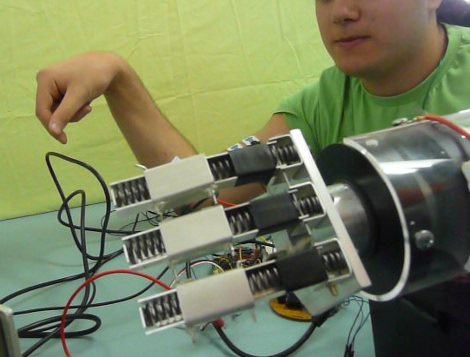
Absolutely fascinating. The University of Washington is developing a vocally controled mouse interface. We’ve seen vocal control of the computer before, but it is usally responding to specific commands and words to carry out tasks such as opening files.  This system uses different vowels and sounds to create cursor motion.  You can see the same system used in the video above to control a robot arm as well.

[via BotJunkie]

Space Tech Helps Athlete Attain World Record

German athlete [Wojtek Czyz] set a new world record for the long jump at the Paralympics 2008 in Beijing, with the aid of his space tech enhanced prosthetic leg. He jumped a record 6.5 meters, 27 centimeters more than the previous record. Prior to switching to his new prosthetic leg for athletic competitions, he was prone to breaking the prosthesis when he performed to the best of his abilities. [Czyz] and his trainer met with ESA’s Technology Transfer Programme (TTP) technology broker MST Aerospace to assess the most important parts of the prosthesis. According to [Dr. Werner Dupont], MST Aerospace Managing Director, the crucial element was the connection angle, or L-bracket. Working with German company ISATEC, they developed a new L-bracket using a much lighter and stronger material from the Alpha Magnetic Spectrometer (AMS), which is an instrument that will be installed on the ISS to study extraterrestrial matter. We find it interesting and pretty cool that space technology can help enhance a disabled athlete’s performance, and think that this could lead to interesting possibilities, even for those who aren’t athletes.

[via Boing Boing]

Open Source Neural Activity Monitors

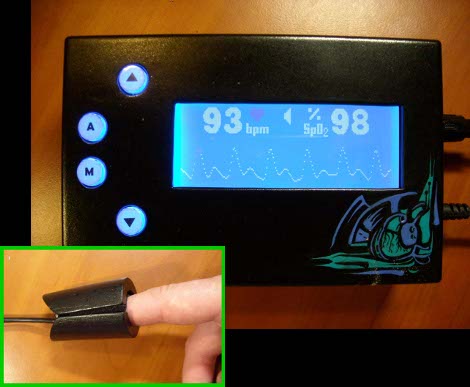
Yesterday we linked to an OCZ Neural Acutator Interface teardown. Several in the comments wanted to know more about the sensor electrodes. Check out the OpenEEG project and OpenEEG mailing list for information on sensing, amplifying, and recording brain activity (EEG). The OpenEEG project maintains an open source Simple ModularEEG design. Two other open source variants of the ModularEEG are the MonolithEEG and [Joshua Wojnas’] Programmable Chip EEG BCI. All three projects use Atmel microcontrollers, with designs in Cadsoft Eagle.

Brain activity is measured using passive or active electrodes. Passive electrodes require a conductive paste to make proper contact with the skin (examples: 1, 2). Active EEG sensors don’t need conductive goop because they have an amplifier directly on the electrode (examples: 1, 2, 3).

[via anonymous reader, comments]