What Happens If Russia Shuts The Door On Their Leaky ISS Module?

There was a particularly tense moment aboard the International Space Station earlier this month, with NASA directing their astronauts to secure themselves in the Dragon capsule and prepare for a potential return to Earth while their Russian counterparts engaged in what we now know to have been some impromptu demolition work on their side of the orbiting complex.

Despite objections from their American partners, Roscosmos had given their cosmonauts the go-ahead to drill and cut into the walls of the Zvezda module — one of the core components of the ISS which has been in orbit since 2000 — to try and identify and ultimately repair persistent leaks that have been venting the Station’s atmosphere out into space for several years. We may never know the exact nature of the behind-the-scenes communication that went on between the two space agencies, but in the end the Russians abandoned their plan and NASA’s personnel were told to resume their normal duties.

But where do things go from here? Although it’s true the International Space Station is entering its final years, the mission isn’t over yet, and that means the two countries need to continue to work together if they hope to get any science done in the time they have left.

At this point there hasn’t been any official word from either agency, but sources that wish to remain anonymous have been dropping hints, and that’s got the rumors swirling. With the understanding that anything is still possible, at this point it looks like Russia is going to abandon any further attempts to repair the leak and instead seal off the crippled compartment of the Zvezda module. This won’t solve all the problems, and in fact will create some new ones. But if that’s what it will take to keep the peace with NASA until Station operations wind down, it’s apparently a bargain they’re willing to make.

Continue reading “What Happens If Russia Shuts The Door On Their Leaky ISS Module?”
Attack Of The Atomic Oxygen

While designing anything for operation in space has its challenges, there is at least one thing that is more of a problem for objects in Earth orbit than for deep-space probes: atomic oxygen. We like oxygen because we need it to live, but it is also highly reactive as a single atom. Luckily, on Earth, most of what we breathe is O2. [Space Daily] talks about the challenges of the International Space Station dealing with the “space weather” of atomic oxygen in low Earth orbit.

Part of the problem is that even when we know better, we tend to think of the atmosphere coming to an abrupt end and space being a hard vacuum. But in reality, the atmosphere gradually dissipates, and at “only” 400 km above the Earth, the Space Station is really flying through a very thin atmosphere.

To compound the problem, this is above the ozone layer, so the Sun’s UV light rips O2 into single oxygen atoms. Over time, these free oxygen atoms can affect many parts of a spacecraft exposed to them. Engineers first noticed that materials recovered from spacecraft had more damage and changes to material properties on the pieces facing the direction of travel. NASA has spent years testing different materials by mounting trays of different material samples outside the ISS.

Carbon-based polymers take a big hit from atomic oxygen exposure. Polymide film is frequently used, but it erodes with exposure. Carbon composites also lose mass. Other materials change in other ways. For example, an optical surface may roughen with exposure.

The usual answer is to over-design for mission objectives or to cover certain polymers with coatings like silicon dioxide or aluminum oxide, which are not as reactive to free oxygen. For a long-duration mission like the ISS, you may have to pay special attention to the materials in use. Very low satellites also need special care, as there is more oxygen in lower orbits.

There are other effects, too, such as extreme thermal cycles, debris strikes, and other indignities that space-traveling materials must withstand. But in deep space, atomic oxygen is a rare issue. Until, at least, we go somewhere else that has a lot of oxygen.

Photographing The ISS With A Thrift Store Lens Is Challenging

There are plenty of photos of the International Space Station out there on the Internet, but taking your own from ground level is a special challenge. [saveitforparts] recently decided to attempt this feat using a $15 thrift store lens.

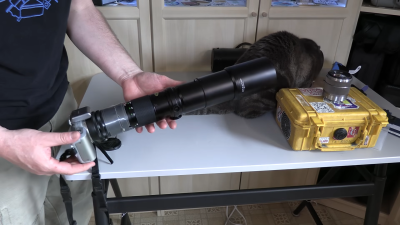
What a setup! The lens is so big it has its own tripod mount.

The cool thing about the digital photography revolution is that there is a lot of old film gear that can be had for cheap. In this case, [saveitforparts] found a 400 mm Sigma XQ lens with a 2x teleconverter for just $14.99. Paired with an adapter, it sat nicely on a Sony NEX-3 digital camera, ready to try and capture the ISS as it passed overhead.

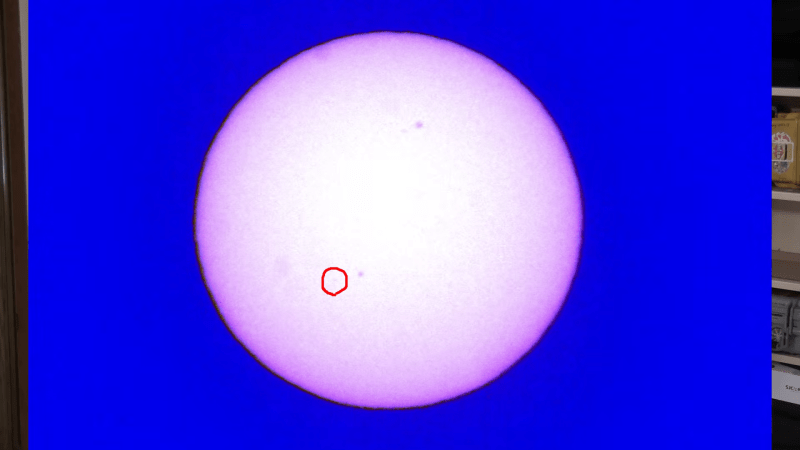
But as you might imagine, aiming at the space station is not a point-and-shoot job. N2YO.com was used to figure out the best time to try and capture it. [saveitforparts] was able to capture the ISS as a white dot as it passed over, but couldn’t quite get enough zoom to really see the Station in detail. He was able to repeat the feat with a Canon camcorder, but the image was still pretty blobby and didn’t show much. Later attempts involved capturing transits as the ISS passed by the Sun, though the orbiting complex mostly appeared as a small speck.

[saveitforparts] did technically capture the ISS, just not closely enough to see much beyond a dot. It’s not the first time we’ve seen this attempted, though! If you try and capture the ISS with something truly ridiculous, like a Game Boy Camera or Kodak Charmera, you are honor-bound to tell us on the tipsline. Continue reading “Photographing The ISS With A Thrift Store Lens Is Challenging”

Real-Time ISS Tracker Shows Off The Goods

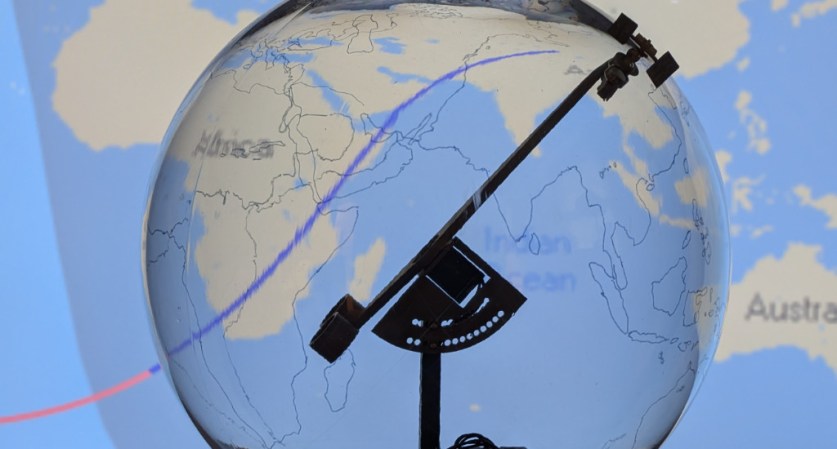
What hardware hacker doesn’t have a soft spot for transparent cases? While they may have fallen out of mainstream favor, they have an undeniable appeal to anyone with an interest in electronic or mechanical devices. Which is why the Orbigator built by [wyojustin] stands out among similar desktop orbital trackers we’ve seen.

Conceptually, it’s very similar to the International Space Station tracking lamp that [Will Dana] built in 2025. In fact, [wyojustin] cites it specifically as one of the inspirations for this project. But unlike that build, which saw a small model of the ISS moving across the surface of the globe, a transparent globe is rotated around the internal mechanism. This not only looks gorgeous, but solves a key problem in [Will]’s design — that is, there’s no trailing servo wiring that needs to be kept track of.

For anyone who wants an Orbigator of their own, [wyojustin] has done a fantastic job of documenting the hardware and software aspects of the build, and all the relevant files are available in the project’s GitHub repository.

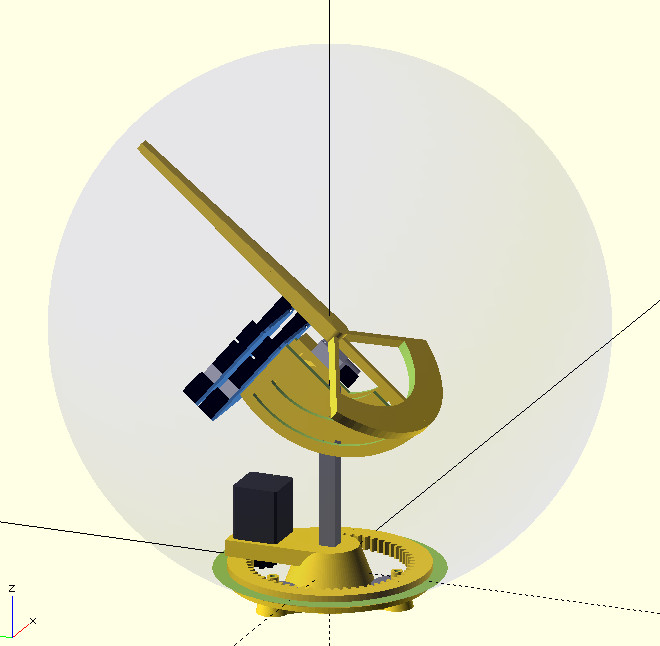
The 3D printable components have been created with OpenSCAD, the firmware responsible for calculating the current position of the ISS on the Raspberry Pi Pico 2 is written in MicroPython, and the PCB was designed in KiCad. Incidentally, we noticed that Hackaday alum [Anool Mahidharia] appears to have been lending a hand with the board design.

As much as we love these polished orbital trackers, we’ve seen far more approachable builds if you don’t need something so elaborate. If you’re more interested in keeping an eye out for planes and can get your hands on a pan-and-tilt security camera, it’s even easier.

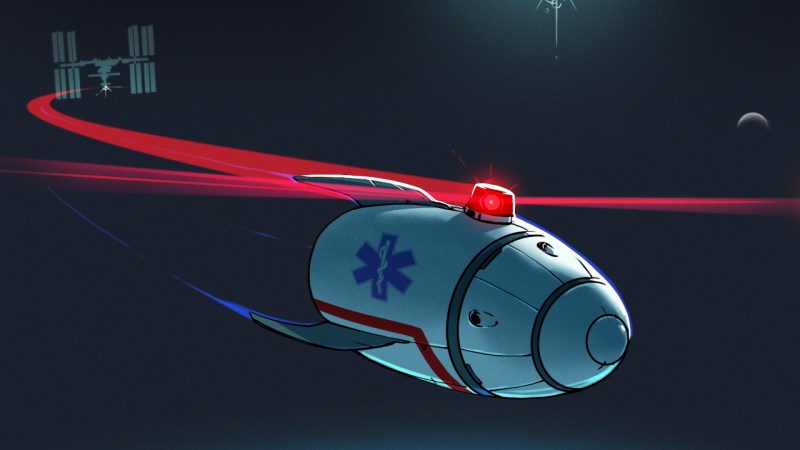
ISS Medical Emergency: An Orbital Ambulance Ride

Over the course of its nearly 30 years in orbit, the International Space Station has played host to more “firsts” than can possibly be counted. When you’re zipping around Earth at five miles per second, even the most mundane of events takes on a novel element. Arguably, that’s the point of a crewed orbital research complex in the first place — to study how humans can live and work in an environment that’s so unimaginably hostile that something as simple as eating lunch requires special equipment and training.

Today marks another unique milestone for the ISS program, albeit a bittersweet one. Just a few hours ago, NASA successfully completed the first medical evacuation from the Station, cutting the Crew-11 mission short by at least a month. By the time this article is released, the patient will be back on terra firma and having their condition assessed in California. This leaves just three crew members on the ISS until NASA’s Crew-12 mission can launch in early February, though it’s possible that mission’s timeline will be moved up.

Continue reading “ISS Medical Emergency: An Orbital Ambulance Ride”

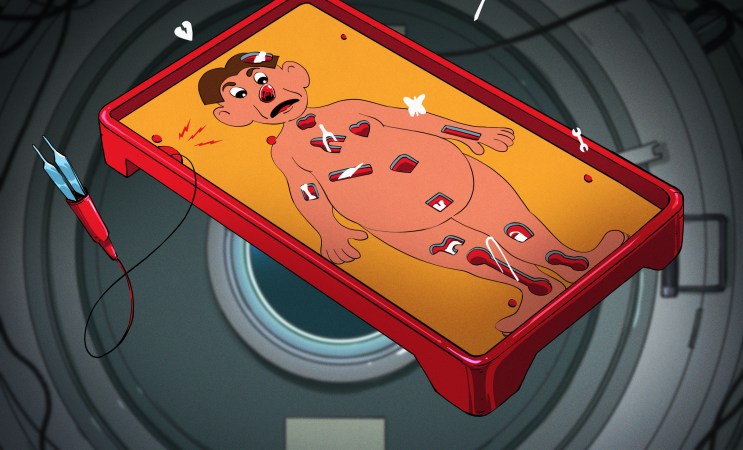
A Cut Above: Surgery In Space, Now And In The Future

In case you hadn’t noticed, we live in a dangerous world. While our soft, fleshy selves are remarkably good at absorbing kinetic energy and healing the damage that results, there are very definite limits to what we humans can deal with, beyond which we’ll need some help. Car crashes, falls from height, or even penetrating trauma such as gunshot wounds — events such as these will often land you in a trauma center where, if things are desperate enough, you’ll be on the operating table within the so-called “Golden Hour” of maximum survivability, to patch the holes and plug the leaks.

While the Golden Hour may be less of a hard limit than the name implies, it remains true that the sooner someone with a major traumatic injury gets into surgery, the better their chances of survival. Here on planet Earth, most urban locations can support one or more Level 1 trauma centers, putting huge swathes of the population within that 60-minute goal. Even in rural areas, EMS systems with Advanced Life Support crews can stabilize the severely wounded until they can be evacuated to a trauma center by helicopter, putting even more of the population within this protective bubble.

But ironically, residents in the highest-priced neighborhood in human history enjoy no such luxury. Despite only being the equivalent of a quick helicopter ride away, the astronauts and cosmonauts aboard the International Space Station are pretty much on their own when it comes to any traumatic injuries or medical emergencies that might crop up in orbit. While the ISS crews are well-prepared for that eventuality, as we’ll see, there’s only so much we can do right now, and we have a long way to go before we’re ready to perform surgery in space

Continue reading “A Cut Above: Surgery In Space, Now And In The Future”

Dragon Is The Latest, And Final, Craft To Reboost ISS

The International Space Station has been in orbit around the Earth, at least in some form, since November of 1998 — but not without help. In the vacuum of space, an object in orbit can generally be counted on to remain zipping around more or less forever, but the Station is low enough to experience a bit of atmospheric drag. It isn’t much, but it saps enough velocity from the Station that without regular “reboosts” to speed it back up , the orbiting complex would eventually come crashing down.

Naturally, the United States and Russia were aware of this when they set out to assemble the Station. That’s why early core modules such as Zarya and Zvezda came equipped with thrusters that could be used to not only rotate the complex about all axes, but accelerate it to counteract the impact of drag. Eventually the thrusters on Zarya were disabled, and its propellant tanks were plumbed into Zvezda’s fuel system to provide additional capacity.

An early image of ISS, Zarya module in center and Zvezda at far right.

Visiting spacecraft attached to the Russian side of the ISS can transfer propellant into these combined tanks, and they’ve been topped off regularly over the years. In fact, the NASA paper A Review of In-Space Propellant Transfer Capabilities and Challenges for Missions Involving Propellant Resupply, notes this as one of the most significant examples of practical propellant transfer between orbital vehicles, with more than 40,000 kgs of propellants pumped into the ISS as of 2019.

But while the thrusters on Zvezda are still available for use, it turns out there’s an easier way to accelerate the Station; visiting spacecraft can literally push the orbital complex with their own maneuvering thrusters. Of course this is somewhat easier said than done, and not all vehicles have been able to accomplish the feat, but over the decades several craft have taken on the burden of lifting the ISS into a higher orbit.

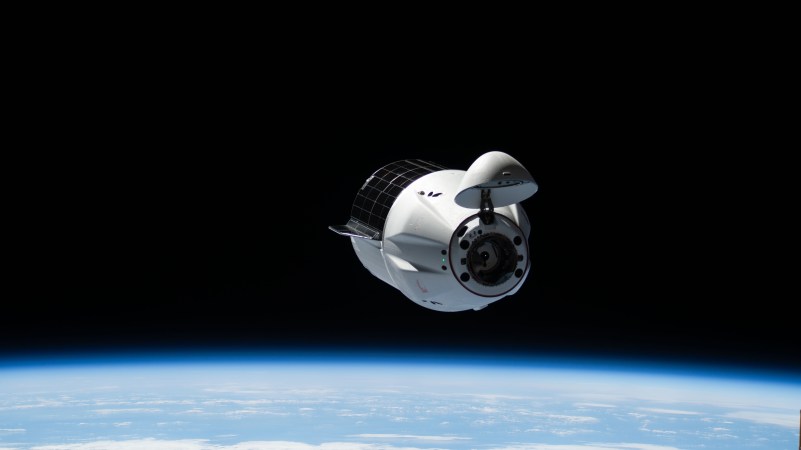
Earlier this month, a specially modified SpaceX Cargo Dragon became the newest addition to the list of spacecraft that can perform a reboost. The craft will boost the Station several times over the rest of the year, which will provide valuable data for when it comes time to reverse the process and de-orbit the ISS in the future.

Continue reading “Dragon Is The Latest, And Final, Craft To Reboost ISS”