Dean Kamen’s Prosthetic Arm

luke

60 minutes has covered [Dean Kamen]’s modular robotic arm.  This thing is light weight, adjustable for different body frame sizes, modular, and eventually thought controlled. The system is currently functioning quite well, as you can see in the video. Current testers are controlling it with buttons under their toes, but the thought control is in the later stages of development. Sounds like science fiction right? You can see a monkey using a thought controlled arm to feed itself grapes, though we don’t think it is [Dean]’s arm.

Another cool feature of this arm is the fact that it changes its grip on your body depending on how much weight you are lifting. Lift something heavy and it grips harder.  Though it has a lot of the same information, there is a little bit of different footage in [Dean]’s TED talk about the arm.

It seems to us, with microcontrollers becoming so cheap and accessible that we should be seeing more home made contraptions in this area. Are any of you working with prosthetics?

Collect And Analyze ECG Data

ecg

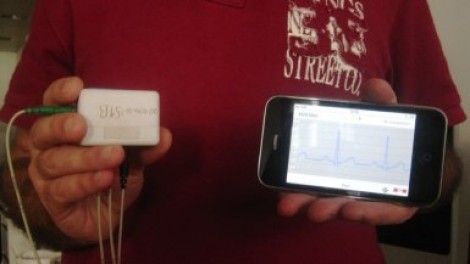
Although we’ve covered DIY ECGs before, [Scott Harden] sent in his version that gives an in-depth explanation of what to do with the collected data. He built a basic battery-powered op-amp-based ECG for under $1. The circuit just amplifies the signal from the chest leads and feeds it into a computer via the microphone port. He then used GoldWave to record, filter, and save the signal. From there, he used python to analyze the heartbeat and calculate his heart rate and further manipulate the data. His previous blog posts go into more detail on how the python code works and why he chose software over hardware filters.

Tiny Medical Bot

blood-robot-8gwd4

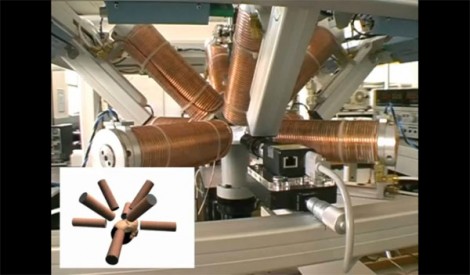
This tiny bot wants to go inside your body. That’s right, it was designed to travel through veins. The little bot has no on board propulsion system. It is controlled by a magnet outside the body. See those little spines? Those straighten out to keep the bot in place when it isn’t supposed to move.  Creepy right? In all the articles we’ve seen on this bot, there aren’t any details about what actually is on board. They mention adding a camera in the near future, but why are they calling it a robot? Surely there’s something cool in that little body. This is a quite practical application of a project we covered recently. Commenters weren’t impressed with the external control system, likening it to the old vibrating football player game. Well, here’s where it could be usefull.

Electronic Stethoscope

dsc04769

[Vik] sent in this simple little project. He purchased a $3 spy ear, a simple 3 transistor amplifier, and attached a stethoscope end. Little modification was necessary, mainly just scraping a bit more space in the microphone tube. The end result is a super cheap electronic stethascope that can be hooked to a computer or other speakers for multiple people to listen to.

Steampunk Vibrator

steampunk_vibrator

[Ani Niow] built this steam powered vibrator. It has a milled stainless steel shell with a brass motor structure. The motor is a Tesla turbine made from a stack of Dremel diamond cutoff wheels. This drives an off-center weight to create the vibration. She tested it using a pressure cooker as the steam source. It worked, but became so hot it had to be held using welding gloves. It works just as well with compressed air though. You can see the device at the Femina Potens Art Gallery in San Francisco or later this month at Maker Faire.

[via Laughing Squid]

UPDATE: [Ani] responds in the comments.

The Narcisystem

biometric

The Narcisystem is part of an art display where [Eric] strapped himself to as many biometric sensors as he could. The core of the system was a Funnel IO which includes an Arduino, Xbee plug, and LiPo charging circuit. It was collecting data from a heart rate monitor, an EEG, a breathalyzer, compass, and an accelerometer. This data was sent to a laptop and then sent to different displays. You can see the setup functioning in a video after the break. The red flashes are his heart beat, the blue light is the direction he’s facing. What you can’t see is the high power bass thud every time he takes a step. The EEG data was supposed to effect the tempo of the music, but it failed and was dropped, as was the fog machine based on his blood alcohol level. He notes that he wanted to do more, but was lacking the hardware.

Continue reading “The Narcisystem”

Baby Twitters Via Kicks

twitter-1

[Corey Menscher] built the Kickbee while attending ITP this Fall. It monitors his pregnant wife’s belly and updates Twitter, a microblogging service, every time the baby kicks. The device makes everyone aware of the baby’s movement, not just the expectant mother. It can also log the baby’s activity to monitor development. The sensors are piezos held in place with an elastic band. They’re connected to an Arduino Mini which connects to a host computer using a BlueSMIRF bluetooth module. The host Mac does the logging and twittering.

This is one of the many projects on display at the ITP Winter Show.

[Thanks, @readiness via Boing Boing]