UPDATE 1/21/14 3:20pm: We’re sold out! See you at the party! Here are directions! Doors open at 6!
UPDATE 1/21/14 3:20pm: We’re sold out! See you at the party! Here are directions! Doors open at 6!

The Gathering is next Tuesday and we are starting to get excited about it! There is a waiting list of people who would like a ticket. If you registered for a ticket that you will not be able to to use, please log in and cancel it.
Cancelling your unused ticket will automatically free up a ticket for someone on the waiting list. Cancellation instructions are below. We want to pack the house and making sure no ticket goes unused is important.
Still want to attend? It’s not too late. Add yourself to the waiting list.
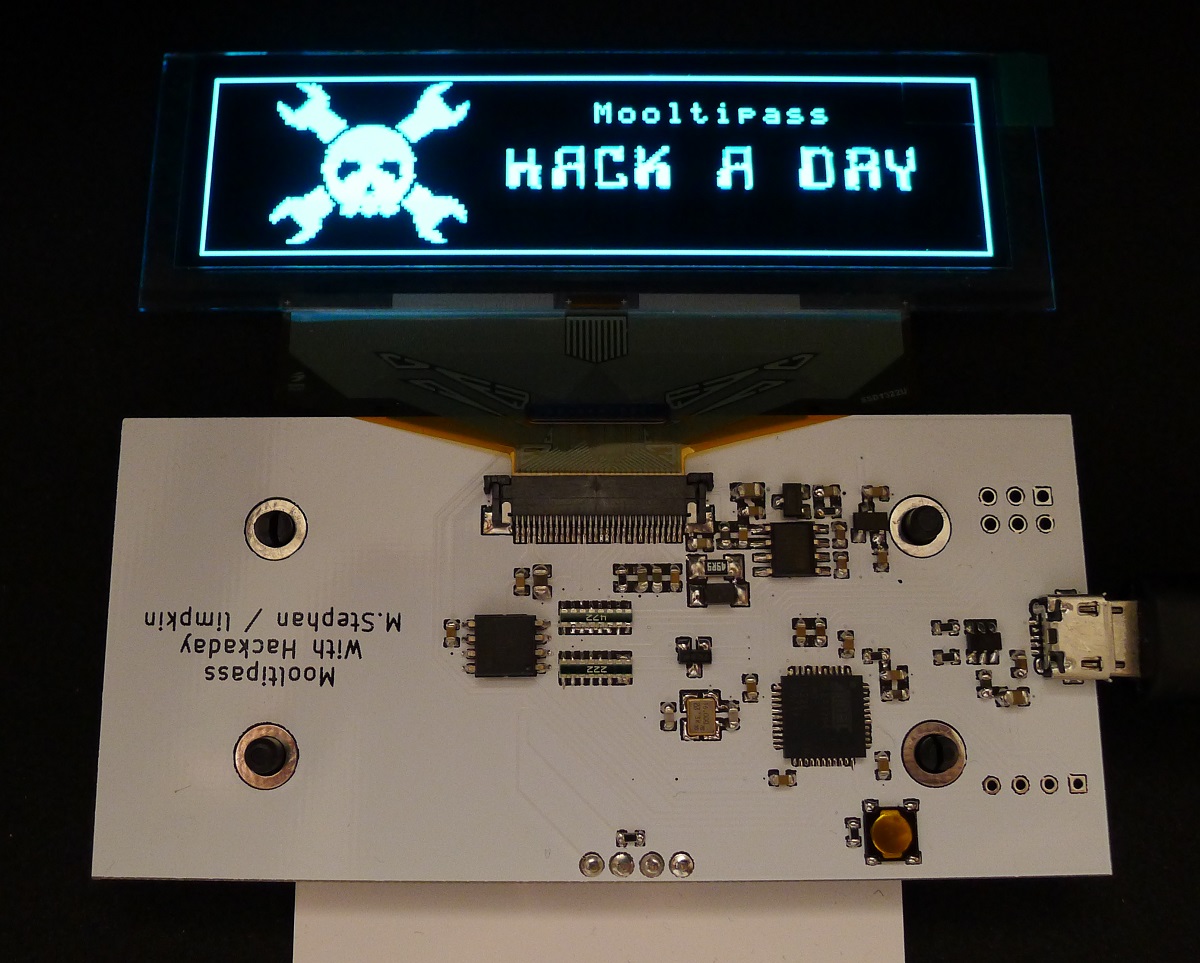
It has been a while since we kept you informed about the current state of the Mooltipass project. Well, several days ago we finally received the PCBs we got produced at Seeedstudio. Keep in mind that this first version (shown in the picture above) is only meant to check that the chosen components can suit our needs while our mechanical contributors work on their designs. Moreover, we may add empty footprints for our readers that may want to hack the device.
After a few hours of soldering and a few days of coding, we finally got a basic firmware running. The OLED screen is easily readable and has an amazing contrast (the picture doesn’t do it justice). So far we checked all basic functionalities of the on-board components and it’ll still take a few days/weeks to be certain that we can settle with them. We are therefore starting to ship a few platforms to the firmware developers that want to work on the core functions of the Mooltipass. So if you’re an experienced C developer and have some spare time, you may get onboard by contacting me at mathieu[at]hackaday[dot]com or by joining the Mooltipass Google Group.
In a few days we will publish the designs that our mechanical guys came up with and we’ll ask you to let us know which ones are your favorites. Depending on how things will go, we may produce PCBs for several of them to select our final design based on user experience and ease of use. We look forward to hearing your feedback in the comments section below!
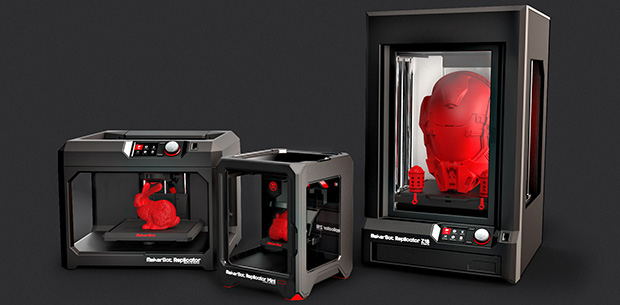
With the Consumer Electronics Show over, it’s finally time to take a look at the new line of MakerBot printers (here’s the press release). Unlike MakerBot’s previous offerings with a one size fits all business model, they’re branching out with a product line that can only be described as, ‘regular, small, and large’.
The new MakerBots include an updated Replicator that’s just slightly larger than the previous version. It includes Ethernet, an option for WiFi, an on-board camera, and a control panel with a 3.5″ LCD and rotary encoder. This new Replicator will retail for $2900, $700 more than the current Replicator (single extruder).
The other new MakerBots include the stripped down and small Replicator Mini. It’s a no-frills machine with a build volume of 10 x 10 x 12.5 cm (~4 x 4 x 5 in) with 200 micron resolution. Also in the new lineup is the Replicator Z18, an impressively large printer with a 30.5 x 30.5 x 45.7 cm (12 x 12 x 18 in) build volume, 100 micron resolution, plastic sides for a heated build volume, and all the bells and whistles on the new Replicator. The Mini will sell for $1375 and the Z18 is expected to sell for $6500.
The updated Replicator is available now, and the Mini and Z18 will be available sometime in the next few months.

According to the barrage of press releases hitting the Hackaday tip line, the Consumer Electronics Show is upon us with announcements of amazing new technologies such as jackets with a cell phone pocket, alarm clocks with Bluetooth, and iPhone cases with a kickstand. What an age to live in.
Among the more interesting announcements at CES is the Intel Edison, a tiny device that combines a dual core Intel SoC with ‘a Pentium instruction set’, WiFi and Bluetooth adapter, and some amount of storage into an SD card form factor. Apart from that, little else is known about the Intel Edison and the only other primary source for this announcement appears to be Intel CEO [Brian Krzanich]’s CES keynote address.
The Edison will be able to run Linux, ‘other operating systems’, and will support Wolfram, the Mathematica-esque programming language where everything is a data type. Edison will also have an app store. Because that’s a thing now, apparently.
If you can’t wait for Edison to be released sometime in the middle of 2014, we’d suggest you check out the Intel Galileo. It’s an Arduino compatible board based on the same Quark SoC found in the Edison but in a significantly more convenient form factor. The Galileo doesn’t have on board WiFi or Bluetooth, but at least you don’t have to wait for the release of the Edison and the complications of a purpose-built breakout board for whatever application you’re thinking of.
1/21/14 – Downtown LA
Come one, come all to a party with [Brian], me, and the Hackaday readers who live in the Los Angeles area. Tickets are free, as is the beer, food, t-shirts, stickers, and other swag which you won’t find out about unless you show up in person.
This is the first official live Hackaday meetup and is open to all ages. During the summer we talked about making Hackaday a virtual hackerspace, and this event is one part of that initiative. We’ll let you in on some stuff we’ve been planning, but in return I expect you to tell us your thoughts on how the Hackaday community can get bigger and better. We’re also using the attendance at this event to judge if we should host more live events (possibly in other cities too). So if you’re in LA get your ticket now and make sure your friends do the same!
UPDATE 3: Get your name on the waiting list… Continue reading “Hackaday: The Gathering”
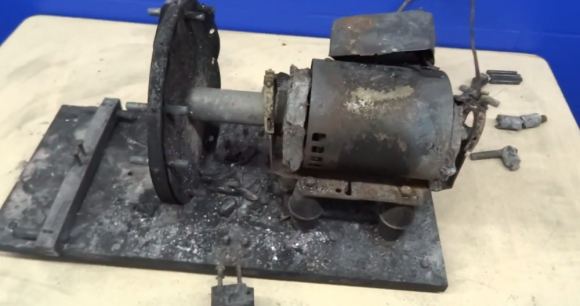
The Geek Group is in the process of cleaning up after their fire. Their small capacitor/spark gap room sustained the most damage, with the interior nearly completely incinerated, along with some structural damage to the walls and roof. The gap room was isolated from the much larger high voltage lab by red plastic welding curtain. The curtain was fire-retardant, but when it did finally burn, it was extremely sooty. With the curtain burning, soot covered the high voltage lab. The rest of the building escaped fire damage, but nearly all of it is covered in a fine layer of soot. The group has been and are attacking the soot problem head on, with shop-vacs, rags, and elbow grease. Several of their sponsors have also promised supplies to cover the remediation.
[Chris] and [Paul] have also been doing some sleuthing as to the root cause of the fire. While the cause will never be known beyond a shadow of a doubt, they have a pretty good idea of the chain of events. Gemini, the group’s 200 kVA Tesla coil had been run about 1/2 hour before smoke was detected. The fire was concentrated in Gemini’s spark gap room. Close inspection of the rotary spark gap showed that the stationary electrodes all seemed to have sustained a mechanical impact. It appears that either while the gap was running, or as it was spinning down, one of the flying electrodes moved enough to impact the stationary electrodes. These electrodes are 3/8″ and 1/2″ tungsten, and often glowed white-hot while the gap was in operation. One set screw held each electrode in to the 12″ rotor. The set screw of one flying electrode was found to be loose, and the electrode it retained probably impacted the stationary electrodes. It’s not a far leap to guess that hot metal from these impacts could have landed in the capacitor array, smoldered, and eventually caught aflame.
A single loose screw most likely caused the entire chain of events leading up to the fire. [Chris] and [Paul] had observed the spark gap throwing out hot bits of metal even during normal operation, and had planned an encapsulation box. However, disaster struck before it was built. This is not to say that The Geek Group operates an unsafe shop. The important thing here is that no one was hurt. Everyone in the building was evacuated quickly and safely.
A quick note about the comments – we know The Geek Group and [Chris] tend to be polarizing topics. However, we’d like to at try to keep the comments constructive.