
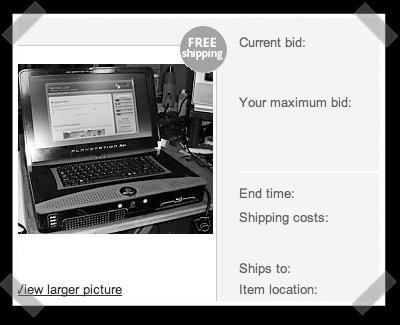
Just a little public service message: If you’ve been drooling over [Ben]’s work and have plenty of loose change, his PS3 laptop is up for auction to benefit the National Cancer Coalition.
Peripherals Hacks1579 Articles
Modchip Your XBox 360 Controller
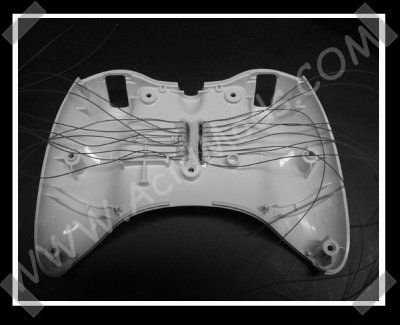
[CyberPyrot] and [l0rdnic0] released their spitfire mod on acidmods for XBox 360 controllers. It involves some fine wiring, but a relatively low parts count. The heart of the mod is a PIC16F84A, a crystal for the clock and a few passive parts. It took me a little while to find it, but the code for the pic hiding under the parts list. For a lengthy demo of the mod in action, you can check out this video.
Related: Xbox 360 Hacks, Xbox Hacks
DIY PC Gaming Gun
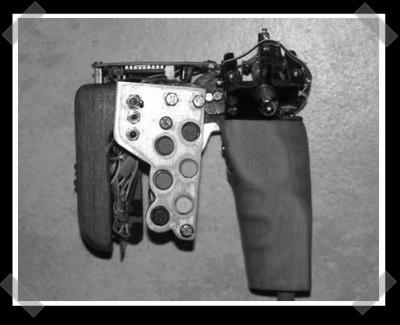
[rustlabs] put together an interesting looking gaming gun for FPS games. He wrote up his build and how to use a webcam to provide gun tracking for games like Half Life 2. He gutted a keyboard to provide the button interface, and infrared LEDs on the gun body are tracked by the cam. Surprisingly, no USB game pads were sacrificed in the build, just a USB keyboard and mouse.
Grid Enabled USB Microscope
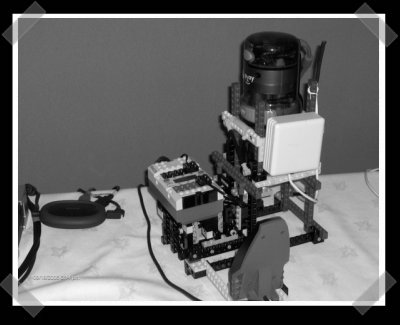
[Jock] sent in this photo gallery showing a Lego Mindstorm automated microscope. I dug up the paper that was published about this hack to find out just what the idea was. It’s a proof of concept showing off automated data collection – the Mindstorms are used to allow the intel QX3 microscope to take data over a grid area. It’s an interesting idea for collecting time series data. The computer interface is a bit overly complex, but the Lego’s make this sort of project accessible to the amateur roboticist.
Replace Your LCD Power Supply
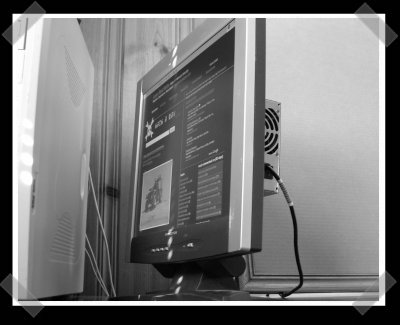
[Computer Guru]’s LCD power supply went out, making it a useless pile of plastic. He used an old computer PSU to replace the defective one. After he identified the outputs on the built-in supply (The one’s I’ve pulled apart were labelled) he stripped down the replacement PSU to provide the necessary voltages.
Make Your Own Roll Up Keyboard
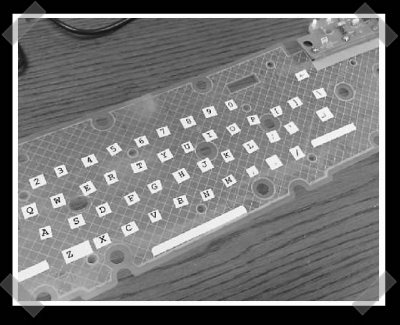
[Auger] sent in this nice little hack. The instructable says to get a USB keyboard (it looks like a Dell USB keyboard to me), gut it and label the flexible membranes inside after you join them together. If you’ve got a supply of this style of keyboard, it could be a cheap source… or better yet, maybe you can use the guts to produce high quality custom keybads.
The JediPad AKA Uber-gyro-mouse
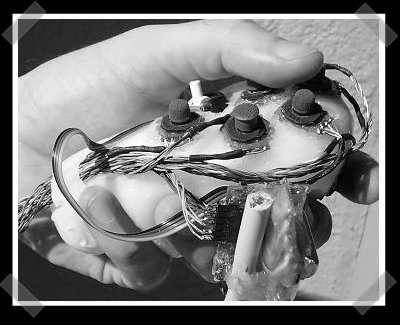
[Samu] sent in his freaking awesome JediPad mouse creation. It’s got seven touch-point style mouse buttions, as well as a pair of gryroscope sensors. Each touch-point has it’s own micro-controller and the signals are input to the computer via USB. He’s looking for help, so shoot him an email if you’re interested.
Check out his demo video after the break.









