There’s an Apollo module on display in Michigan and its cold-war backstory is even more interesting than its space program origins.
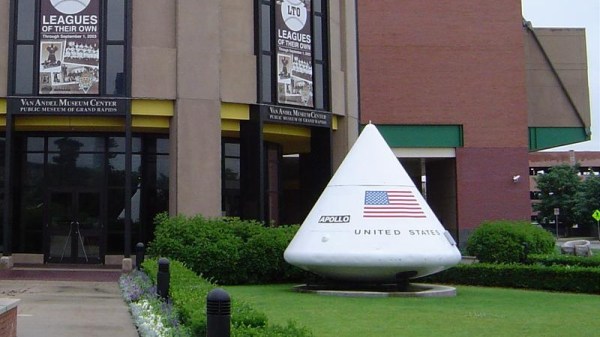
Everyone who visits the Van Andel Museum Center in Grand Rapids, Michigan is sure to see the Apollo Command Module flanking the front entrance. Right now it’s being used as a different kind of capsule: a time capsule they’ll open in 2076 (the American tricentennial). If you look close though, this isn’t an actual Command Module but what they call a “boilerplate.”
Technically, these were mass simulators made cheaply for certain tests and training purposes. A full spacecraft costs a lot of money but these — historically made out of boilerplate steel — could be made with just the pieces necessary and using less expensive materials. What you might not know is that the boilerplate at the Van Ardel — BP 1227 — has a cold war spy history unlike any other boilerplate in the fleet.
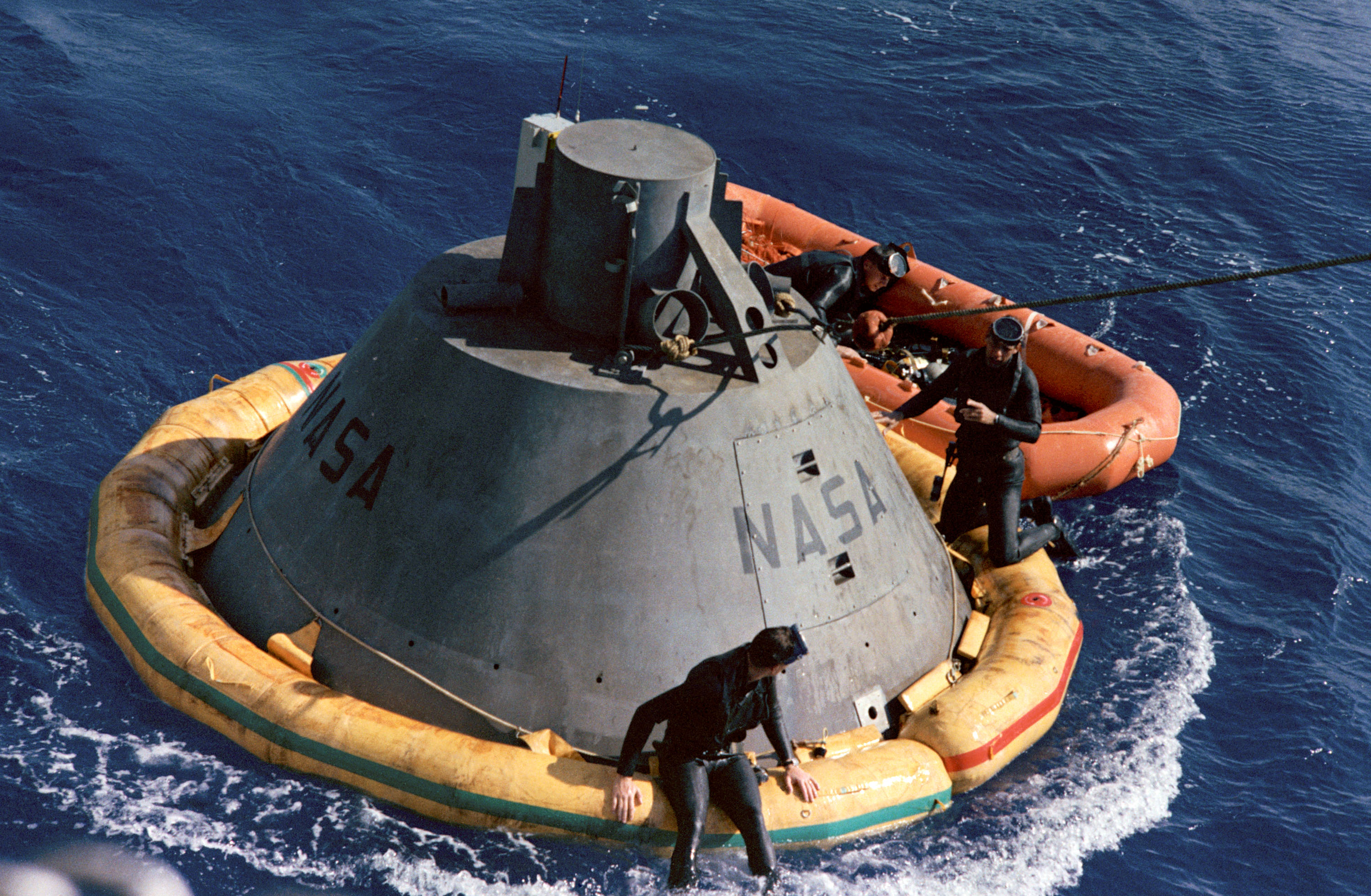 The early life of BP 1227 is a little sketchy. It appears the Navy was using it for recovery training somewhere between the Azores and the Bay of Biscay in early 1969. We don’t know for sure if the picture to the left is BP 1227 or not. Comparing it to the one at the museum, it probably isn’t, but then again the museum’s does have a fresh paint job and possibly a top cap. Regardless, the picture to the left was from 1966 in the Atlantic, giving us an idea of how boilerplate capsules were put into service.
In those days — the height of the cold war — Naval ships were often followed by Soviet “fishing trawlers.” These were universally understood to be spy ships — Auxiliary, General Intelligence or AGI vessels.
Continue reading “Spy Tech: How An Apollo Capsule Landed In Michigan After A Layover In The USSR”