Edison Motors Offering All-Mechanical Trucks, At Least To Start

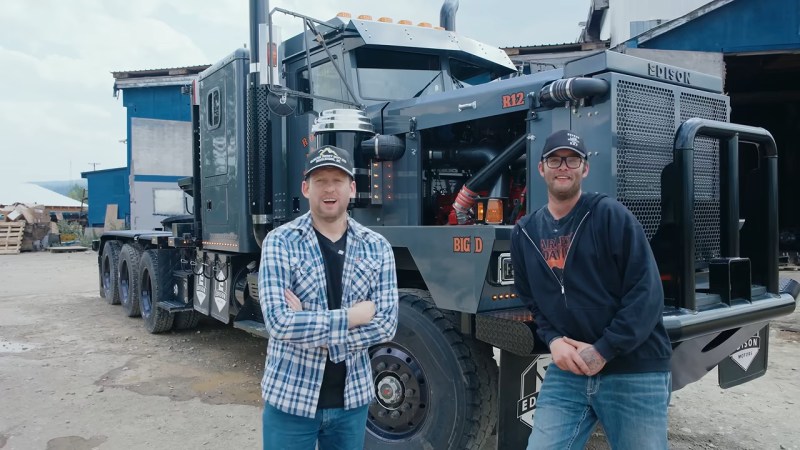
We’ve been following Canadian startup Edison Motors for some time now, but their latest offering caught us a bit off guard — their BDE series truck will be offered first without the electric hybrid drive that first piqued our interest. They make a good case for why in the video below, in which the production prototype tows around a junked Nikola semi as a sort of memento mori of what Edison does not want to end up as.

Now, make no mistake: Edison Motors is going to be selling the series-hybrid version of these big rigs eventually. That truck will have a Scania diesel rated at 500 kW driving electric motors rated at a combined 1800 kW peak power — that’s 2400 ponies. Along with the diesel generator those ponies will be driven by a big o’l battery, but none of that is in the truck in the video. It’s the same cab, and the same frame, but in order to get some revenue in while jumping regulatory hurdles and working the kinks out of the hybrid drive, they put a conventional Cummins diesel and 16-speed transmission in the “Big D” as the truck is known.

The business case makes sense: they don’t want to have their single new product hit a snag, possibly require a recall, and fall into bankruptcy the way the electric truck company Nikola did. The conventional drivetrain also lets them prove their engineering prowess to companies that might like the idea of a Made-in-Canada truck, but be nervous about new technology from a new company.

If you want to know more about the whole diesel-electric scheme, we covered that last year. Edison also has plans to offer its hybrid drive technology for smaller trucks in kit form, which is perhaps the most exciting part from a hacker perceptive.

Continue reading “Edison Motors Offering All-Mechanical Trucks, At Least To Start”
Move Over, Cybertruck: Series Hybrids From Edison Are On The Way

It’s been awhile since we checked in with Canada’s Edison Motors, so let’s visit [DeBoss Garage] for an update video. To recap, Edison Motors is a Canadian company building diesel-electric hybrid semi-trucks and more.

Arial view of Edison's new property
The last interesting thing to happen in Donald, BC was when it burned down in the 1910s.

Well, they’ve thankfully moved out of the tent in their parents’ back yard where the prototype was built. They’ve bought themselves a company town: Donald, British Columbia, complete with a totally-not-controversial slogan “Make Donald Great Again”.

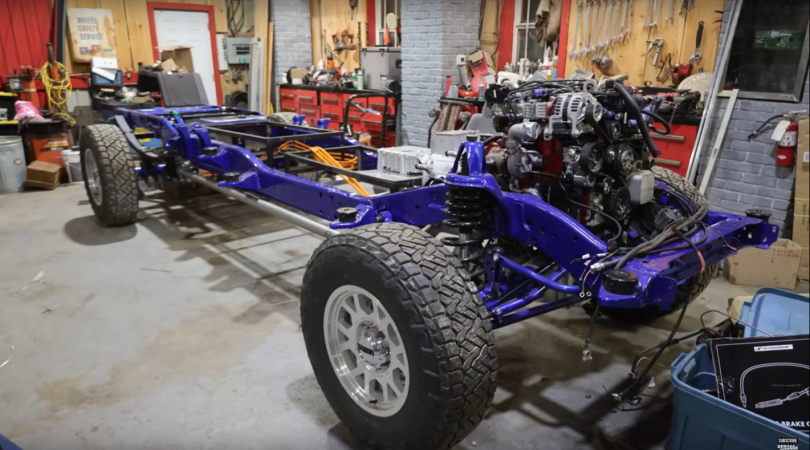
More interesting is that their commercial-off-the-shelf (COTS), right-to-repair centered approach isn’t just for semi-trucks: they’re now a certified OEM manufacturer of a rolling heavy truck chassis you can put your truck cab or RV body on, and they have partnered with three coach-builders for RVs and a goodly number of manufacturing partners for truck conversion kits. The kits were always in the plan, but selling the rolling chassis is new.

One amazingly honest take-away from the video is the lack of numbers for the pickups: top speed, shaft horsepower, torque? They know what all that should be, but unlike the typical vaporware startup, Edison won’t tell you the engineering numbers on the pickup truck kits until it has hit the race track and proved itself in the real world. These guys are gear-heads first and engineers second, so for once in a long time the adage “engineers hate mechanics” might not apply to a new vehicle.

The dirt track is the first thing under construction in Donald, so hopefully the next update we hear from Edison Motors will include those hard numbers, including pesky little things like MSRP and delivery dates. Stay tuned.

In our last post about an electric truck, a lot of you in the comments wanted something bigger, heavier duty, not pure battery, and made outside the USA. Well, here it is.

Continue reading “Move Over, Cybertruck: Series Hybrids From Edison Are On The Way”

Series Hybrid Semi-Trucks: It Works For Locomotives So Why Not?

The current Edison Motors semi-truck prototype. (Credit: Edison Motors)

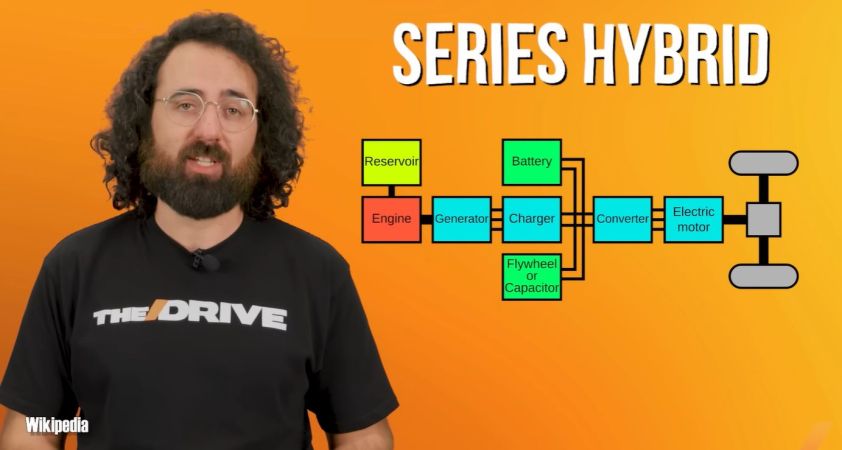
Canadian start-up Edison Motors may not seem like much at first glance — consisting of fewer than two dozen people in a large tent — but their idea of bringing series hybrid technology to semi-trucks may just have wheels. The concept and Edison Motors’ progress is explained in a recent video by The Drive on Youtube, starting off with the point that diesel-electric technology is an obvious fit for large trucks like this. After all, it works for trains.

In a series hybrid, there are two motors: a diesel generator and an electric motor (diesel-electric). This was first used in ships in the 1900s and would see increasing use in railway locomotives starting in the early 20th century. In the case of Edison Motors’ current prototype design there is a 9.0 liter Scania diesel engine which is used solely as a generator at a fixed RPM. This is a smaller engine than the ~15 liter engine in a conventional configuration and also doesn’t need a gearbox.

Compared to a battery-electric semi-truck, like the Tesla Semi, it weighs far less. And unlike a hydrogen-fuel cell semi-truck it actually exists and doesn’t require new technologies to be invented. Instead a relatively small battery is kept charged by the diesel generator and power fed back into the battery from regenerative braking. This increases efficiency in many ways, especially in start-stop traffic, while not suffering a weight penalty from a heavy battery pack and being able to use existing service stations, and jerry cans of diesel.

In addition to full semi-trucks Edison Motors also works on conversion kits for existing semi-trucks, pick-up trucks and more. Considering how much of the North American rolling stock  on its rail systems is diesel-electric, it’s more amazing that it would have taken so long for the same shift to series hybrid on its road. Even locomotives occasionally used direct-drive diesel, but the benefits of diesel-electric hybrids quickly made that approach obsolete.

Continue reading “Series Hybrid Semi-Trucks: It Works For Locomotives So Why Not?”