
Proper Linux, On An ESP32

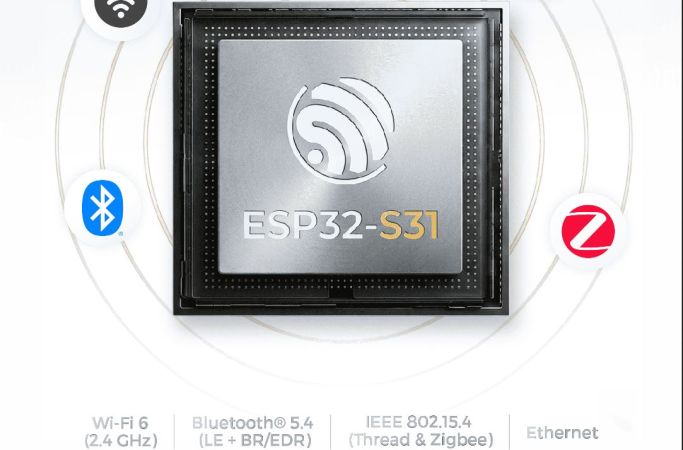
The ESP32 series of microcontrollers feature a lot on these pages, offering as they do a significantly powerful processor and in most cases, wireless connectivity. One recent member of the bewilderingly large family is the ESP32-S31, It’s a dual-core RISC-V unit with WiFi 6, and if that’s not interesting enough there’s the news that it runs Linux. Not -nommu Linux, but the full-fat version, as it has a memory management unit.

Before you imagine a superlative experience, it’s worth the reminder that the available resources will not give it much when it comes to computing power. But there’s an Espressif GitHub repository, and work on a port of a 6.x kernel, so you should be able to do something with it. A quick look on AliExpress finds dev boards at a range of prices, so the cost of experimenting shouldn’t be too high.

This moment at which the paths of microcontroller and full-fat SoC start to cross has been on the horizon for quite a while, and it’s exciting to see it finally arrive. Expect more similar chips in competition with this one, and more power too. Meanwhile see our noting the launch of the S31.


Espressif’s New ESP32-S31: Dual-Core RISC-V With WiFi 6 And GBit Ethernet

In a move that’s no doubt going to upset and confuse many, Espressif has released its newest microcontroller — the ESP32-S31. The confusing part here is that the ESP32-S series was always the one based on Tensilica Xtensa LX7 cores, while the ESP32-C series was the one using RISC-V cores.

That said, if one looks at it as a beefier -S3 MCU it does have some appealing upgrades. The most obvious improvements are with the use of WiFi 6, as well as Bluetooth Classic and LE 5.4, including LE Audio. There is also Thread and Zigbee support for those who are into such things.

The Ethernet MAC got a bump from the 100 Mbit RMII MAC in previous MCUs and is now gigabit-rated, while the number of GPIO is significantly higher at 60 instead of 45 on the -S3. On the RAM side, things are mostly the same, except for DDR PSRAM support, with octal SPI offering up to 250 MHz compared to 80 MHz on the -S3.

On the CPU side the up-to-320 MHz RISC-V cores are likely to be about as powerful as the 240 MHz LX7 cores in the -S3, based on the ESP32-C series performance in terms of IPC. Overall it does seem like a pretty nice MCU, it’s just confusing that it doesn’t use LX7 cores with the series it was put into. When this MCU will be available for sale doesn’t seem to be known yet, with only samples available to select customers.







