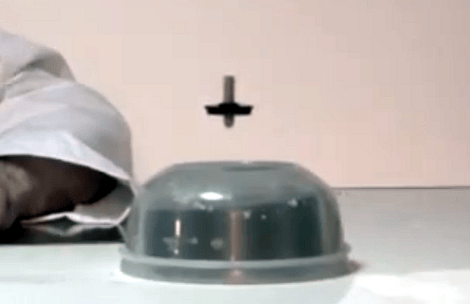
[Andrey Mikhalchuk] built his own magnetic levitation device and you can too… if you have the patience. He’s not using electromagnets, like the Arduino levitator or the floating globe. Instead, a pair of ceramic ring magnets and a few hours are all it takes.
The base of his device is a couple of very large ring magnets that would most often be used in speakers. It’s hard to see them in the image above because there’s an inverted plastic container obscuring them. A second (or third depending on how you’re counting) ring magnet is selected because it is smaller than the circular void in the magnetic base. It’s impossible to simply balance the magnet in the air, but spinning it is a different story. By creating a perfectly balance magnetic top, then spinning it inside the magnetic field of the base, you can leave it floating in mid-air.
Check out the video after the break. It’s a neat effect, but you really do have to have a perfect setup for it to work. [Andrey] mentions that it takes a couple of hours to fine-tune. And if the ambient conditions change slightly, it throws the whole thing off.