As LLMs Devour The Storage Market, Fujifilm Bets On Tape

One of the interesting things about the slow-moving AI apocalypse we seem to be trapped in is watching the knock-on effects reverberate through communities and economies. We’ve seen how — and lamented that — the LLM-driven datacenter build up has increased demand for GPUs, RAM and SSDs directly, and we watched that in turn increase demand for traditional, spinning rust hard drives. Perhaps it was only a matter of time before demand came for the tapes, too. Yes, tapes: good old fashioned “sticky tape and rust”. With AI increasing demand for archival material, Fujifilm has announced they’ll be increasing production by 5x through 2028.

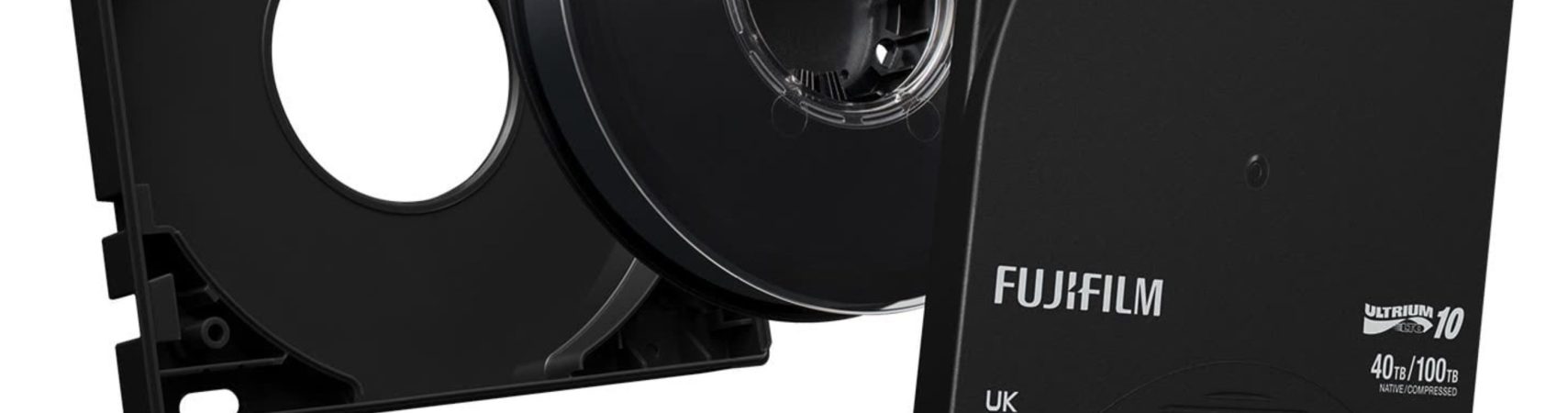
This production increase is specifically targeting about the latest and greatest 10th generation of Linear Tape, Open (LTO) which Fujifilm has produced since its inception. Indeed, Fujifilm has been in the tape storage business for almost as long as we’ve been storing data on magnetic tape, with their first forays into the field dating to the 1950s. The Ultrium10 tapes are available in 30 TB and 40 TB standard sizes, which are advertised as 75 TB and 100 TB based on a perhaps-optimistic 2.5:1 compression ratio. Given it’s already a linear standard and not exactly blazing fast at 400 uncompressed MB/s, there’s no reason not to compress the heck out of data being sent to cold-storage on tape. While not great by modern SSD or HDD standards, those are dizzying numbers if the last tape drive you used was a Datasette.

Still, it shows that the industry is reacting to the same trends that have hackers bringing surplus tape drives into their homelabs. This isn’t a small bet by Fujifilm, with 10 billion yen (about $63 million) at stake.

While some of us have been making more use of optical media these days, it looks like Sony isn’t reversing course on getting out of the Blu-ray business, so don’t expect to see giant disk changers coming to a server room near you. Tape bots are apparently a different story.


Header image: Fujifilm.
Backup Tapes Come Back To The Homelab

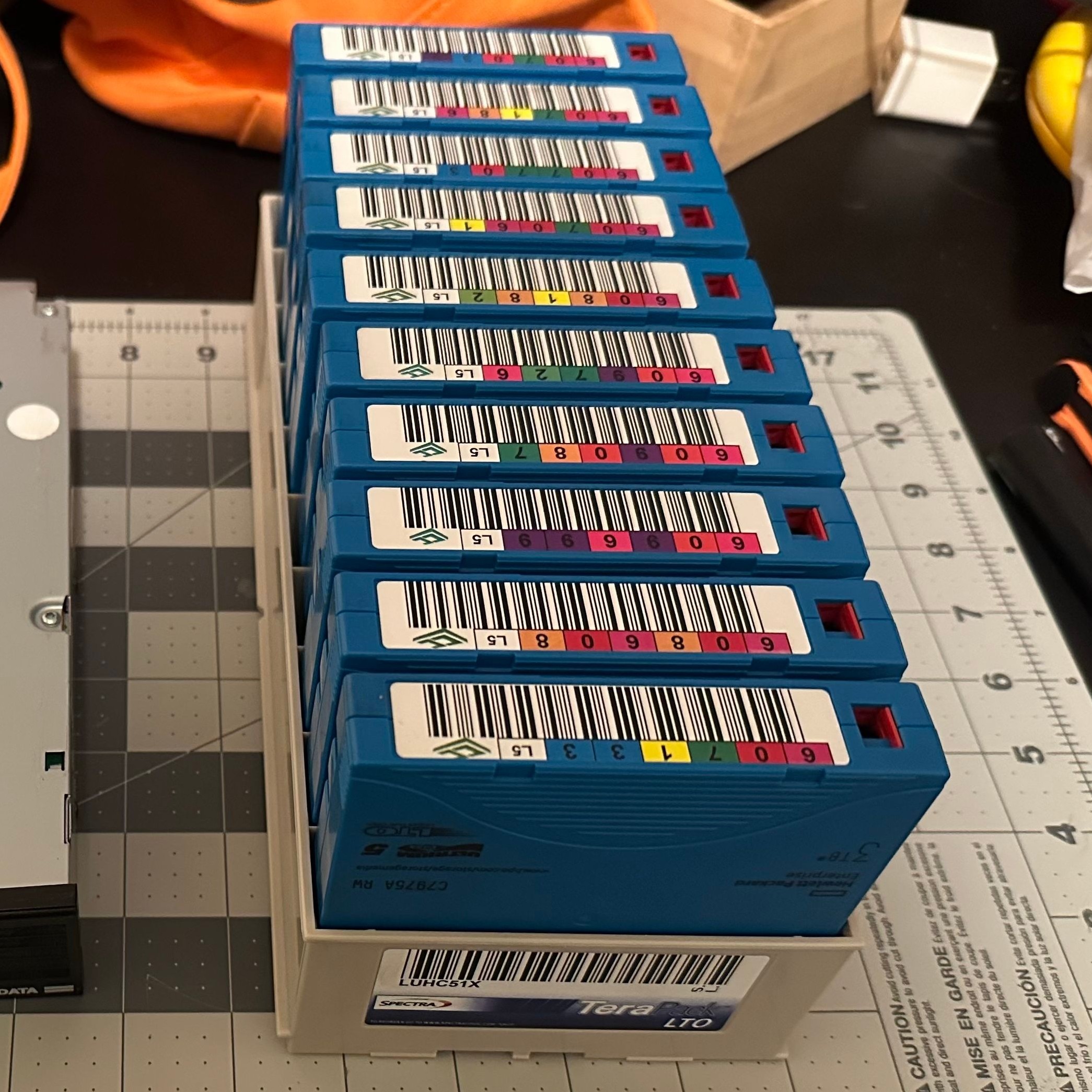
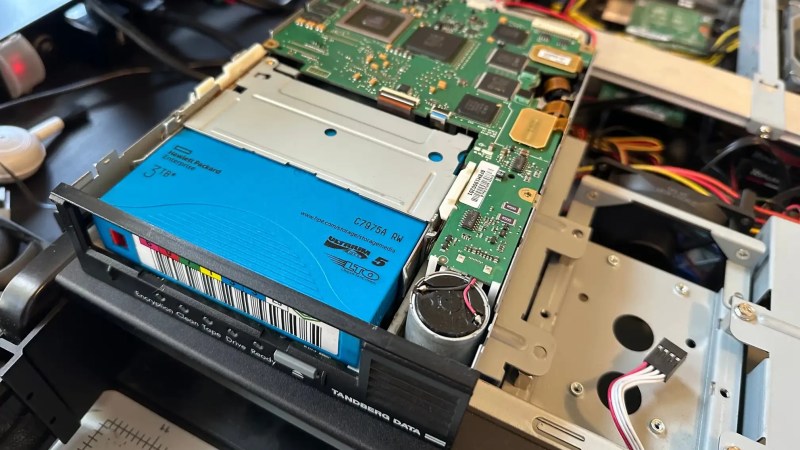
It’s one of the great mysteries of computing, how somehow in the Year Of OLlama 2026, tape remains the god of cheap storage. A while back [Ben Pettis] recounted his experience setting up an LTO-5 tape drive in his homelab, an experience which only becomes more relevant as hard drive prices stay high.

LTO-5 is already well out of date in the professional world, after all– a new server install would be debating the merits of LTO-9 versus LTO-10, but for the homelab it’s a matter of what’s affordable on the used market with decently-sized cartridges. If you can live with 1.5 TB of uncompressed data on a roughly palm-sized Linear Tape, Open cartridge then LTO-5 could be good enough. Yes, the tapes are advertized as 3TB, but that’s assuming a 2:1 compression ratio on the data, which you’re not likely to get on the photos and video that make up much of a data horder’s storage. That’s one thing [Ben] was quick to clear up for us. He also detailed his adventures with the cheaper-to-buy fiber channel model of drive.

The label would have you believe this box stores 30 TB.

Tape drives usually come with an SAS or fiber channel interface– fiber channel being, you guessed it, an optical solution unlike the SCSI-like SAS connection you may be familiar with for block storage devices. With a PCIe adapter it’s not hard to set up, provided you get the cables the right way around! That’s another detail we’re glad [Ben] shared so we can find it again if we have the same problem: with no switch in the circuit, you need a crossover cable to bring TX to RX. Which is obvious in retrospect, but obscure to those of us just learning about the standard.

The advantage, as [Ben] makes clear and everyone has always known is simply price. As of this writing, diskprices.com has 16$/TB as the lowest cost, while [Ben] was able to pick up lightly-used tapes on eBay for only 2$/TB. If you have a lot of data, those savings amortize the drive costs relatively quickly, since a used drive like [Ben]’s can be had for a few hundred bucks.

Is it the ultimate solution for our data storage woes? That depends on your needs, but perhaps not considering we get as many tips on storing data on reel-to-reel as we do on LTO. We even saw a tape-loading robot repurposed to serve bar one time.