
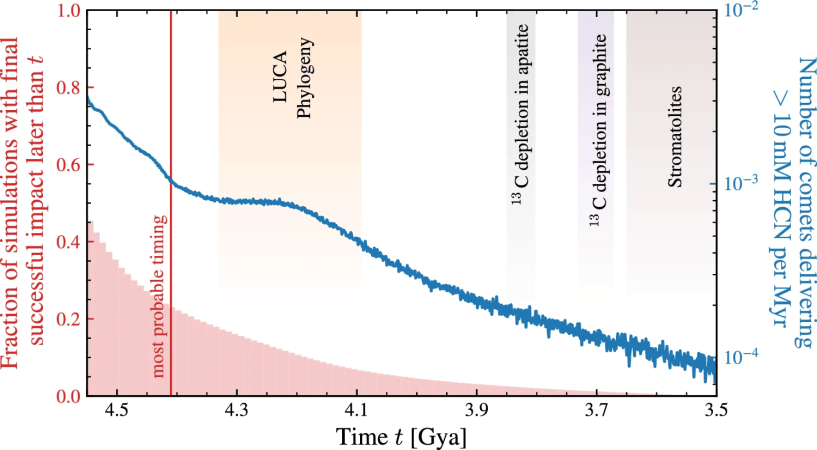
When it comes to abiogenesis, i.e. the formation of the first biological cells on Earth, there are many theories on how this got kickstarted. One of the more popular theories involves the primordial Earth being seeded with the organic building blocks by comets hurtling through the atmosphere. Although organic compounds have been discovered on such comets, the question of whether these compounds could survive hurtling through Earth’s atmosphere and the rapid deceleration upon impact remained unanswered.
Now a study by [Richard J. Anslow] et al. in Scientific Reports posits that the answer here is a very probable ‘no’. Using detailed cometary impact simulations and our current understanding of the formation and presence of these volatile organic molecules on comets it was found that the possibility of such molecules surviving the impact was extremely low.
The focus here was on hydrogen cyanide (HCN), with simulations showing a negligible amount of it surviving to make it onto Earth’s surface. Naturally from there other influences like hydrolysis will further dilute and degrade such molecules, making their effect on any biological activity highly unlikely. Meanwhile this comet-based delivery method was much more effective on a historical Mars – one capable of retaining liquid water – with more than five times successful deliveries of HCN.
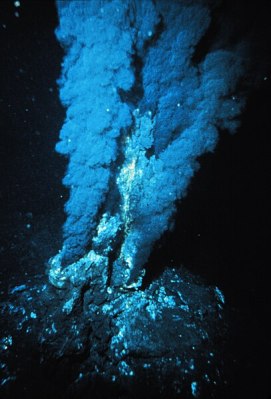
Realistically, the much more likely source of such ingredients and the energy for the formation of the first biological cells on Earth would have been found near hydrothermal vents, which even today provide a rich mixture of chemicals that sustains entire ecosystems that are quite unlike those found here on the surface. For smaller planets like Mars the cometary route could however been a viable method for biological activity, which provides exciting prospects for similar bodies like Europa once we start exploring its oceans.









