
Launching Rockets Is Hard, Bringing Them Back Is Harder

Since the first V2 rocket sailed above the Kármán line back in 1944 and right up until the modern era, the trajectory of most space-bound rockets was more or less the same: after expending their propellants they would either crash into some desolate steppe or plunge into the ocean. In either event, the rocket was disposable. The important bit up top might go on to explore the stars or send a human crew off on their mission, but the booster rocket that lifted the spacecraft out of the atmosphere was always going to be sacrificed for the cause.
But in the 1970s NASA had a wild idea: what if we didn’t smash a brand-new rocket valued at millions of dollars into the ocean every time we wanted to put something in orbit? Instead, they would build a hybrid space vehicle that blended the vertical takeoff and raw power of a rocket with the capabilities of an airplane, allowing it and whatever it was carrying to make a gentle runway landing at the end of its mission. As such, the Space Shuttle was born.

With the benefit of hindsight, we now know the Shuttle wasn’t quite the spaceflight revolution that NASA had hoped for. The age of reusable rockets didn’t truly begin until 2015, when SpaceX landed the first stage of their Falcon 9. To date they’ve repeated the feat nearly 600 times, all the while increasing the reliability and speed of their operations. Today the Falcon 9 is the most prolific launch vehicle in history, and nearly every other rocket in active development is being designed to include some element of reusability.

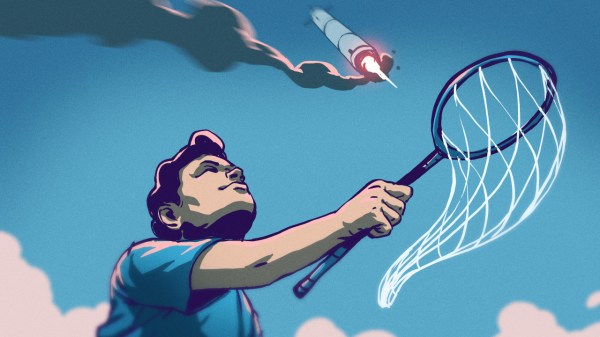
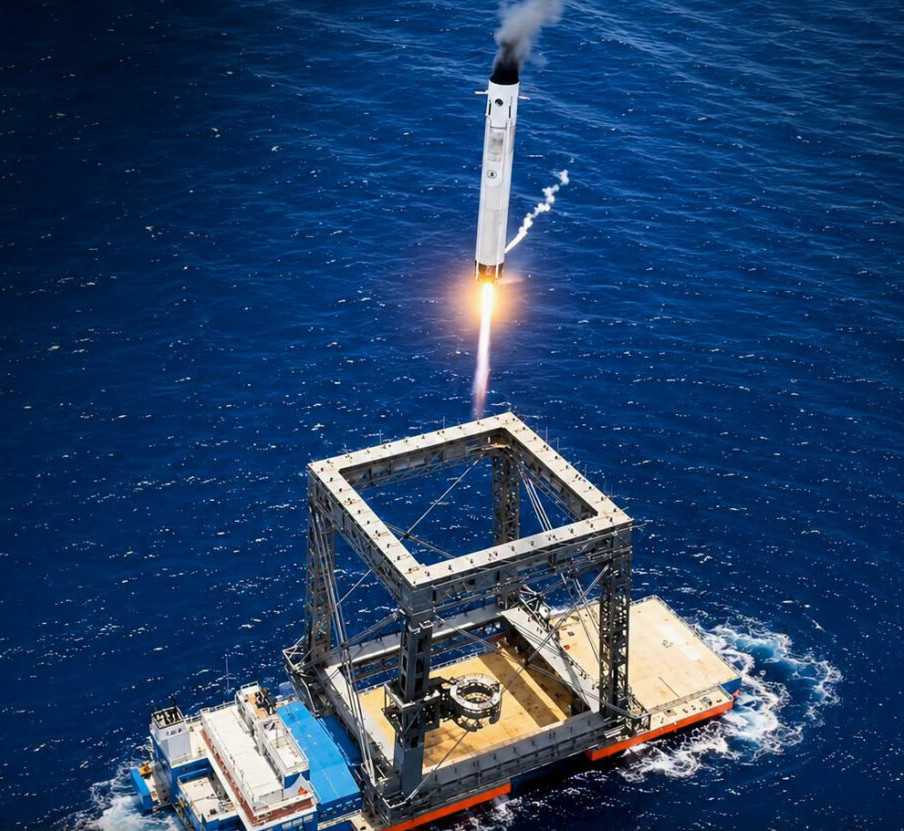
Most recently, China demonstrated that they could recover their Long March 10B rocket by gently bringing it down into what amounts to a giant butterfly net. While it might seem a bit quaint compared to rockets that land on their tails like something out of a 1950s sci-fi movie, the idea offers considerable promise.

Continue reading “Launching Rockets Is Hard, Bringing Them Back Is Harder”

Hackaday Links Column Banner

Hackaday Links: July 31, 2022

Don’t look up! As of the time of this writing, there’s a decent chance that a Chinese Long March 5B booster has already completed its uncontrolled return to Earth, hopefully safely. The reentry prediction was continually tweaked over the last week or so, until the consensus closed in on 30 Jul 2022 at 17:08 UTC, give or take an hour either way. That two-hour window makes for a LOT of uncertainty about where the 25-ton piece of space debris will end up. Given the last prediction by The Aerospace Corporation, the likely surface paths cover a lot of open ocean, with only parts of Mexico and South America potentially in the crosshairs, along with parts of Indonesia. It’s expected that most of the material in the massive booster will burn up in the atmosphere, but with the size of the thing, even 20% making it to the ground could be catastrophic, as it nearly was in 2020.

[Update: US Space Command confirms that the booster splashed down in the Indian Ocean region at 16:45 UTC. No word yet on how much debris survived, or if any populated areas were impacted.]

Good news, everyone — thanks to 3D printing, we now know the maximum height of a dive into water that the average human can perform without injury. And it’s surprisingly small — 8 meters for head first, 12 meters if you break the water with your hands first, and 15 meters feet first. Bear in mind this is for the average person; the record for surviving a foot-first dive is almost 60 meters, but that was by a trained diver. Researchers from Cornell came up with these numbers by printing models of human divers in various poses, fitting them with accelerometers, and comparing the readings they got with known figures for deceleration injuries. There was no mention of the maximum survivable belly flop, but based on first-hand anecdotal experience, we’d say it’s not much more than a meter.

Humans have done a lot of spacefaring in the last sixty years or so, but almost all of it has been either in low Earth orbit or as flybys of our neighbors in the Sol system. Sure we’ve landed plenty of probes, but mostly on the Moon, Mars, and a few lucky asteroids. And Venus, which is sometimes easy to forget. We were reminded of that fact by this cool video of the 1982 Soviet landing of Venera 14, one of only a few attempts to land on our so-called sister planet. The video shows the few photographs Venera 14 managed to take before being destroyed by the heat and pressure on Venus, but the real treat is the sound recording the probe managed to make. Venera 14 captured the sounds of its own operations on the Venusian surface, including what sounds like a pneumatic drill being used to sample the regolith. It also captured, as the narrator put it, “the gentle blow of the Venusian wind” — as gentle as ultra-dense carbon dioxide hot enough to melt lead can be, anyway.

Continue reading “Hackaday Links: July 31, 2022”









