Hackaday Links Column Banner

Hackaday Links: July 19, 2026

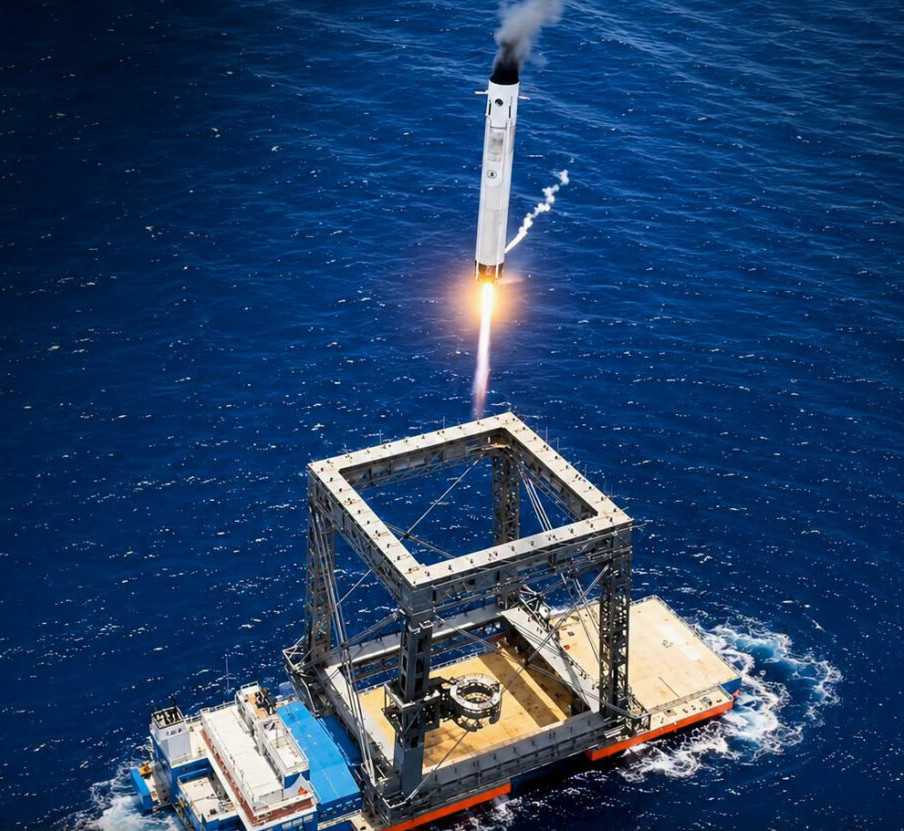
We’ll start this week off by giving our congratulations to Skyroot Aerospace of India for successfully launching the country’s first privately developed orbital rocket yesterday. The company’s Vikram-1 booster stands 24 m (79 ft) tall and uses a somewhat unusual four-stage arrangement, with the first three stages using solid propellant and the final liquid-fueled stage being responsible for putting the payload into a precise orbit. With this successful launch, India becomes only the third country in the world with a private company capable of performing orbital launches.

Generally, the rocket should be moving when the countdown hits zero.

On the other end of the spectrum, we have SpaceX’s prototype Starship, which elected not to leave Earth during a last-second (literally) launch termination on Thursday. Aborted launches are, of course, nothing new in the world of rocketry, especially when dealing with an in-development vehicle that has 33 engines that need to fire up at the same moment before it can leave the pad. But this dramatic abort was unique as it was the first time lift-off of the massive 124.4 meter (408 ft) rocket had been called off when the engines were already running.

Onboard systems took advantage of the very narrow window between the time the Raptor engines are switched on and the rocket actually leaves the launchpad to decide that it was not a good day to visit space after all. Word from SpaceX is that two of the Raptor engines on the first stage will be replaced and that they should be ready to make another launch attempt sometime this upcoming week.

While getting rockets off the ground is never easy, one thing that seems to have no trouble going up is the price of gasoline. Even still, Americans seem largely uninterested in electric vehicles, or at the very least, the slate of EVs that are currently available to them — especially now that the $7,500 federal tax credit has ended. Yesterday, TechCrunch ran an article about all the EVs that have exited the US market over the last year due to stagnant sales or import difficulties, and it’s quite a list.

Continue reading “Hackaday Links: July 19, 2026”

New Artemis Plan Returns To Apollo Playbook

In their recent announcement, NASA has made official what pretty much anyone following the Artemis lunar program could have told you years ago — humans won’t be landing on the Moon in 2028.

It was always an ambitious timeline, especially given the scope of the mission. It wouldn’t be enough to revisit the Moon in a spidery lander that could only hold two crew members and a few hundred kilograms of gear like in the 60s. This time, NASA wants to return to the lunar surface with hardware capable of setting up a sustained human presence. That means a new breed of lander that dwarfs anything the agency, or humanity for that matter, has ever tried to place on another celestial body.

Unsurprisingly, developing such vehicles and making sure they’re safe for crewed missions takes time and requires extensive testing. The simple fact is that the landers, being built by SpaceX and Blue Origin, won’t be ready in time to support the original Artemis III landing in 2028. Additionally, development of the new lunar extravehicular activity (EVA) suits by Axiom Space has fallen behind schedule. So even if one of the landers would have been ready to fly in 2028, the crew wouldn’t have the suits they need to actually leave the vehicle and work on the surface.

But while the Artemis spacecraft and EVA suits might be state of the art, NASA’s revised timeline for the program is taking a clear step back in time, hewing closer to the phased approach used during Apollo. This not only provides their various commercial partners with more time to work on their respective contributions, but critically, provides an opportunity to test them in space before committing to a crewed landing.

Continue reading “New Artemis Plan Returns To Apollo Playbook”

Hackaday Links Column Banner

Hackaday Links: March 9, 2025

It’s been a busy week in space news, and very little of it was good. We’ll start with the one winner of the week, Firefly’s Blue Ghost Mission 1, which landed successfully on the Moon’s surface on March 2. The lander is part of NASA’s Commercial Lunar Payload Services program and carries ten scientific payloads, including a GPS/GNSS receiver that successfully tracked signals from Earth-orbiting satellites. All of the scientific payloads have completed their missions, which is good because the lander isn’t designed to withstand the long, cold lunar night only a few days away. The landing makes Firefly the first commercial outfit to successfully soft-land something on the Moon, and being the first at anything is always a big deal.

Continue reading “Hackaday Links: March 9, 2025”

Hackaday Links Column Banner

Hackaday Links: January 19, 2025

This week, we witnessed a couple of space oopsies as both Starship and New Glenn suffered in-flight mishaps on the same day. SpaceX’s Starship was the more spectacular, with the upper stage of the seventh test flight of the full stack experiencing a “rapid unscheduled disassembly” thanks to a fire developing in the aft section of the stage somewhere over the Turks and Caicos islands, about eight and a half minutes after takeoff from Boca Chica. The good news is that the RUD happened after first-stage separation, and that the Super Heavy booster was not only able to safely return to the pad but also made another successful “chopsticks” landing on the tower. Sorry, that’s just never going to get old.

On the Bezos side of the billionaire rocket club, the maiden flight of Blue Origin’s New Glenn ended with the opposite problem. The upper stage reached orbit, but the reusable booster didn’t make it back to the landing barge parked off the Bahamas. What exactly happened isn’t clear yet, but judging by the telemetry the booster was coming in mighty fast, which may indicate that the engines didn’t restart fully and the thing just broke up when it got into the denser part of the atmosphere.

Continue reading “Hackaday Links: January 19, 2025”

Measuring The Mighty Roar Of SpaceX’s Starship Rocket

SpaceX’s Starship is the most powerful launch system ever built, dwarfing even the mighty Saturn V both in terms of mass and total thrust. The scale of the vehicle is such that concerns have been raised about the impact each launch of the megarocket may have on the local environment. Which is why a team from Brigham Young University measured the sound produced during Starship’s fifth test flight and compared it to other launch vehicles.

Published in JASA Express Letters, the paper explains the team’s methodology for measuring the sound of a Starship launch at distances ranging from 10 to 35 kilometers (6 to 22 miles). Interestingly, measurements were also made of the Super Heavy booster as it returned to the launch pad and was ultimately caught — which included several sonic booms as well as the sound of the engines during the landing maneuver.

Continue reading “Measuring The Mighty Roar Of SpaceX’s Starship Rocket”

Hackaday Links Column Banner

Hackaday Links: October 20, 2024

When all else fails, there’s radio. Hurricane Helene’s path of destruction through Appalachia stripped away every shred of modern infrastructure in some areas, leaving millions of residents with no ability to reach out to family members or call for assistance, and depriving them of any news from the outside world. But radio seems to be carrying the day, with amateur radio operators and commercial broadcasters alike stepping up to the challenge.

Continue reading “Hackaday Links: October 20, 2024”

Hackaday Links Column Banner

Hackaday Links: March 17, 2024

A friend of ours once described computers as “high-speed idiots.” It was true in the 80s, and it appears that even with the recent explosion in AI, all computers have managed to do is become faster. Proof of that can be found in a story about using ASCII art to trick a chatbot into giving away the store. As anyone who has played with ChatGPT or its moral equivalent for more than five minutes has learned, there are certain boundary conditions that the LLM’s creators lawyers have put in place to prevent discussion surrounding sensitive topics. Ask a chatbot to deliver specific instructions on building a nuclear bomb, for instance, and you’ll be rebuffed. Same with asking for help counterfeiting currency, and wisely so. But, by minimally obfuscating your question by rendering the word “COUNTERFEIT” in ASCII art and asking the chatbot to first decode the word, you can slip the verboten word into a how-to question and get pretty explicit instructions. Yes, you have to give painfully detailed instructions on parsing the ASCII art characters, but that’s a small price to pay for forbidden knowledge that you could easily find out yourself by other means.

Continue reading “Hackaday Links: March 17, 2024”