Reviving MSN Messenger’s I-Buddy USB Accessory

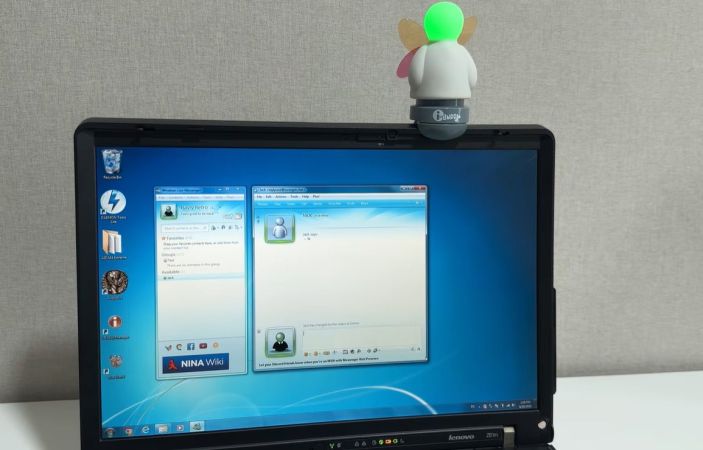
Some of our esteemed readers were not yet out of diapers back in 2013 when Microsoft decided to put MSN Messenger out to pasture, but the memories that this instant messenger’s (IM) interface and notification sounds have left are hard to erase. This also includes some of the weirdest accessories that this IM spawned, such as the USB-connected i-Buddy. Recently [Rayly Retro] got his mittens on a new-in-box one to revive alongside an era-appropriate Windows 7 PC.

What the i-Buddy gets you is the ability to light up the head in seven different colors, twist the torso and flap the butterfly wings, all of which can correspond to certain events in the MSN IM or for more general notifications, as set by software running on the connected PC. Interestingly, this i-Buddy is recognized by Windows as a USB HID, so no special driver is needed. A range of ways to program it exist too, including a .NET-based library from back when it was still being sold for around $20.

Although the MSN Messenger network’s servers have long since been dumped into an e-waste dumpster over at Microsoft HQ, an alternative exists in the form of the Escargot service using which a range of official clients can work again.

In the video it’s demonstrated how to create a user account with the Escargot site and how to patch the messenger – here Window Live Messenger 2009 – before signing in. With that step completed, getting the i-Buddy up and running is next. This took a lot of struggling, since the version of the i-Buddy software that comes with the device didn’t like Windows 7 much. Fortunately an old forum post led to a download of version 2.10, using which the gadget jumped to life, happily lighting up and flapping its wings.

Continue reading “Reviving MSN Messenger’s I-Buddy USB Accessory”
How Discord Was Ported To Windows 95 And NT 3.1

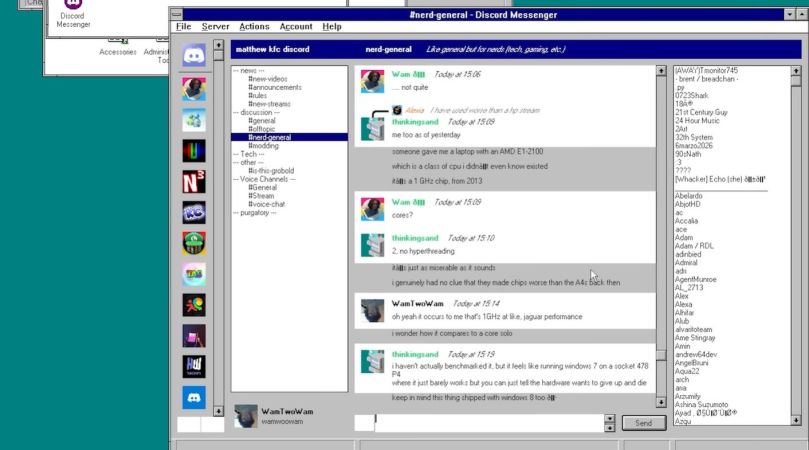
On the desktop, most people use the official HTML and JavaScript-based client for Discord in either a browser or a still-smells-like-a-browser Electron package. Yet what if there was a way to use a third-party client and even run it on Windows XP, Windows 95, and NT 3.1? This is exactly what [iDontProgramInCpp] did with their Discord Messenger project.

Fortunately, as a web ‘app’ the Discord API is readily accessible and they don’t seem to be in a rush to ban third-party clients. But it did require a bit of work to add newer versions of TLS encryption to Windows XP and older. Fortunately OpenSSL still supports these older platforms, so this was not a major hurdle and Windows XP happily ran this new Discord client. That left porting to older Windows versions.

Most of the challenge lies in writing shims for API calls that do not exist on these older platforms when backporting software from Windows XP to older Windows versions, and GCC (MinGW) had to be used instead of MSVC, but this also was a relatively minor detail. Finally, Windows NT 3.1 was picked as the last challenge for Discord Messenger, which ran into MSVCRT runtime issues and required backporting features to the NT 3.1 version that was still part of the OS back then.

[MattKC] covers the project in a recent video, as well as the AeroChat client which targets Windows Live Messenger fans.  Hopefully the API that allows these projects to operate doesn’t get locked down, as third-party clients like these bring their own unique advantages to the Discord ecosystem.

Continue reading “How Discord Was Ported To Windows 95 And NT 3.1”

How Facebook Killed Online Chat

In the early days of the internet, online conversations were an event. The technology was novel, and it was suddenly possible to socialize with a whole bunch of friends at a distance, all at once. No more calling your friends one by one, you could talk to them all at the same time!

Many of us would spend hours on IRC, or pull all-nighters bantering on MSN Messenger or AIM. But then, something happened, and many of us found ourselves having shorter conversations online, if we were having any at all. Thinking back to my younger days, and comparing them with today, I think I’ve figured out what it is that’s changed.

Continue reading “How Facebook Killed Online Chat”