Fixing An E-Waste ASUS P5A-B Socket 7 Mainboard

A fun part of retro computing is saving ‘e-waste’ that was headed for certain destruction. These boards can have any number of defects, modifications and more that have to be remedied prior to using them. In the case of the Asus P5A-B Socket 7 mainboard that [Bits und Bolts] rescued from the scrapheap at least one issue was obvious: someone had ripped off the plastic part of the ZIF socket, leaving only the metal pins poking out like an awkward kind of LGA socket.

In addition to the busted PGA ZIF socket there was additional damage, including a broken SMT capacitor and missing resistor. Interestingly, someone had apparently modded the ATX power connector to permanently power on the system by removing a pin and bridging to the power-on signal. Obviously this mod had to be undone by removing the bridge and installing a new pin. After this cracked solder joints had to be addressed, before the tedious task of removing the stray PGA socket pins one by one started.

Exactly what was done to this mainboard and why will likely forever remain a mystery, but at least there didn’t seem to be any serious damage. After installing a CPU it was possible to boot and access the BIOS as well as run a couple of tools, confirming that one more Socket 7 board has been saved from the scrapper.

Continue reading “Fixing An E-Waste ASUS P5A-B Socket 7 Mainboard”
Asus Motherboard gets CPU Upgrade Past its Specs

Clever Motherboard Hack Brings Late 90’s Motherboard Into The Early 2000’s

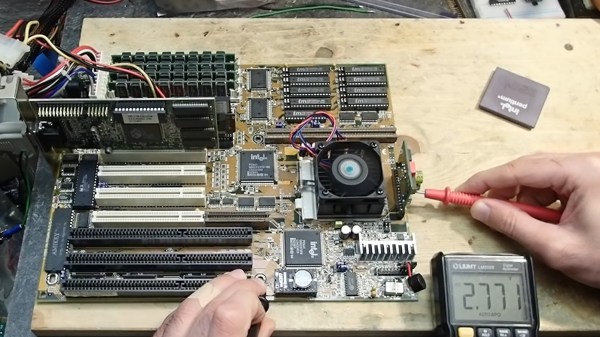
Some people look at specifications as a requirement, and others look at them as a challenge. You’re reading this on Hackaday, so you know where [Necroware] falls. In the video below the break, you’ll see how he takes a common mid-to-late 90’s motherboard and takes it well past its spec sheet.

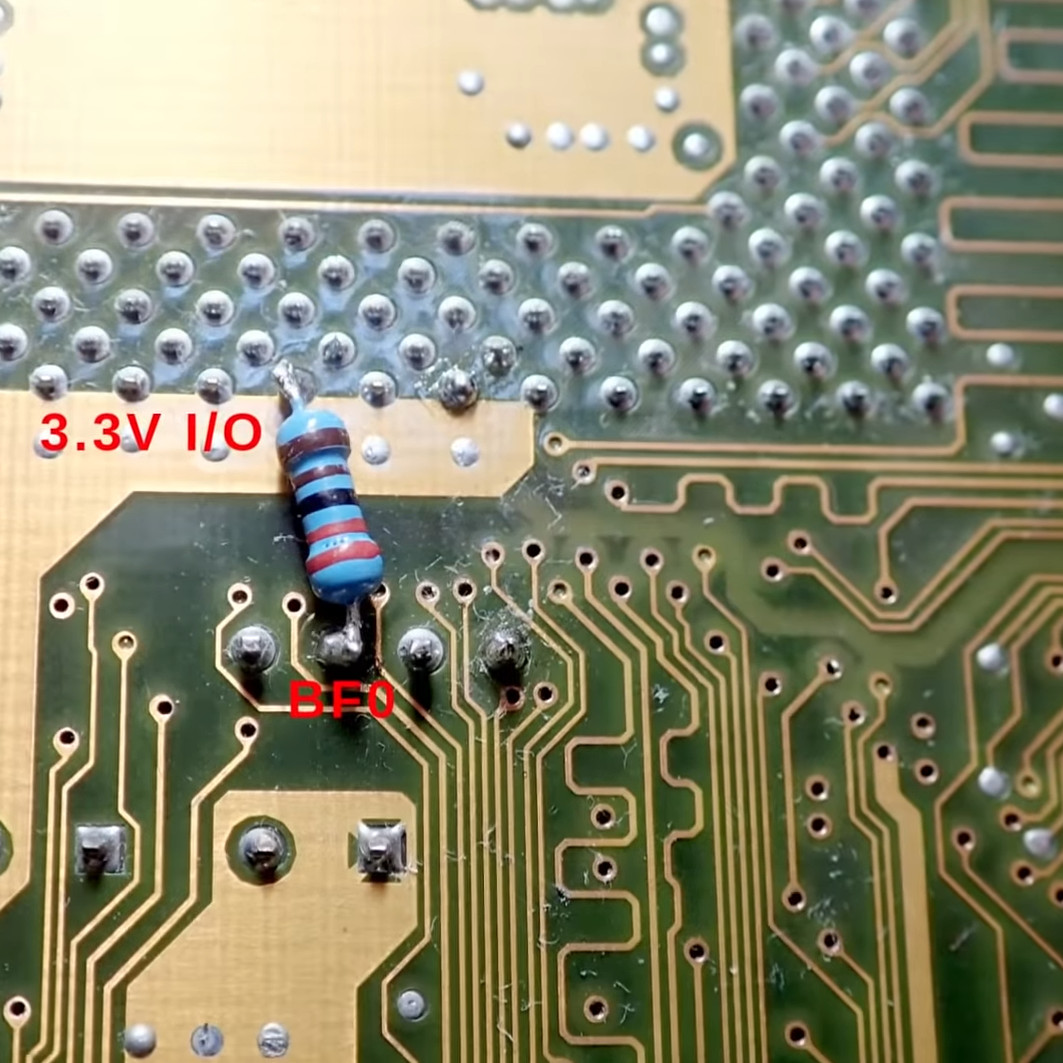
A pull up resistor enables faster clock multipliers
[Necroware] does what all soldering iron ads think people do with soldering irons
Having already started with replacing the Real Time Clock with his own creation, [Necroware] looked for other opportunities to make the Asus P/I-P55TP4XEG more capable than Asus did. And, he succeeded. Realizing that the motherboard has the ability to have an external voltage regulator board, [Necroware] made one so that the Socket 7 board could supply more than a single voltage to the CPU- the very thing keeping him from upgrading from a Pentium 133 to a Pentium MMX 200.

While the upgrade was partially successful, a deep dive into the Socket 7 and Super Socket 7 documentation helped him realize the need for a pullup resistor on a strategic clocking pin. Then, [Necroware] went full Turbo and smashed this author’s favorite single core CPU of all time into the socket: the AMD K6-2 450, a CPU well beyond the original capabilities of the board.

It really goes to show that, of course, It’s All About The Pentiums. Thanks to [BaldPower] for the doing the needful and dropping this great hack into the Tip Line!

Continue reading “Clever Motherboard Hack Brings Late 90’s Motherboard Into The Early 2000’s”