DIY Rooftop Tent Sets Up In A Jiffy

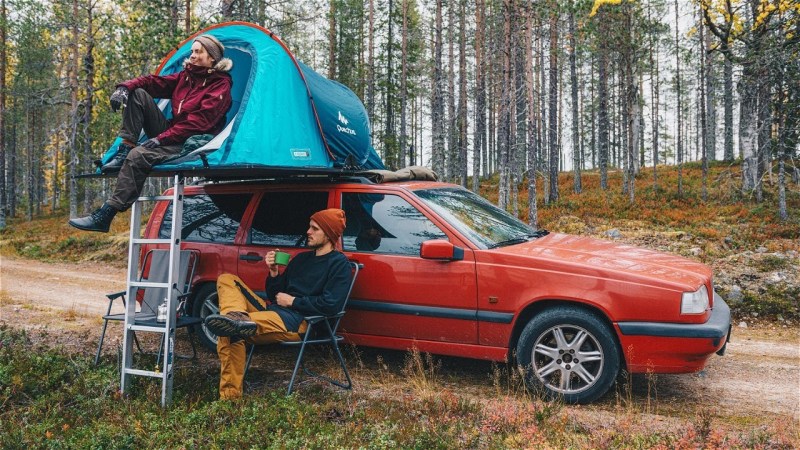
[CraftAndu] shares his DIY car rooftop tent design that looks like a pretty accessible build. It allowed him to test drive the concept to his satisfaction while spending a fraction of what a commercial unit would cost.

The rooftop tent consists of a folding platform of sturdy plywood bolted to the roof rack. The tent is attached, with the support rods cleverly anchored to the hinges so folding the platform stows the tent and mattress, and unfolding deploys it. Doing this in a way that also leaves suitable clearance between the sections when folded requires a special hinge design, but it’s mechanically straightforward. According to [CraftAndu], it’s also plenty strong and he never had any worries about stability. The final touch is a rain cover made from durable waterproof fabric that buckles around the whole thing.
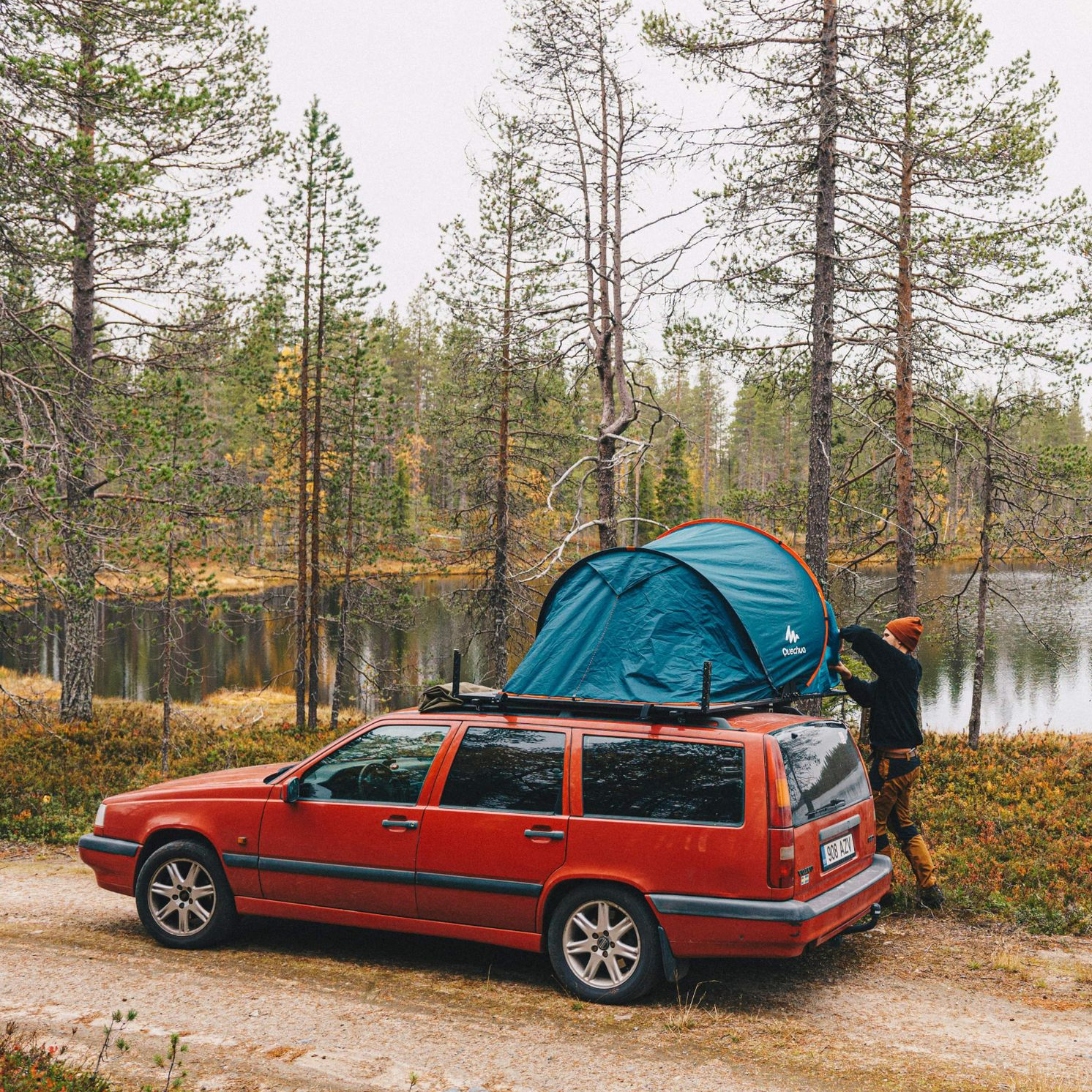
There are a few nifty design elements we particularly like. The integrated aluminum ladder is a nice touch, as is the little folding table on the inside of the ladder. Also, since the platform folds out to the side, one can have a small roof overhead while sitting below. Hanging a tarp around the perimeter also creates a what he jokingly refers to as “the livingroom”.

[CraftAndu] also shares his thoughts after using it for a two-week trip. Chief among them is that while it worked very well and shows no signs of wear, it’s still just a tent. It’s a bit cramped, cold, and like any tent it needs to be dried out in the morning due to condensation even if there’s no rain. On the plus side, it’s ridiculously convenient and easy to set up. Check it out in the video, embedded just below.

If you want to see some other DIY vehicle-camper projects, don’t miss this DIY pop-up truck camper, the Toyota Corolla that sleeps two, and for a little something different here’s a van converted to off-grid camper-slash-remote office.
Continue reading “DIY Rooftop Tent Sets Up In A Jiffy” →

Camping On Unconventional Watercraft

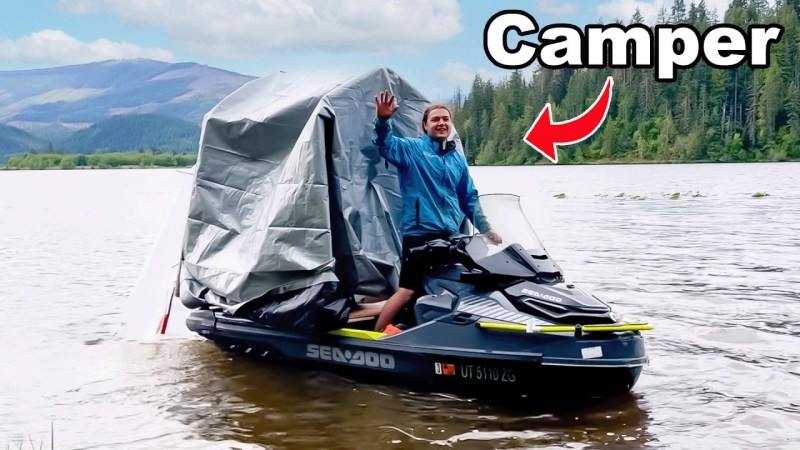
The fjords of Norway are world famous for their beauty, but even though the word itself is Norwegian, there are fjords all over the world in areas that used to be covered in glaciers. One of these areas is the Pacific Northwest of North America, we herit’s actually possible to travel by boat from the Seattle area all the way into Alaska without going to the Pacific Ocean, and although plenty of people make this journey by boat, [Matt] is planning on doing this journey on a jet ski with a custom camper on the back.

Normally a jet ski wouldn’t be the ideal platform for a multi-day on-boat adventure because of their size, but [Matt] found perhaps the largest jet ski ever made and he got a deal on it since it had previously been wrecked. Once he repaired the hull damage, he cut a sheet of plywood in half and put a hinge in the middle so it can unfold over the top of the jet ski but fold it away when he’s traveling. With the basic concept in place he took it right out on the water to a campsite before finalizing the construction of the rest of the tent, including the installation of a door, a window, and some interior lighting.

During that first night, a storm cropped up and pushed the craft out to shore while [Matt] was sleeping, so after realizing, waking up, and motoring back to shore, he made sure to tie the craft to a rock to avoid similar situations before going back to sleep. But besides some motion sickness which prevented him from cooking inside his camper, the rest of the adventure went off without a hitch. Before taking it on the Inside Passage he has been thinking of a few improvements like outriggers to keep it from rocking while he sleeps. [Matt] is no stranger to unusual camper builds, though, we recently featured his other camper which is an electric car converted to explore abandoned railroads.

Continue reading “Camping On Unconventional Watercraft” →

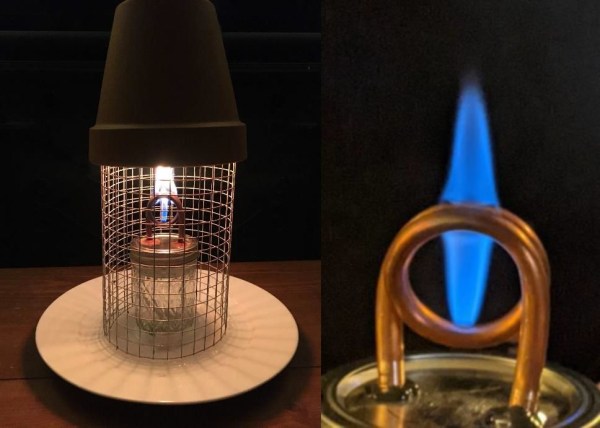
Jet burner and close-up

$7 Tent Heater Provides Comfort On A Budget

At Hackaday’s Minnesota office, we appreciate central heat and hot coffee because the outdoor temperature is sub-zero in Celsius and Fahrenheit. Not everyone here has such amenities, and families living in tents could use heater help. If you live somewhere inhospitably cold and have the resources (time being the most crucial), please consider building and donating alcohol jet burners.

Alcohol burners like these are great for tents because if they tip over, they self-extinguish. You can fill them with 70% rubbing alcohol and they’ll heat a small space, and if running on denatured alcohol, they can be used to cook with. They won’t do you much good outdoors unless you have significant wind protection, as the tiny jet is likely to blow out. The first time you light one, you must heat the coil with a lighter or another heater to vaporize incoming fuel, then it can sustain itself by wicking fluid up from the reservoir jar. Relighting after a tip or accidental gust only takes a spark since the copper is already hot.

If you came for a hack, note how they fill the small tubes with salt funneled through a condiment cap before bending them. Sure, there are springy pipe bending tools, but who doesn’t already have salt and tape? Keeping humans warm is crucial, but heating metal takes a different approach.

Thank you for the tip, [cyberlass]

Build Your Own Lightweight Flash Tripod

[Peter Karlsson] is a commercial photographer who wanted some ultralight, portable supports for multiple flashes. What he came up with meets those goals; measuring 16 inches long when folded and weighing just 14 ounces. They set up just like a tent because they’re made from tent poles. Like the portable habitats, the tripods have bungee cords running through each section which holds them rigid but allows them to fold for transport. This is a great sister project to the flash synchronizer from yesterday. See the demo and the building instructions after the break.

Continue reading “Build Your Own Lightweight Flash Tripod” →