Ask Hackaday: Solutions, Or Distractions?

The “Long Dark” is upon us, at least for those who live north of the equator, and while it’s all pre-holiday bustle, pretty lights, and the magical first snow of the season now, soon the harsh reality of slushy feet, filthy cars, and not seeing the sun for weeks on end will set in. And when it does, it pays to have something to occupy idle mind and hands alike, a project that’s complicated enough to make completing even part of it feel like an accomplishment.

But this time of year, when daylight lasts barely as long as a good night’s sleep, you’ve got to pick your projects carefully, lest your winter project remain incomplete when the weather finally warms and thoughts turn to other matters. For me, at least, that means being realistic about inevitabilities such as competition from the day job, family stuff, and the dreaded “scope creep.”

It’s that last one that I’m particularly concerned with this year, because it has the greatest potential to delay this project into spring or even — forbid it! — summer. And that means I need to be on the ball about what the project actually is, and to avoid the temptation to fall into any rabbit holes that, while potentially interesting and perhaps even profitable, will only make it harder to get things done.

Continue reading “Ask Hackaday: Solutions, Or Distractions?”
Flash Memory: Caveat Emptor

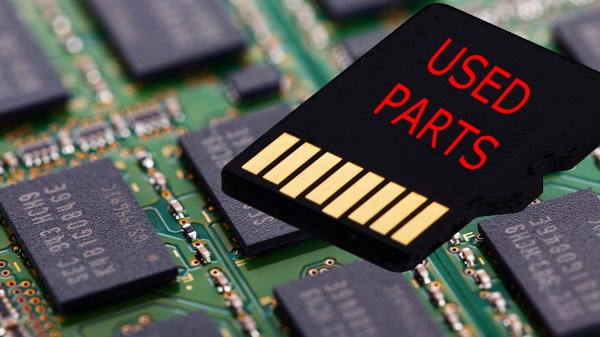
We all love new tech. Some of us love getting the bleeding edge, barely-on-the-market devices and some enjoy getting tech thirty years after the fact to revel in nostalgia. The similarity is that we assume we know what we’re buying and only the latter category expects used parts. But, what if the prior category is getting used parts in a new case? The University of Alabama in Huntsville has a tool for protecting us from unscrupulous manufacturers installing old flash memory.

Flash memory usually lasts longer than the devices where it is installed, so there is a market for used chips which are still “good enough” to pass for new. Of course, this is highly unethical. You would not expect to find a used transmission in your brand new car so why should your brand new tablet contain someone’s discarded memory?

The principles of flash memory are well explained by comparing them to an ordinary transistor, of which we are happy to educate you. Wear-and-tear on flash memory starts right away and the erase time gets longer and longer. By measuring how long it takes to erase, it is possible to accurately determine the age of chip in question.

Pushing the limits of flash memory’s life-span can tell a lot about how to avoid operation disruption or you can build a flash drive from parts you know are used.