Testing Severely Neglected VHS Tapes And CDs

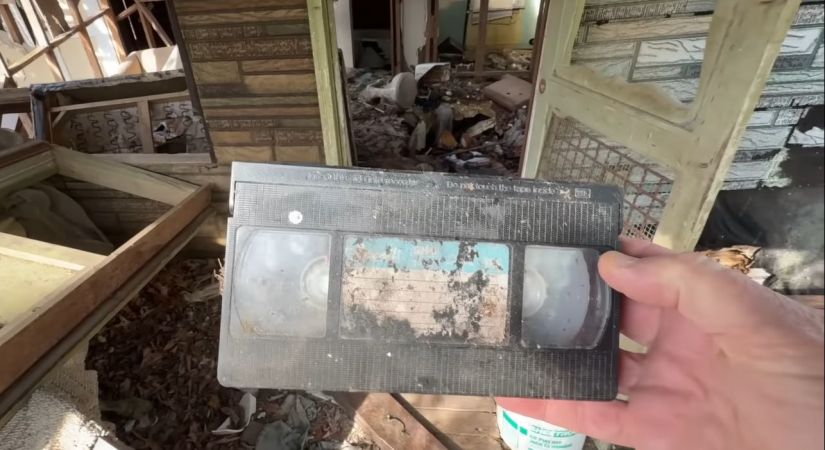
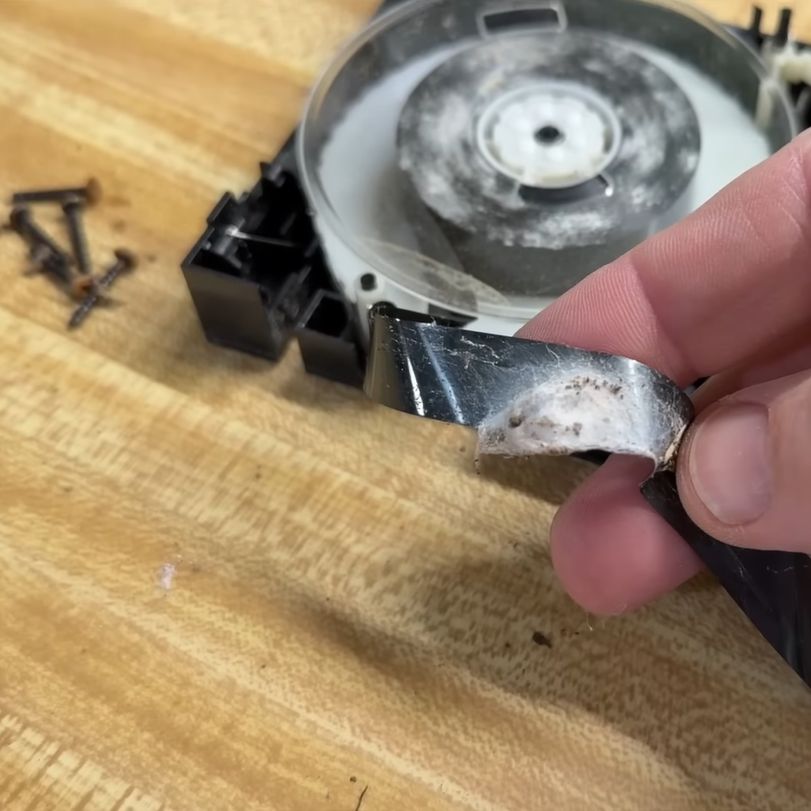
Check your tape for spider nests before rewinding. (Credit: Brady Brandwood, YouTube)

Physical media has a certain amount of durability associated with it, a quality which is naturally determined by the way that they’re stored. Generally this does not involve being abandoned on the porch of a dilapidated, abandoned house where the elements and any passing critter can have their way with it.

Exactly how playable would these VHS tapes and CDs still be? Whether it was out of a sense of burning curiosity, or for a similar reason that [Brady Brandwood] has a habit of adopting former seafood critters like lobsters as adorable pets, these items got recently collected and put to the test.

Normally VHS tapes are kept safely in a little sleeve or box in a dry, cool place, similar to CDs and DVDs. These particular items had however been left for at least a decade out in the open amidst the ransacked remains of abandoned homes. This meant that the VHS tapes were full of dirt and debris, and at least in one case with a spider nest that jammed up the thrift-store VHS/DVD combo player.

The CDs were cleaned and tried in a G5 iMac, with the obvious results there being that as long as the shiny layer with the data was intact, they worked fine. While a damaged disc tried to play somewhat, even the amazing audio CD error-correcting algorithms can not compensate for see-through gashes.

Continue reading “Testing Severely Neglected VHS Tapes And CDs”
VHS-Tape-Plasma Mirror Drives Tiny Particle Accelerator

When you think of a particle accelerator, you’re probably thinking of tens of kilometers of tube buried underground, at high vacuum, that uses precisely timed electromagnetic fields to push charged particles like electrons up to amazing speeds (and energies). However, it’s also possible to accelerate electrons in other ways, and lasers are a good bet. Although a laser-based particle accelerator can push electrons very effectively for a few centimeters, they top out at a relatively low maximum “speed” of a couple billion electron-volts, as opposed to the trillions of eV that you can get out of a really big traditional accelerator.

If only you could repeat the laser trick again, “hitting” the already-moving electrons from behind with another beam, you could boost them up to even higher energies. Doing so would take something like a one-way mirror that lets the electrons pass through, but that you could then bounce a laser beam off of. In a fantastic mixture of science and mother-of-invention-style hacking, these scientists from Lawrence Berkeley National Labs use plain-old VHS tape to make plasma mirrors to do just that. Why VHS tape? Because it’s cheap, flexible, and easy to move through the apparatus at high speeds.

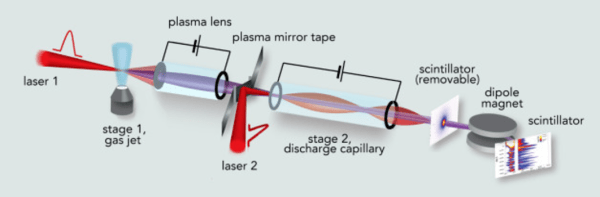
The device works like this: a first laser beam passes through a jet of ionized gas and pulls some electrons with it. These electrons are then focused into a beam and pass through some (moving) VHS tape. The electrons punch a hole through the tape. In their wake they leave a hot plasma of mid-90s TV shows you never got around to watching. The second laser beam is then bounced off this plasma mirror and further accelerates the electron beam from behind. In principle, you could repeat this second stage enough times to build up the energy you needed, but for now the crew is working to characterize their single-stage beam. Getting the timing right on the second-stage beam is, naturally, non-trivial.

Anyone who has spent some time in a science lab knows that there are millions of these tiny get-it-done-quick hacks behind the scenes, but it’s nice to see one take center stage as well. If you’ve got stories of great lab hacks that you’d like to see us cover, post up in the comments!

Thanks [Bruce] for the tip, via Science Daily.