Hackaday Links Column Banner

Hackaday Links: July 5, 2026

Happy belated July 4th to all the readers from the United States — hopefully you aren’t reading this from a hospital bed after losing a hand or burning off your eyebrows. While we suspect amateur firework shows and their related injuries will be around for many years to come, we did note that many major cities switched over to drone shows this year.

At least on paper, the appeal is obvious. Beyond the fact that drones are safer and quieter than pyrotechnics, they’re also capable of far more complex displays. Good luck trying to draw George Washington’s face in the sky with exploding rockets. But even if it’s a little more than nostalgia, there’s still something about the sights and sounds of fireworks that enthrall audiences. For many, the whole “rockets’ red glare” thing is a bit more meaningful than the “drones’ red LEDs.”

Earlier this week, we brought you news that Sony would stop producing physical PlayStation discs in January 2028. Many gamers are understandably concerned about the long-term implications such a move will have for software ownership, and while the negative reactions online haven’t bothered Sony enough to get them to amend their plans, they have clarified the situation with developers by explaining that games published before the cutoff date aren’t impacted. So if a developer has a hit title that drops in the summer of 2027 and they want to keep cranking out discs, additional orders can still be placed. Not much of a reprieve, but it will give the community a little more time to figure out what comes next.

Continue reading “Hackaday Links: July 5, 2026”

Sony To End Physical PlayStation Disc Production In 2028

Sony has just announced on their PlayStation blog that they will stop the production of game discs starting January 2028. This effectively means a shift away from physical media to one that fully relies on downloading content from the PlayStation online store.

Although not technically confirmed, this announcement would strongly indicate that the PlayStation 6 will do away with its optical drive altogether as previously speculated. Of course, physical media has long since been on the ropes, particularly when it comes to gaming. Valve’s recently released Steam Machine doesn’t feature an optical drive, and for that matter, neither does the average gaming PC these days. But it’s still disappointing to see in many ways.

Although digital downloads have their advantages, a major problem here is that due to Digital Rights Management (DRM) you only ever get a license to lease a game. This means losing the ability to lend or borrow a game, and will likely mark the end of second hand sales. With narrow exceptions such as Good Old Games (GoG) and its DRM-free installers that you can e.g. burn onto a CD or copy to a USB drive as a static instance of the software, this shift by Sony effectively ends game ownership for PlayStation owners.

With Affordable Storage Options Dwindling, Where To Store Our Data?

These days our appetite for more data storage is larger than ever, with video files larger, photo resolutions higher, and project files easily zipping past a few hundred MB. At the same time our options for data storage are becoming more and more limited. For the longest time we could count on there always being a newer, roomier, faster, and cheaper form of storage to come along, but those days would seem to be over.

We can look back and laugh at low capacity USB Flash drives of the early 2000s, yet the first storage drive to hit 1 TB capacity did so in 2007, with a Hitachi Deskstar 7k100, only for that level of capacity in PCs to not really be exceeded nineteen years later.

We also had Blu-ray discs (BD) promise to cram the equivalent of dozens of DVDs onto a single BD, with two- and even four-layer BDs storing up to a one-hundred-and-twenty-eight GB. Yet today optical media is dying a slow death as the sole remaining cheap storage option. NAND Flash storage has only increased in price, and the options for those of us who have large cold storage requirements would seem to be decreasing every day.

So what is the economical solution here? Invest in LTO tapes using commercial left-overs, or give up and sign up for Cloud Storageā„¢ for the low-low price of a monthly recurring fee?

Continue reading “With Affordable Storage Options Dwindling, Where To Store Our Data?”

Testing Severely Neglected VHS Tapes And CDs

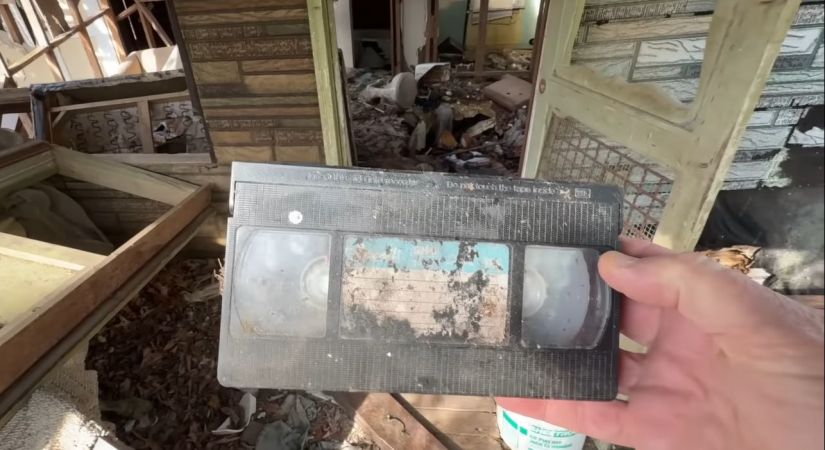
Check your tape for spider nests before rewinding. (Credit: Brady Brandwood, YouTube)

Physical media has a certain amount of durability associated with it, a quality which is naturally determined by the way that they’re stored. Generally this does not involve being abandoned on the porch of a dilapidated, abandoned house where the elements and any passing critter can have their way with it.

Exactly how playable would these VHS tapes and CDs still be? Whether it was out of a sense of burning curiosity, or for a similar reason that [Brady Brandwood] has a habit of adopting former seafood critters like lobsters as adorable pets, these items got recently collected and put to the test.

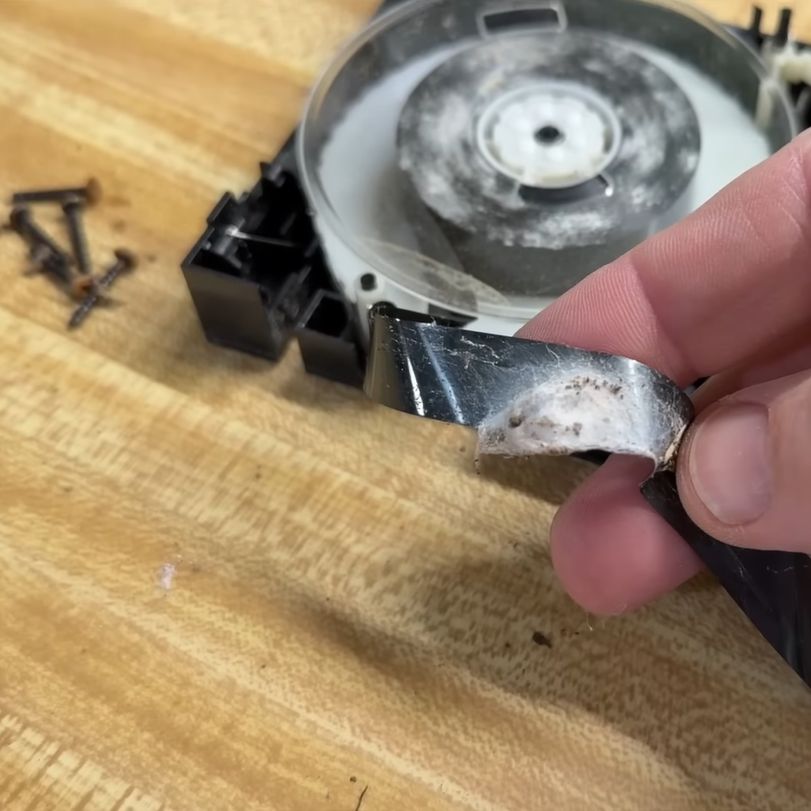
Normally VHS tapes are kept safely in a little sleeve or box in a dry, cool place, similar to CDs and DVDs. These particular items had however been left for at least a decade out in the open amidst the ransacked remains of abandoned homes. This meant that the VHS tapes were full of dirt and debris, and at least in one case with a spider nest that jammed up the thrift-store VHS/DVD combo player.

The CDs were cleaned and tried in a G5 iMac, with the obvious results there being that as long as the shiny layer with the data was intact, they worked fine. While a damaged disc tried to play somewhat, even the amazing audio CD error-correcting algorithms can not compensate for see-through gashes.

Continue reading “Testing Severely Neglected VHS Tapes And CDs”

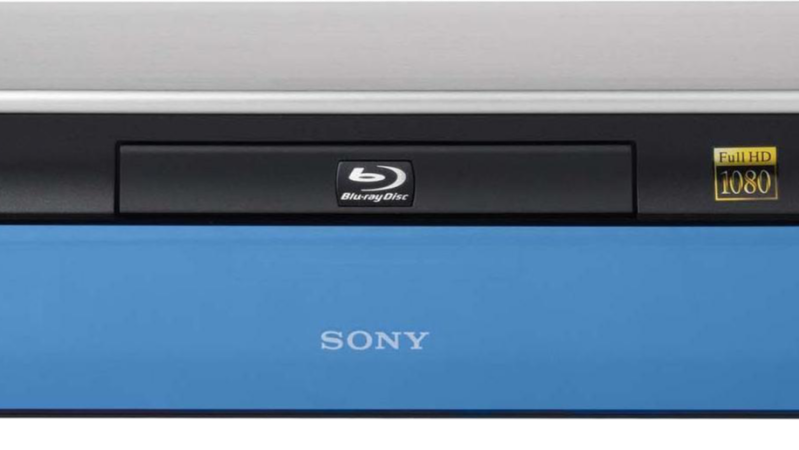
Front panel of Sony Blu-ray player

Blu-ray Won, But At What Cost?

Over on their substack [ObsoleteSony] has a new article: The Last Disc: How Blu-ray Won the War but Lost the Future.

In this article the author takes us through the history of Blu-ray media and how under Sony’s stewardship it successfully defeated the competing format of the time, HD DVD. Sony started behind the eight ball but through some deft maneuvering managed to come out on top. Perhaps the most significant contributing factor was the inclusion of Blu-ray drives in the PlayStation 3.

The person leading the Blu-ray initiative for Sony was Masanobu Yamamoto, whose legacy was the compact disc. What was needed was a personal media format which could deliver for high-definition 1080p video. As the DVD format did not have the storage capacity required, new formats needed to be developed. The enabling technology for both Blu-ray and HD DVD media was the blue laser as it allowed for more compact encoding.

Sony’s Blu-ray format became the dominating format for high-definition personal media…just as physical media died.

Thanks to [Stephen Walters] for writing in about this one.

Reliving VHS Memories With NFC And ESPHome

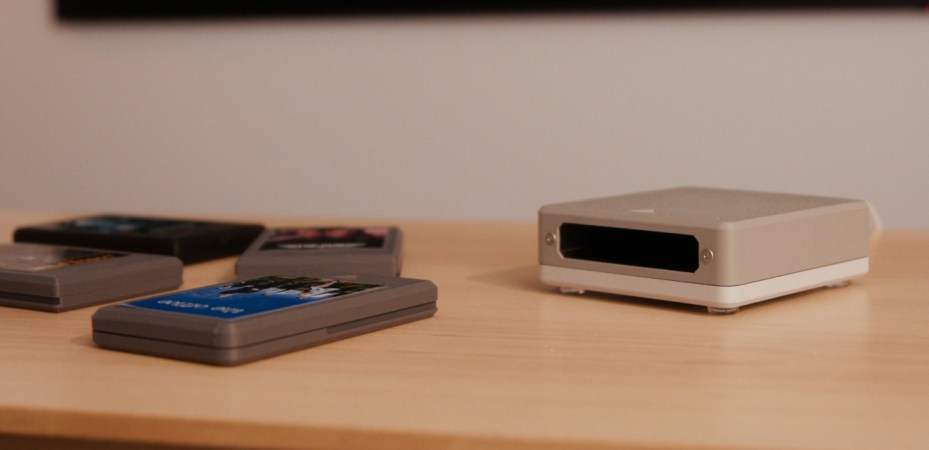
Like many of us of a certain vintage, [Dillan Stock] at The Stock Pot is nostalgic for VHS tapes. It’s not so much the fuzzy picture or the tracking issues we miss, but the physical experience the physical medium brought to movie night. To recreate that magic, [Dillan] made a Modern VHS with NFC and ESPHome.

NFC tags are contained in handsomely designed 3D printed cartridges. You can tell [Dillan] put quite a bit of thought into the industrial design of these: there’s something delightfully Atari-like about them, but they have the correct aspect ratio to hold a miniaturized movie poster as a label. They’re designed to print in two pieces (no plastic wasted on supports) and snap together without glue. The printed reader is equally well thought out, with print-in-place springs for that all important analog clunk.

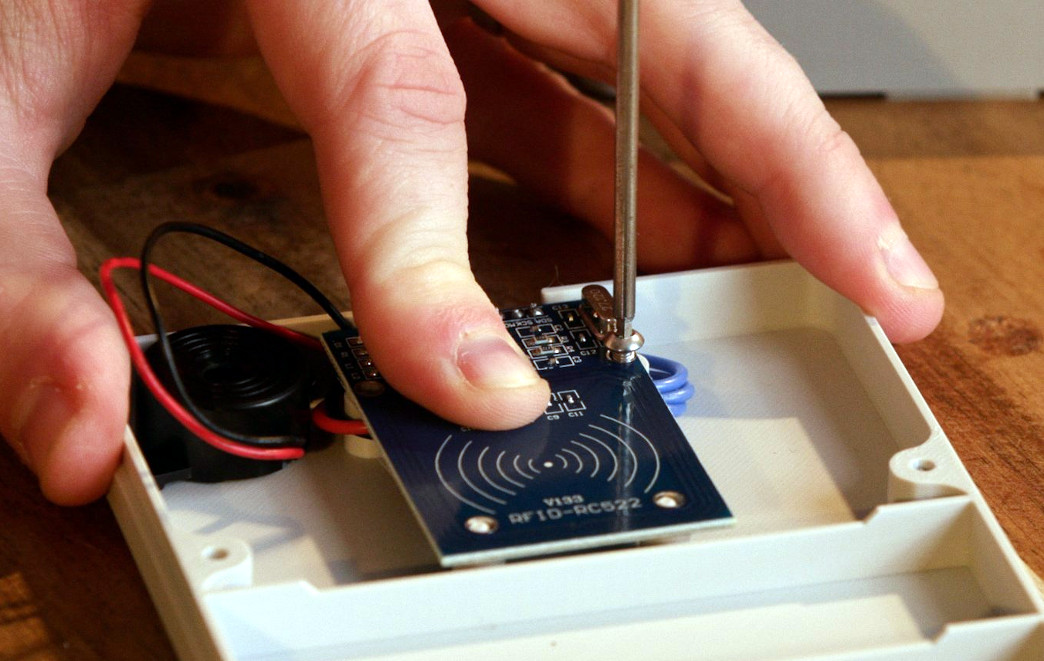
Electronically, the reader is almost as simple as the cartridge: it holds the NFC reader board and an ESP32. This is very similar to NFC-based audio players we’ve featured before, but it differs in the programming. Here, the ESP32 does nothing related directly to playing media: it is simply programmed to forward the NFC tag id to ESPHome. Based on that tag ID, ESPHome can turn on the TV, cue the appropriate media from a Plex server (or elsewhere), or do… well, literally anything. It’s ESPHome; if you wanted to make this and have a cartridge to start your coffee maker, you could.

If this tickles your nostalgia bone, [Dillan] has links to all the code, 3D files and even the label templates on his site. If you’re not sold yet, check out the video below and you might just change your mind. We’ve seen hacks from The Stock Pot before, everything from a rebuilt lamp to an elegant downspout and a universal remote.

Continue reading “Reliving VHS Memories With NFC And ESPHome”

Why Physical Media Deserved To Die

Over the course of more than a decade, physical media has gradually vanished from public view. Once computers had an optical drive except for ultrabooks, but these days computer cases that even support an internal optical drive are rare. Rather than manuals and drivers included on a data CD you now get a QR code for an online download. In the home, DVD and Blu-ray (BD) players have given way to smart TVs with integrated content streaming apps for various services. Music and kin are enjoyed via smart speakers and smart phones that stream audio content from online services. Even books are now commonly read on screens rather than printed on paper.

With these changes, stores selling physical media have mostly shuttered, with much audiovisual and software content no longer pressed on discs or printed. This situation might lead one to believe that the end of physical media is nigh, but the contradiction here comes in the form of a strong revival of primarily what used to be considered firmly obsolete physical media formats. While CD, DVD and BD sales are plummeting off a cliff, vinyl records, cassette tapes and even media like 8-track tapes are undergoing a resurgence, in a process that feels hard to explain.

How big is this revival, truly? Are people tired of digital restrictions management (DRM), high service fees and/or content in their playlists getting vanished or altered? Perhaps it is out of a sense of (faux) nostalgia?

Continue reading “Why Physical Media Deserved To Die”