Great Ball Contraption

[youtube=http://www.youtube.com/watch?v=B1A7VpQ5paU]

The idea of the Great Ball Contraption is to take modules from many builders and combine them into one large machine. The modules need to find some way of moving LEGO soccer balls and basketballs from an input point to an exit are that passes them onto the next module. Some of them sort the balls, but in the end the eight-and-a-half-minute video above shows the orbs going around and around. That’s just fine with us, it’s no secret that we love machines that are overly complicated and may be completely useless.
Preparing Your PCB Design For Manufacture

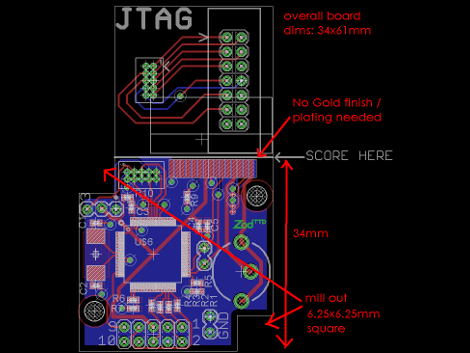
[Colin] has cut his teeth with about fifteen PCB orders. He wrote a tutorial describing the process and sharing his tips on avoiding common problems. You may remember our own How-To prepare designs for manufacture early last year. In that post, [Ian] shared his veteran knowledge by outlining BatchPCB’s board design process. This time, [Colin] is using Advanced Circuits in Colorado as a board house, giving us more insight on how the different companies work. No matter who you choose for manufacturing, make sure you really understand how to properly format and troubleshoot your designs. It’ll end up saving you a lot of time and money.

Recharging AC With Propane

[youtube=http://www.youtube.com/watch?v=v2vN_mxW4Bc]

As the summer heats up an air conditioning system is a necessity in many climates. [Grayson’s] system suffered some damage over the winter that caused it to vent its refrigerant, avoiding an explosive situation. Before he can chill out inside he’ll need to recharge it and he’s chosen to use propane in his cooling system. According to our friend Google this is not his original idea, but has been done many times before. [Grayson] makes the point that although propane is flammable it’s not necessarily any more dangerous in a fire than Chlorodiflouromethane, or R22, which is the nasty little gas that fled his system for its new home in the upper atmosphere.

The video above includes a brief explanation of recharging the system and the tools needed. We’d need to mill this over for quite a while before working up the gumption to give it a try. For now we’ll stick to [Grayson’s] more pedestrian hacks like making some servo motors sing or easing our yard work woes.

IPad Hacked To Include A Verizon MiFi

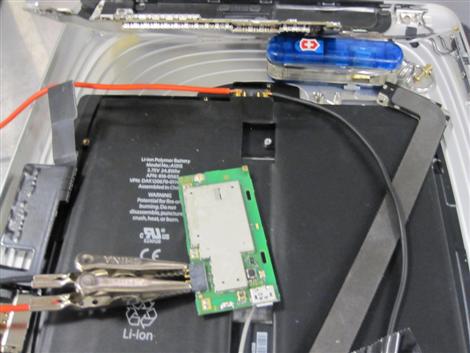
Finally, some hardware hacking on an iPad.  Finding the 3G connection that came with the iPad lacking, this industrious hacker yanked it out and replaced it with the guts from a MiFi. At the cost of his GPS, he’s gained a better connection and is now a wifi hotspot. It wasn’t horribly complex, but he did have to do a tiny bit more than just plug and play.

[thanks Smilr]

Vuvuzela Removal

We’re hearing complaints everywhere about the noisemakers called Vuvuzelas during the world cup. Whether you are a fan of the sport or not, you can appreciate when a fellow hacker gets annoyed and start hacking. [Tube] has created a software filter that manages to remove the sound of the Vuvuzela from the videos. He shares the process of how it was all created, using Logic Express and a Mac mini (Google translation). Maybe this will also provide some relief from the constant stream of Vuvuzela whining as well.

[via DVice]

Android Meets Arduino

This new toolkit, called “Android” meets Arduino, allows you to connect an Arduino to your device and communicate back and forth. You could trigger external events at the Arduino end when an event happens on your phone, or even trigger things on your phone side when something happens at the Arduino.  We can’t wait to see the stuff people come up with beyond simple notifiers.

[via littlebirdceo]

Unbricking With The Help Of Arduino

A

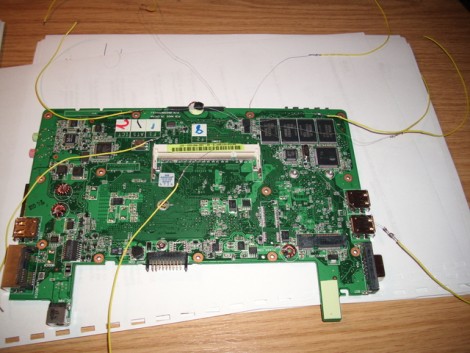
This bricked Eee PC came to [Janzo] for about $50. Everything was fine with it, except for the failed bios update that rendered it useless to the last owner. [Janzo] set to work with an Arduino on a quest to repair the bios. He looked up the datasheet for the EEPROM that stores the bios and did some delicate soldering to gain access to the power and data pins on the device. A bit of trial and error and he was able to read the registers. Some comparisons between the output file and the official Eee PC bios file in a HEX editor confirmed that the first 80 bytes were fine but after that something went wrong. After coding a quick Python script [Janzo] reflashed the chip and had the computer up and running again.

We’ve seen Eee PC bios recovery before. This is a very simple method because it makes use of the simplicity we find in the Arduino. Nice job.