3D Printing And The Dream Of Affordable Prosthetics

As amazing as the human body is, it’s unfortunately not as amazing as e.g. axolotl bodies are, in the sense that they can regrow entire limbs and more. This has left us humans with the necessity to craft artificial replacement limbs to restore some semblance of the original functionality, at least until regenerative medicine reaches maturity.

Despite this limitation, humans have become very adept at crafting prosthetic limbs, starting with fairly basic prosthetics to fully articulated and beautifully sculpted ones, all the way to modern-day functional prosthetics. Yet as was the case a hundred years ago, today’s prosthetics are anything but cheap. This is mostly due to the customization  required as no person’s injury is the same.

When the era of 3D printing arrived earlier this century, it was regularly claimed that this would make cheap, fully custom prosthetics a reality. Unfortunately this hasn’t happened, for a variety of reasons. This raises the question of whether 3D printing can at all play a significant role in making prosthetics more affordable, comfortable or functional.

Continue reading “3D Printing And The Dream Of Affordable Prosthetics”
The New Pebble: Now 100% Open Source

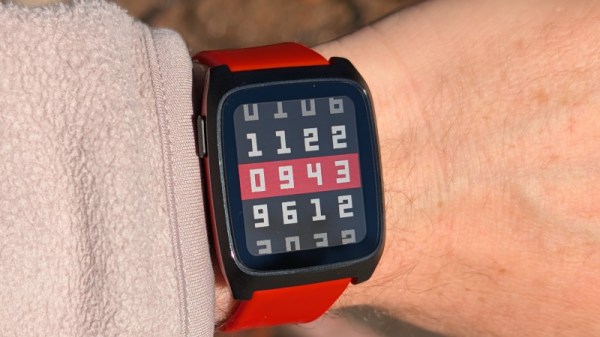
The Pebble was the smartwatch darling of the early 2010s, a glimpse of the future in the form of a microcontroller and screen strapped to your wrist. It was snapped up by Fitbit and canned, which might have been the end of it all were it not for the dedication of the Pebble community.

Google open-sourced the OS back in January this year, and since then a new set of Pebble products have appeared under the guidance of Pebble creator [Eric Migicovsky]. Now he’s announced the full open-sourcing of the current Pebble hardware and software stack. As he puts it, “Yesterday, Pebble watch software was ~95% open source. Today, it’s 100% open source”.

If you’re curious it can all be found in repositories under the Core Devices GitHub account. Building your own Pebble clone sounds cool, but perhaps the real value lies instead in giving the new Pebbles something the original never had, an assured future. If you buy one of the new watches then you’ll know that it will remain fixable, and since you have the full set of files you can create new parts for it, or update its software. We think that’s the right way to keep a personal electronic device relevant.

If you want a new Pebble they have a store, meanwhile read some of our previous coverage of its launch.

Sensor Package Aims To Predict Acid Rain

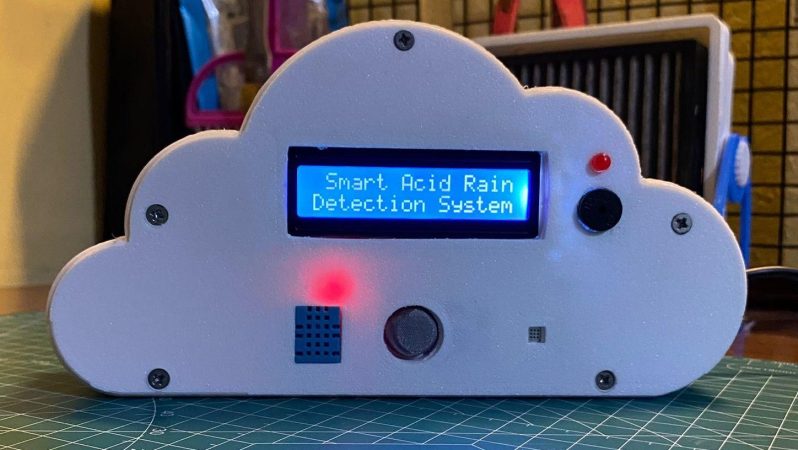
Acid rain sucks, particularly if you run a fancy university with lots of lovely statues outside. If you’d like to try and predict when it’s going to occur, you might like this project from [Mohammad Nihal].

When rain is particularly acidic, it’s usually because of the combination of sulfur dioxide or nitrogen dioxide and moisture in the atmosphere. This combination ends up making sulfuric acid or nitric acid that then falls to the ground as precipitation. The low-pH rain that results can harm ecosystems, melt statues, and just generally give everyone a hard time.

[Mohammed] decided to try and predict acid rain by building a simple device based on an Arduino Nano. It records SO2 levels with an MQ-136 gas sensor, and NO2 levels with an unspecified MEMS-based sensor. There’s also a DHT11 temperature & humidity sensor in the mix, which is important since moisture content plays a role. The Arduino reads these sensors and uses a simple predictive algorithm to create an “Acid Rain Risk Score” that is displayed on a 16×2 character LCD. It’s all wrapped up in a fun 3D printed enclosure that looks like a cloud.

There are some limitations to the device. Namely, it doesn’t necessarily have a great read on atmospheric SO2 and NO2 levels in the atmosphere, particularly at altitudes where rain is formed, because the sensor sits inside the device indoors. However, the basic concept is there, and improvements could certainly be made with some upgrades and further research.