
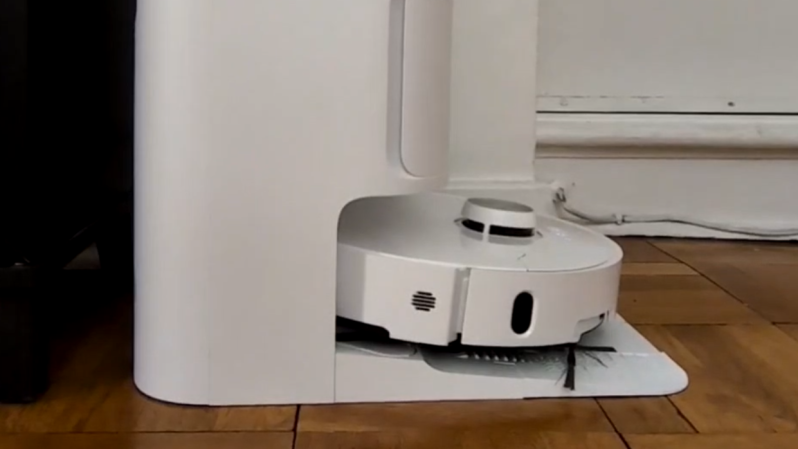
Although there are a few robots on the market that can make life a bit easier, plenty of them have closed-source software or smartphone apps required for control that may phone home and send any amount of data from the user’s LAN back to some unknown server. Many people will block off Internet access for these types of devices, if they buy them at all, but that can restrict the abilities of the robots in some situations. [Max]’s robot vacuum has this problem, but he was able to keep it offline while retaining its functionality by using an interesting approach.
Home Assistant, a popular open source home automation system, has a few options for voice commands, and can also be set up to transmit voice commands as well. This robotic vacuum can accept voice commands in lieu of commands from its proprietary smartphone app, so to bypass this [Max] set up a system of automations in Home Assistant that would command the robot over voice. His software is called jacadi and is built in Go, which uses text-to-speech to command the vacuum using a USB speaker, keeping it usable while still offline.
Integrating a voice-controlled appliance like this robotic vacuum cleaner allows things like scheduled cleanings and other commands to be sent to the vacuum even when [Max] isn’t home. There are still a few limitations though, largely that communication is only one way to the vacuum and the Home Assistant server can’t know when it’s finished or exactly when to send new commands to the device. But it’s still an excellent way to keep something like this offline without having to rewrite its control software entirely.












A robot telling another robot what to do.
Just a new definition for “ruin”.
Just know when the eyes turn red, you’re in trouble.
Sounds like you haven’t seen at moltbook yet. Lol and despair.
Once you filter out all the LARPing from the TESCREAL cultists, Moltbook is nothing but yet another blog-comment-spam dumping ground of the dead internet.
Just root it and install Valetudo, replace the cloud API with local MQTT. The L40 Ultra is supported (and it might not turn into a brick).
Have you noticed that some devices have a million reviews both in word and video but NONE of them will mention the caveats of the software, like forced apps that won’t work when denied internet access and devices that won’t even run when not first reported to some online company and/or insane EULA’s you have to agree to.
So many shills and fools and so few reviewers. And it’s annoying since you first have to buy a thing then send it back and go through all the hassle when you find unacceptable stuff related to the software.
But not to worry, most reviewers WILL make stupid faces in their icons; and who doesn’t want that eh… so much better than information that you can use obviously.
I’d probably wire it directly into the microphone, to cut out sources of interference. Then maybe you could use some cheap smartphone sensors (ESP32 based stuff?) to know when the robot is moving or when it’s returned to the docking station.