Why Leaded Fuel Is Still A Thing

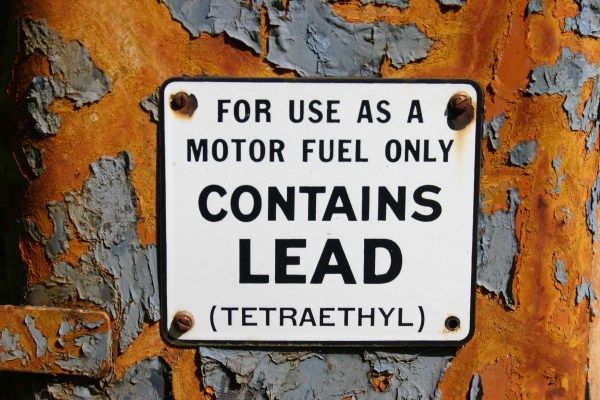
Leaded fuel is considered one of the greatest environmental failures in modern human history. Adding tetraethyl lead to gasoline reduced knock in internal combustion engines, which was widely considered a good thing. It was only later that the deleterious health effects came into view, by which point there was a massive fleet of lead-dependent automobiles and an industry reluctant to change. Still, the tide turned, and over the last 50 years, unleaded fuel has become the norm for automotive use across the world.

And yet, there remains a hold out—a world where engines still burn leaded fuels and spray their noxious fumes across the countryside. In the aviation sector, leaded fuel remains a normal part of everyday operations to this day amidst concerted efforts to eliminate it for good.

Continue reading “Why Leaded Fuel Is Still A Thing”

TagTinker Lets You Hack Electronic Shelf Labels

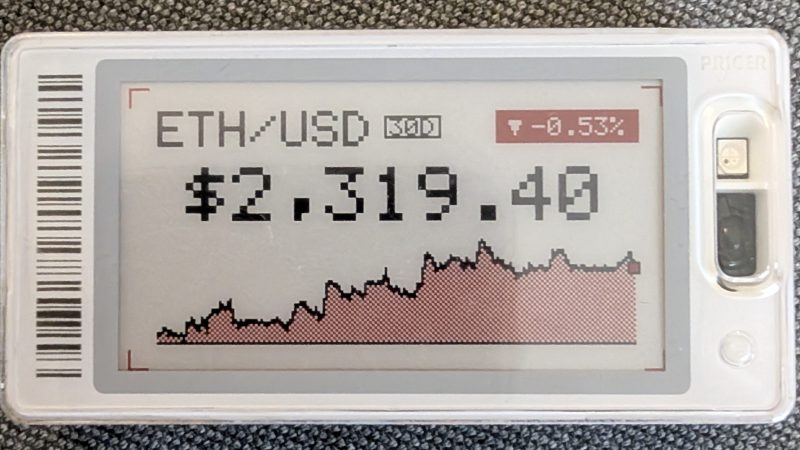
Was there ever anything wrong with simple paper price labels? Absolutely not. And yet, the world invented the electronic price tag anyway. If you happen to come across some of these devices and want to hack them, you might like TagTinker from [i12bp8].

TagTinker is a Flipper Zero application specifically built for talking to infrared electronic shelf labels (ESLs). These are e-paper devices that receive commands and updates via an infrared interface, and they’re relatively simple to talk to. [i12bp8] built upon previous work from [furrtek] which revealed the protocols used to update these devices, and implemented it into an app that runs on the Flipper. It can do neat things like scan the NFC tags built into ESLs to ID them, deploy bitmap images to the tags, or run live-updated dashboards on the devices with the aid of a Flipper WiFi devboard.

If you’ve always wanted to play with these tags but didn’t want to do the grunt work yourself, it just got a whole lot easier to mess around. Though, it’s worth noting, [i12bp8] has strictly prohibited any illegal uses of this app, so be good out there. We’ve seen these tags repurposed before, too – who knew they could make such good conference badges? 

TDR For Auto Diagnostics Done On The Cheap

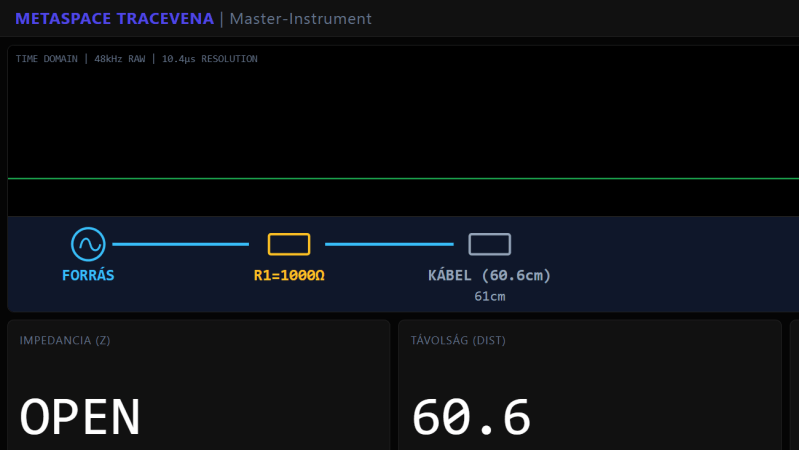
A time domain reflectometer (TDR) is a useful tool to have for finding faults in a wiring harness. However, they don’t come cheap, putting them out of reach for many shadetree mechanics that like to work on their own cars. However, [László SZŐKE] has been exploring a neat way to build a similar device on the cheap.

Typically, time domain reflectometry involves shooting a short electric pulse down a wire, and listening for how long it takes to bounce back. The time depends on the length of the wire, so it can be used to determine the location of a break in conductivity. Unfortunately, these pulses move so fast that very fast, very expensive hardware is needed to make these measurements.

[László’s] technique relies on lower-tech hardware. Instead of sending a very short pulse down a wire, his rig uses a cheap C-Media USB audio device to send a 4 kHz or 8 kHz sine wave instead. Then, by listening to the reflection and measuring the phase shift, it’s possible to detect the distance to the end of the wire (or a break along its length). Some supporting hardware is required for protection’s sake, and to tune the setup for measuring shorter or longer cabling. However, with some smart software processing, [László] states that it’s possible to measure down to 1 cm resolution.

The idea is that this setup could prove particularly useful for automotive troubleshooting. If you measure a wire and the device reports a length of 30 cm, when you know the wire stretches several meters into the engine bay… you know there’s a break around 30 cm from your measurement point.

There’s still plenty of work to be done – for now, [László] is working on a new prototype that should have better performance when testing shorter cables. Still, we love to see this sort of out-of-the-box thinking put towards a common troubleshooting task. If you’re doing fun signal analysis work of your own, don’t hesitate to light up the tipsline.