
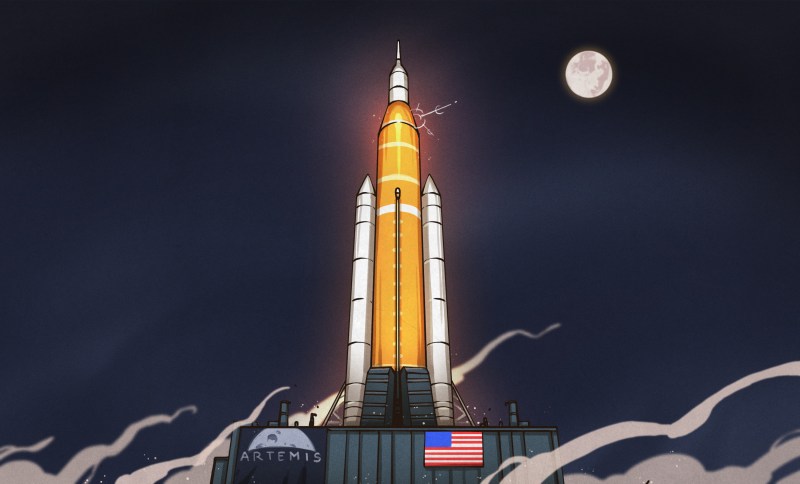
When the Artemis lunar program was first conceived, the third mission would have seen astronauts step foot on the Moon for the first time since Apollo 17 in 1972. But as hard as getting into space is, a sojourn to our nearest celestial neighbor is even more mindbogglingly complex, and so earlier this year it was announced that actually landing on the Moon would be pushed out to the fourth mission.
 In turn Artemis III would take a page out of the Apollo 9 playbook and test out rendezvous and docking procedures with commercial landers while operating in the relative safety of low Earth orbit. Moving the target date for the landing a few years down the road gave all involved parties a little more breathing room, but it also provided a valuable opportunity to gain insight into the performance of the vehicles and systems ahead of the critical moment. In the original timeline, the first time Orion would attempt to dock with the lander would have been just before descending to the lunar surface — leaving precious little time to troubleshoot should anything go wrong.
Yesterday NASA held a press conference to update the public on their progress towards the planned 2027 launch of Artemis III, which included the long-awaited announcement of the crew that will kick the tires on the next-generation lunar landers being developed by SpaceX and Blue Origin
Meet the Artemis III Crew
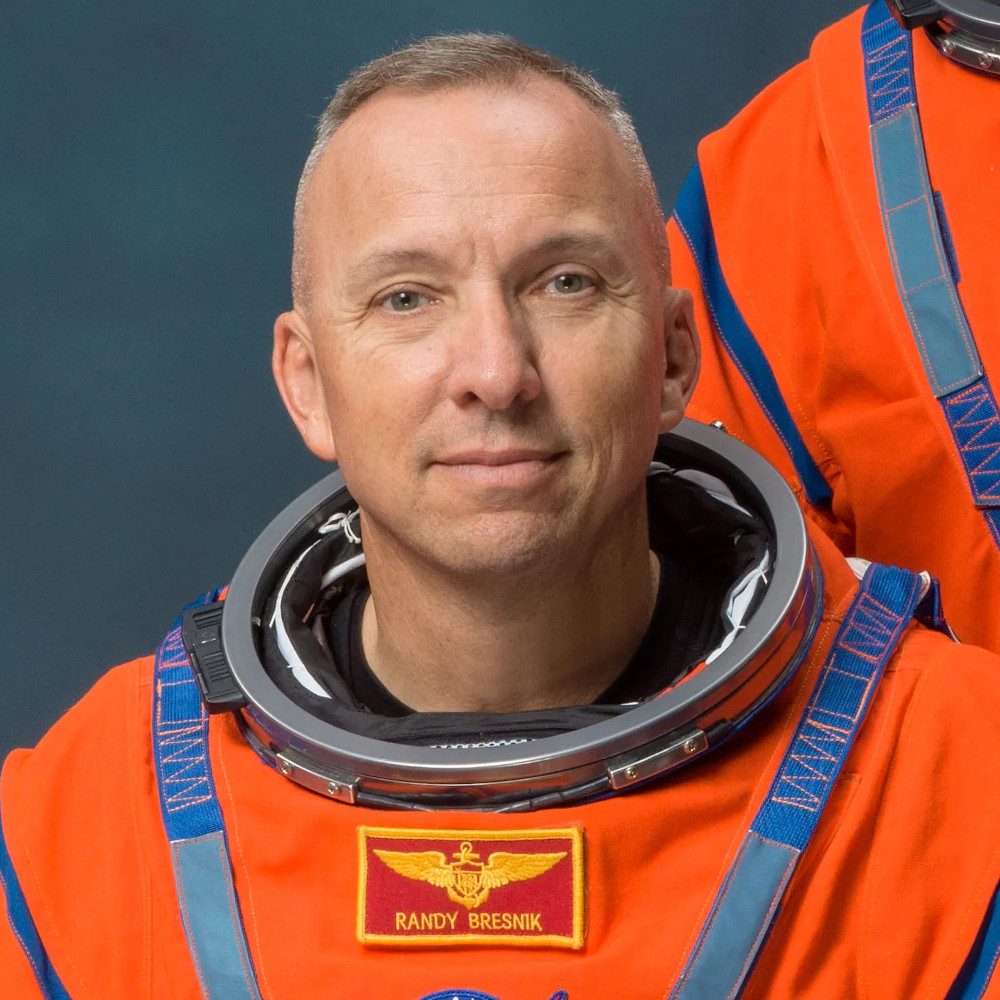
Commander
A graduate of the Naval Fighter Weapons School (TOPGUN) and former F/A-18 Test Pilot, United States Marine Corps Colonel Randy Bresnik served as Mission Specialist aboard the Space Shuttle on STS-129 and Commander of the International Space Station during Expedition 53. He has logged more than 7,000 hours at the controls of nearly 100 types of aircraft, 3,600+ hours aboard spacecraft, and 32+ hours of spacewalk time between five extravehicular activities (EVAs).
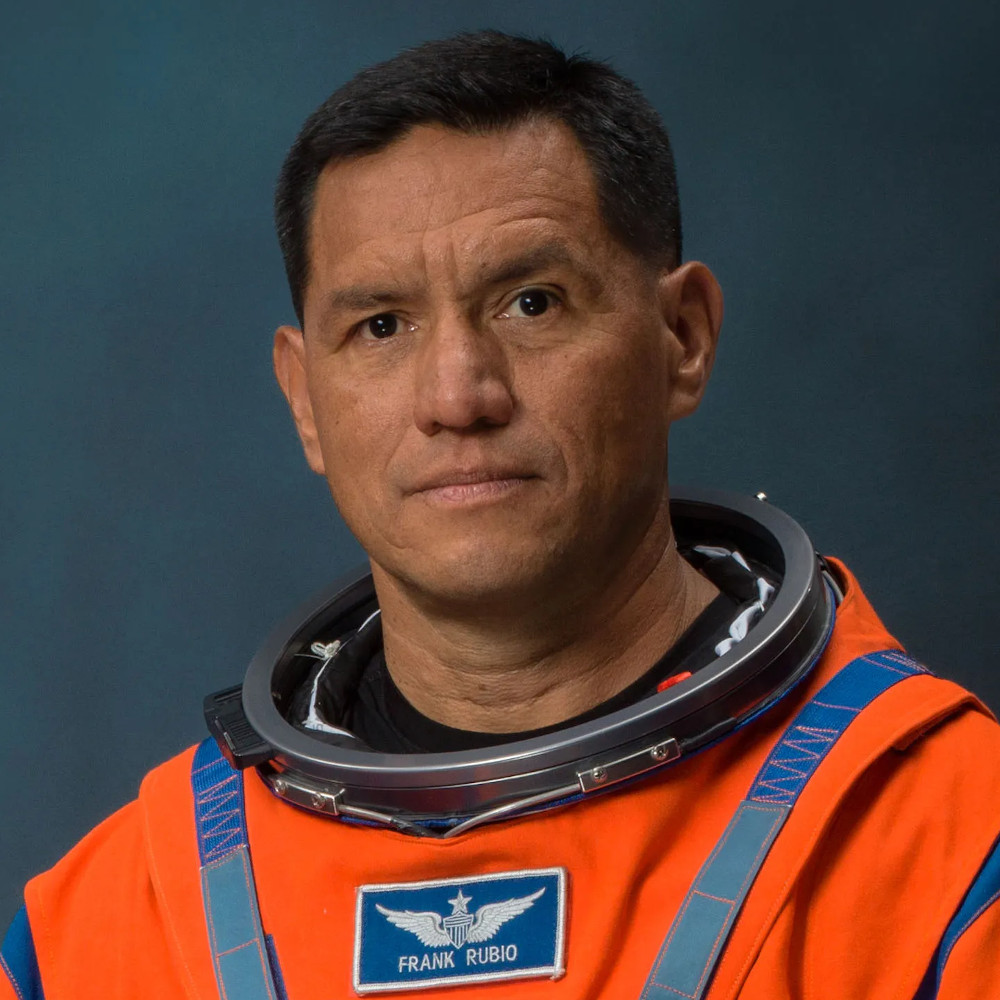
Mission Specialist
United States Army Colonel Frank Rubio holds a Doctorate of Medicine and logged over 1,100 hours as a UH-60 Black Hawk helicopter pilot, with more than 600 hours of that time under combat conditions in Bosnia, Afghanistan, and Iraq. In 2022 he flew to the International Space Station aboard the Soyuz MS-22 on what was planned as a six month mission. But due to damage to the spacecraft, he ended up remaining on Station for 371 days, setting a new record for the longest spaceflight by an American astronaut.
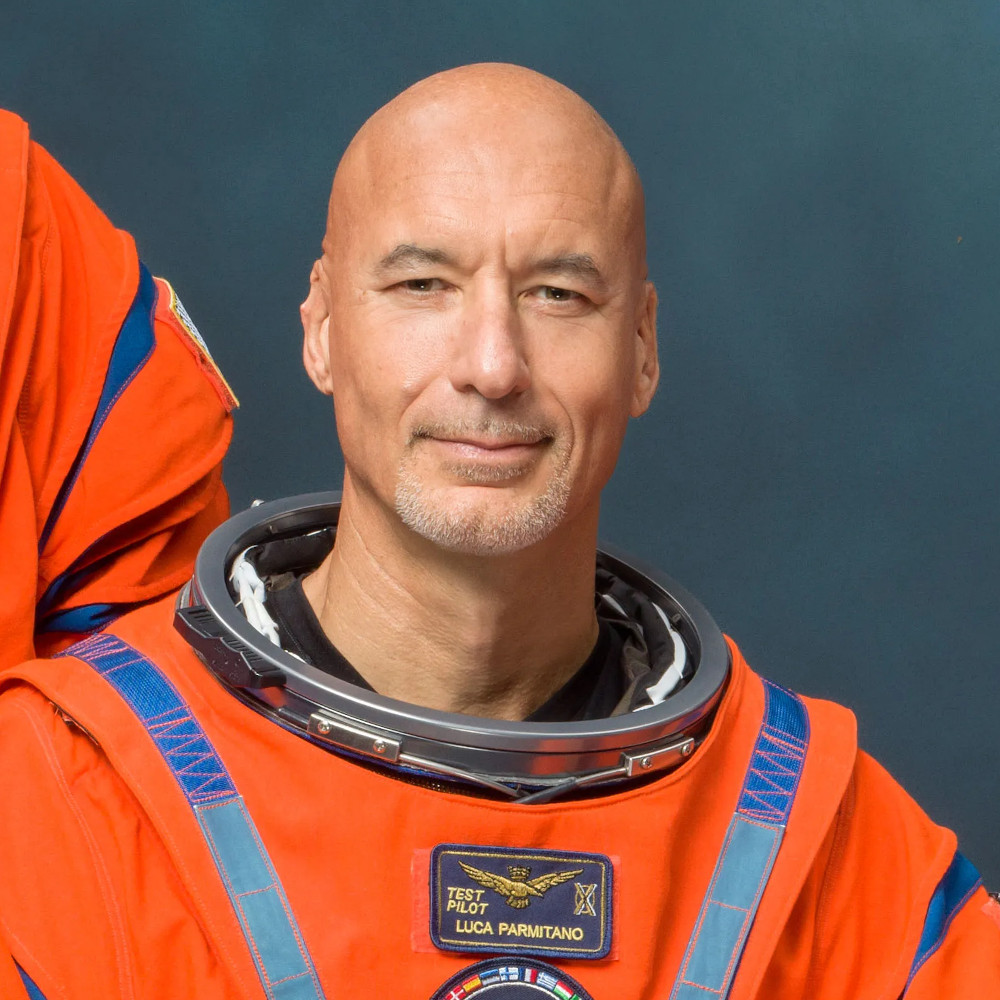
Pilot
European Space Agency (ESA) astronaut Luca Parmitano is a Colonel and Test Pilot in the Italian Air Force with 2,000+ hours of flying time on over 40 types of aircraft. He served as Flight Engineer on the International Space Station during Expedition 36/37 in 2013, during which time he became the first Italian to conduct an EVA. He successfully navigated a highly dangerous situation during his second EVA when a spacesuit malfunction caused his helmet to fill with water. He returned to the ISS in 2019 as part of Expedition 60/61, bringing his total time in space to just under 367 days.
Mission Specialist
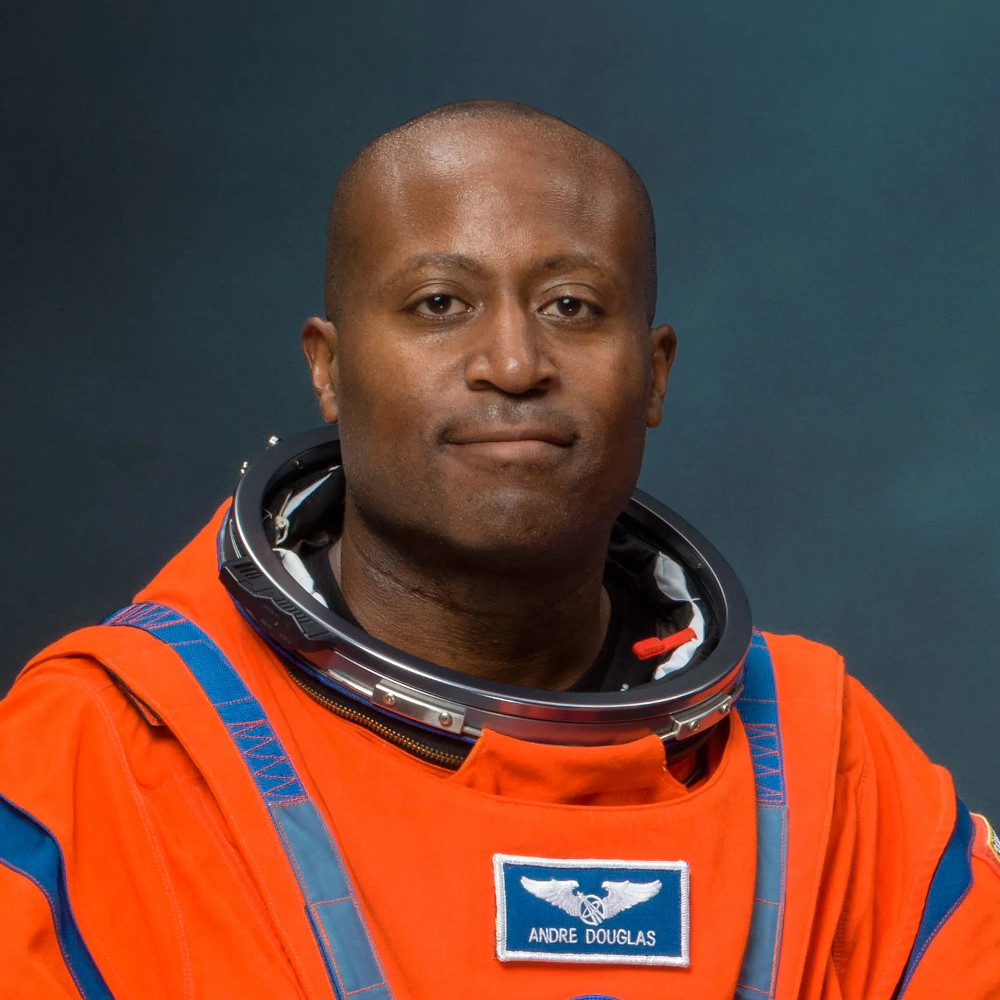
Coast Guard Reserve officer Andre Douglas holds a Bachelor of Science degree in Mechanical Engineering, Master’s degrees in Naval Architecture, Marine Engineering, Electrical Engineering, and Computer Engineering, as well as a Doctoral Degree in Systems Engineering. During his time at the Johns Hopkins University Applied Physics Laboratory, he assisted in the development of NASA’s Double Asteroid Redirection Test (DART) mission and Japan’s Martian Moons eXploration spacecraft. He completed his astronaut training in 2024, and although he served as a backup crew member for Artemis II, this will be his first spaceflight.
One Mission, Three Launches
Although astronauts are by their nature the best of the best, the collected experience and knowledge of the Artemis III crew is truly incredible — and for good reason. This flight will be one of the most challenging and technically complex operations ever conducted in space, perhaps second only to the Apollo Moon landings themselves. In the most ambitious version of the plan, three spacecraft launched by three different booster rockets will conduct a carefully choreographed operation over the course of two weeks.
To start the first phase of Artemis III, Blue Origin will use one of their New Glenn rockets to carry the Blue Moon MK2 lander into low Earth orbit. The lander is designed to spend up to 90 days in space, which will give NASA a comfortable window of opportunity to get their Space Launch System rocket and Orion spacecraft ready for liftoff. After launch Orion will rendezvous and dock with the lander, and the crew will spend the next two days performing various tests and demonstrations. If everything goes well, they will ultimately enter the lander itself and don prototypes of the spacesuits that Axiom Space is developing for the Artemis IV crew to wear on the lunar surface.
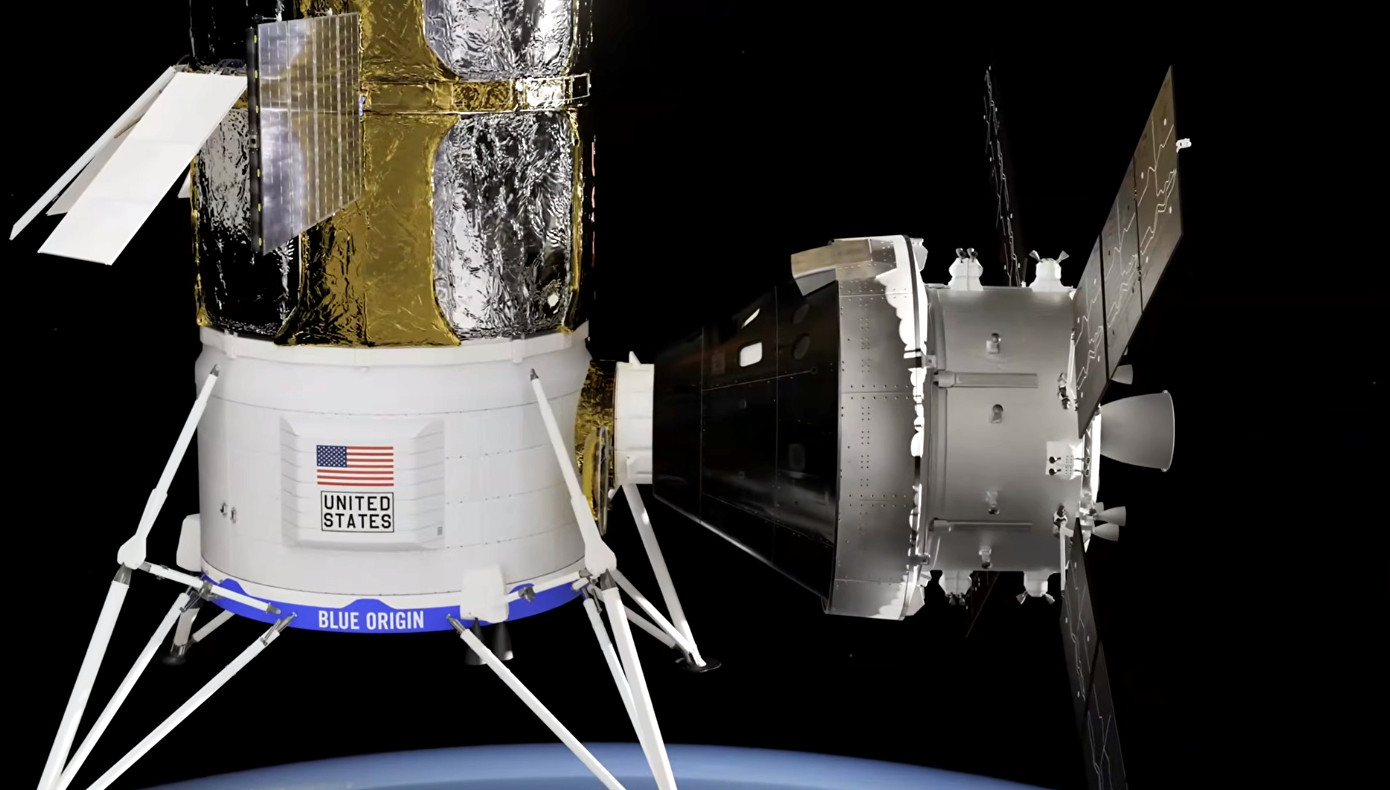
Meanwhile, SpaceX will be preparing a modified version of their Starship V3 spacecraft for liftoff atop the Super Heavy booster. Once the Orion spacecraft is undocked and clear of the Blue Moon MK2, the prototype Starship Human Landing System (HLS) will launch and meet the capsule in orbit. According to SpaceX representatives, the vehicle itself won’t be too far removed from the version that completed a test flight back in May. Compared to Blue Origin’s lander, which will feature a boilerplate cabin design and functional life support systems, the Artemis III crew won’t be able to enter this early version of HLS.
Likely in expectation that comparisons would be made between the apparent capabilities of the two landers, SpaceX Vice President of Space Operations Jessica Jensen pointed out that many of the systems that will be used in Starship HLS such as the life support and avionics are derived from the flight-proven hardware used on the Crew Dragon — with some components such as the docking system being effectively identical. From the perspective of SpaceX, it’s more important to focus on testing the new hardware and procedures being developed specifically for the Moon.
Given that astronauts will not be able to enter the Starship HLS prototype, it’s expected the crew will spend significantly less time docked to it. After conducting some maneuvers to see how the two vehicles handle in relation to each other, the Orion will depart orbit and head for a splashdown in the Pacific.
Setting Course For Artemis IV
Although the press conference was about the upcoming mission, Jensen did give some brief details on how SpaceX and NASA are working together to refine the procedures for Artemis IV in 2028.

Back when Artemis III was set to touch down on the lunar surface, the plan was for Starship HLS to first enter into a relatively uncommon Near-Rectilinear Halo Orbit (NRHO) around the Moon, where it would eventually be met by the Orion capsule. However this was largely predicated on the idea that the Lunar Gateway Station would also be in NRHO. Now that the construction of Gateway has been abandoned, there’s no reason to rendezvous in that particular orbit.
Instead Orion will now dock with Starship HLS in low Earth orbit, just like it will on Artemis III. From there, Starship will use its own engines to perform the critical trans-lunar injection burn and put both craft on course towards the Moon.
This approach is not only easier to execute, but will require less propellant and therefore fewer refueling flights — directly addressing a common criticism leveled against the Artemis architecture.
High Risk, High Reward
Calling Artemis III ambitious would be an understatement. A mission involving a trio of spacecraft and their respective launch vehicles, two of which being early prototypes, has never been attempted in the history of spaceflight. Getting just one vehicle off the ground is a challenge in itself, and although experienced gained over the decades thanks to the International Space Station has made the subsequent rendezvous between two craft relatively routine, doing it twice during the same mission adds a whole new dimension.
Even the most ardent space fan has to admit it’s exceptionally difficult to believe that the involved parties can put such a bold plan into action in the next ~18 months, especially given the recent New Glenn explosion that has left Blue Origin’s launchpad in shambles. But it will certainly be exciting to see them try.












Looking at the group photo I just can’t not see the promo images for Armageddon (1998)
Wait….
Does this mean that sls 4s job is now just to get a crew capsule to LEO?
If so that’s an expensive way to get humans up there when there are several existing systems (dragon for ex.) That can do that.
That seems like a simplistic view to me. It’s also about end-to-end system testing.
SLS 3 is just getting them to orbit so they can practice the rendezvous. They’re not even using the modified Centaur 4 upper stage which I guess will go to the moon without testing in the new configuration with SLS 4. Yes, seems super wasteful.
It’s not wasteful once you realize 1. what SLS was actually for and 2. in actuality it makes things sooo much easier for Blue Origin and SpaceX to not have to human rate the launch of the landers.
Doing training on completely different hardware just to cheap out a little is not a sane thing to do
These aren’t Legos. You can’t swap out Dragon for Orion: one was built to reach ISS orbit and the other was built for the Moon. And you can’t really launch Orion with anything else because you don’t have the human rating.
Yes, the current launch system sounds silly. That’s because Starship itself is the silly part: you don’t need this mega rocket thing to go to the Moon, but hey, SpaceX needed funding for it and Blue Origin had no launch vehicle, so here we are.
The original Artemis plan was centered around Falcon Heavy launching a lander, but SpaceX wasn’t interested in that. And that just blew the entire schedule out of the water straight from the get go.
It is what it is. SLS costs NASA nothing because if you had taken it away, the money went away. Starship costs NASA a fraction of the cost because SpaceX is fronting by far the majority of the cost. It’s silly, but this definitely isn’t the first time NASA’s done silliness because it gets them free money.
I would argue it is saving NASA money because the US government is funding it via spaceX. Rather than directly through NASA. Realistically it could all go through NASA and probably cost the US government less overall, because they wouldn’t need to pay the spacex shareholders.
“Realistically it could all go through NASA and probably cost the US government less overall, because they wouldn’t need to pay the spacex shareholders.”
Yeah, uh, no? Look, I’m not a huge fan of SpaceX because they’re close to a functional monopoly and, well, Elon Musk, so they do weird things that aren’t even close to intelligent. But the majority of SpaceX’s funding actually comes from Starlink, which also needs Starship, so no, it definitely wouldn’t have cost less through NASA unless NASA had decided to create cheap satellite internet.
So yes, it’s definitely saving money, at the low low cost (sigh) of basically destroying astronomy.
“So yes, it’s definitely saving money, at the low low cost (sigh) of basically destroying astronomy.”
Sadly, this is very true. There’s so much crap in the sky today, with more on promise for tomorrow.
“If so that’s an expensive way to get humans up there”
At $4.2 BILLION per launch (according to NASA’s Office of Inspector General (OIG) in their May 2023 report) of a completely expendable launch vehicle, that’s an expensive way to get anything up there.
It’s not a “per launch” cost. The OIG report is scathing (because it should be!) since on a cost or technical basis everyone knows NASA would never have done SLS at all – it’s congressionally mandated for Other Reasons they’re not going to say out loud.
It’s a per year cost, about 2 billion/year. They’re paying to keep the lights on. And if that sounds high, it isn’t high if it was in the correct budget line item rather than NASA.
The entire Artemis program is equal to less than one full day of social security and medicare expenses for boomers
SS and medicare are funded by a separate tax system that people pay into their whole lives, so you have that. At some point we will have medicare for all, which I’m sure you’d be happy with as well.
I do remember Luca Parmitano from watching Space Night! 🙂
https://en.wikipedia.org/wiki/Space_Night
https://www.youtube.com/watch?v=AONoF6QuF5Q
No lunar gateway. So only a repute mission?
I partially agree. Internationally, NASA had seen better days of reputation already.
However, it’s still in better conditition than the rest of that country, maybe.
NOAA has it worse, for example. Or so I read.
The country/nation currently seems to have an aversion against science and social things in general. Or so it seems, from the outside.
Must be hard for to NASA to keep face in these days and administration.
The only thing that seem to interest the average people are cheap oil/gas and affordable housing/cost of living. And taxes.
And money, of course. It’s a topic in about every US American comment on the vast internet. For years.
Money is their god, as being explained in the film “They Live”.
“They Live” and “Idiocracy” were documentaries without them knowing.
Mind experiment: If NASA hadn’t spent that sum, who would have? Military? Bureaucracy?
Also, who’s money is it anyway? The financial capital that nations have is being based on debt.
Nations do loan money from other nations, causing a debt.
Globally, every nation has debt in another nation. Each one owes someone else money.
If a nation goes bankrupt, others will follow.
If a nation pays off all its debt, same thing happens: other nations might go bankrupt.
Because they nolonger have capital based, on that former debt.
Capitalism and trade are quite simple and complex same time.
Simple at the surface, but the closer someone looks at it the less it makes sense.
NASA is Paperclip Nazi TAX….
And you keep paying it.
Ah yes, there’s NASA wasting money on SLS, a program that…. they didn’t actually want and were congressionally directed to use? And Starship, a program that’s less than 50% funded by NASA? Huh?
The entire sudden push for lunar missions is for the same reason as in the 60s. All of this is politics. You know what NASA is actually doing? Sneaking in huge amounts of science and industry participation (which… is actually a lot of just billionaire philanthropy) along the way.
JUST DELETE THE STORY if you are going to screw with the commentary like this Buddy…
Those guys are some super high achievers…
#feelingkindofdumbrightnow
You can see the effects of DEI at work when there are no female astronauts despite being more qualified, as the current admin is so deeply misogynistic they would probably have cancelled the entire mission rather than put a woman in space.
You mean Isaacman is misogynistic?
I have no idea if he is or not but do you have some reason to think that apart from this specific crew?
Also, don’t you mean ‘the effects of a hate for DEI at work’? Since DEI is suppose to be the only reason women have jobs according to the current administration in Washington.
But then why did they not bump the black guy, for being black and such and thus ‘only being hired for DEI reasons’, again according to the white house thinking.
Oh and which women are you thinking of that have so much better qualifications?
“there are no female astronauts despite being more qualified”
Names please – I have a daughter and from time to time I show her female makers, scientists and engineers.
I agree, its back to the 1970s attitude for women in the work place. Cowardly men, threatened by women are taking over again. And all those who think this is great, are probably single.
I now hear that the whitehouse insists on having a woman land on the moon ASAP.
So I guess it’s not considered DEI and my previous remark was too dismissive.
And I have to agree, it would be a good gesture to the whole planet if a woman finally also stepped on the moon.
(I continue to be against moon bases though.)
Incidentally I hear that they wanted pilots for the upcoming mission. and it made me realize that the previous mission also had a lot of pilots as crew. Now if you know that the NASA administrator is an enthusiastic pilot and flies jet fighters you have to start wondering if there isn’t a bit of a bias there.
It would be great if it appeared as a natural cause, though, I think.
In USSR, there was the female astronaut Tereshkova.
She was doing okay, but she had been used as a symbol for heir gender.
Or let’s take Star Trek TOS. It featured a mixed bridge crew that just looked natural for a crew of distant future.
It was believable, no big deal. Just normal.
There were no ongoing remarks about different gender or ideology.
It was a team of professionals doing there duty.
In my opinion, it would be nice if a mixed crew lands on the moon eventually.
But not because of DEIA requirements, but because the individuals have simply earned their position naturally. Without making a big fuss about it.
It’s just like with woman’s quota, I’m afraid.
he idea means good, but in practice it will do more harm than good,
because a quota will undermine all the hard efforts woman have spent in the past decades/centuries.
A quota will make people think “she’s only here because of the quota”.
The Omnicause rears its ugly head
NASA is bleeding personnel to SpaceX, As long as you are liars you lose market share to Elon’s men.
BS stories for gargantuan monetary inducements IS A CRIME….
Lot’s of little helpers out there too….
END human spaceflight except where it is absolutely necessary for something other than a wiener waving Moon Race v2.0 with a country we beat to the moon 57 years ago.
ONE year of ISS support costs about the same as 13 years of Curiosity.
Total Curiosity mission cost (13 years): $2.53 billion rover program + ~$750–$812 million 13 year total operating costs ≈ $3.28–$3.34 billion
Commonly cited NASA ISS operating costs are around $3 to $4 billion per year, though one source breaks that into roughly $1 billion for station operations, $350 million for ISS-related research, and about $1.7 billion for transportation/supplies.
How JPL Keeps the 13-Year-Old Curiosity Rover Doing Science
It takes some special tricks to maintain a robot 200 million kilometers from home
09 Jun 2026
https://spectrum.ieee.org/curiosity-rover-jpl-mars-science
Unfortunately, nobody cares. See: all the news coverage about the Artemis II flight. If you want people to care about science and exploration, put humans in the spacecraft.
You would be absolutely scandalized to hear about what programs I’d rather cut before manned space flight
“The End of Astronauts: Why Robots Are the Future of Exploration” (2022) is a concise, provocative book by astronomer Martin Rees (UK Astronomer Royal) and science writer Donald Goldsmith. It argues that, for scientific exploration beyond low-Earth orbit (LEO), robotic missions offer far superior efficiency, safety, and cost-effectiveness compared to human astronauts. The authors do not oppose all human spaceflight—they accept continued activity in LEO (e.g., on the ISS or successors) and possibly limited private or symbolic efforts—but contend that “we do not need astronauts as space explorers” for the coming decades, especially for destinations like the Moon, Mars, or asteroids.
Core Thesis and Structure
The book challenges the romantic appeal of “boots on the ground” by emphasizing practical realities:
Human limitations: Astronauts require life support (air, food, water, radiation shielding), face health risks (radiation exposure, microgravity effects on bones/muscles/eyes, psychological strain), and demand vastly more mass, complexity, and expense—often 10x or more than robotic equivalents. Human bodies have not evolved for space and will remain constrained even as technology advances.
Robotic advantages: Robots (and future AI-enhanced ones) can operate autonomously or with ground control, endure harsh conditions indefinitely, range more widely, collect/analyze data efficiently, and avoid risking lives. Past successes like Mars rovers, Cassini, or New Horizons demonstrate this; advancing AI will further close any gap in adaptability or “on-the-spot” decision-making. Robots also minimize planetary contamination (forward or backward).
Economics and priorities: A single crewed Mars mission could fund dozens of robotic ones, yielding more science per dollar. Public funding should prioritize high-return robotic exploration over prestige-driven human flights. The book covers organizing space efforts, near-Earth orbit, the Moon, Mars, asteroids, colonization, global costs, and space law across nine chapters.
The authors ground their case in data, history, and projections rather than ideology. They note that robots have already outperformed humans in many exploratory roles and will continue to improve rapidly, while human physiology stays roughly the same until speculative cyborg or genetic modifications (which they see as distant or transforming humans into something non-biological).
Critique of the Fantasy of Human Colonization of Mars
The book’s most pointed skepticism targets visions of large-scale human settlement or “colonization” of Mars, often associated with figures like Elon Musk. Rees and Goldsmith view these as overhyped science-fiction fantasies disconnected from near-term realities:
Immense costs and logistics: Sending and sustaining humans requires transporting enormous supplies for life support, habitats, return fuel (or in-situ resource utilization that remains unproven at scale), and redundancy for failures. Radiation shielding, dust storms, thin CO₂ atmosphere, low gravity (~38% of Earth’s), and extreme cold compound the challenges. Terraforming Mars is dismissed as unrealistic—we’re already struggling to manage Earth’s climate, let alone transforming another planet.
Risk to humans and science: Long-duration missions expose crews to career-ending or life-shortening radiation doses; psychological isolation could lead to issues; and any “colony” would likely remain dependent on Earth for decades or longer. Biological contamination (e.g., Earth microbes from astronauts or equipment) could compromise searches for native Martian life, muddying scientific conclusions. The authors highlight how robotic missions avoid these risks while enabling broader, safer surveys.
Lack of compelling rationale: They question the “destiny” narrative, arguing that vague appeals to human expansion or inspiration don’t outweigh the opportunity costs. For exploration and science, robots deliver more value. Permanent colonies aren’t justified by resources (e.g., helium-3 on the Moon is overhyped) or economics in the foreseeable future. Any early human presence on Mars would likely be tiny, one-way private adventures by the ultra-wealthy, not self-sustaining societies—and even then, survivors might need heavy genetic/cyborg modifications, effectively becoming a new “species.”
Broader context: The book critiques hype from billionaires and agencies, noting that space law remains underdeveloped for conflict over resources or claims, and that public budgets are finite. Romantic “manifest destiny” analogies to historical colonization ignore the vastly harsher environment and ethical issues (e.g., potential harm to any hypothetical Martian biosphere).
In the epilogue, the authors offer a tempered long-term view: By 2040, exploration remains mostly robotic; far-future “post-human” entities (heavily augmented) might venture deeper into space, but flesh-and-blood humans are unlikely to thrive beyond Earth without becoming something else.
Overall, “The End of Astronauts” is a pragmatic, science-focused call to temper expectations: Robots aren’t just a temporary stand-in; for exploration in the solar system over the next few decades, they represent the smarter, safer, and more productive path. Human presence in space has value for other reasons (e.g., LEO research, symbolism), but it shouldn’t drive planetary exploration at the expense of better alternatives.
Why Space Reality Kills Your Space Dreams
Eager Space
Nov 2, 2025
There are many grand space dreams – large habitats in orbit, colonies on mars, lunar tourism – but those dreams will only happen if somebody can make money implementing the dream.
https://www.youtube.com/watch?v=U3aSAjuHdFI
cool, now ask AI “why is posting AI responses to a one-line question over and over responsible for the downfall of civilization”
I’m so glad I do live in Europe, where we have kept a somewhat romantic, naive and rose colored idea of space exploration.
Wait! But in “Astronaut Farmer” a single person did make the dream come true all alone! :D
Sure, let’s just stay under our beds and hide until the heat death of the universe. Space is scary.
Didn’t read. Only soulless bug-people think that we can simply automate away the intangible qualities of exploration. You’re speaking with unearned confidence and arrogance while you are clearly missing the piece of your brain which is needed to understand things that are perceivable to 99% of every human who has ever lived.
The topic already appeared in Star Trek in the 1960s.
It’s touched in the M5 episode, when our heros wonder how far automatization should go and whether the human factor still matters.
https://www.youtube.com/watch?v=x6Z18LIk_8s
Ambitious goals?
Artemis I was a do-over of Apollo 7 (visit LEO)
Artemis II was a do-over of Apollo 8 (Around the moon on a free return orbit)
Artemis III will be a do-over of Apollo 9 (Practice docking/undocking with a lunar lander in LEO)
Less than half of the people alive today have experienced those missions. Every person working on Artemis is doing it for the first time ever.
Well we got sidetracked for a while and we need to re-learn all that stuff, it’s a necessary step
Apollo 8 was more ambitious, though. It involved an orbital maneuver. Artemis II was more of an fly-by around the moon, with most work being done by physics itself.
But still, it’s okay considering that most knowledge and expertise from 50 years ago was forgotten during the long pause.
Sigh, nasa not doing what the old NASA was so good at….
More in search of cash and management perks…