
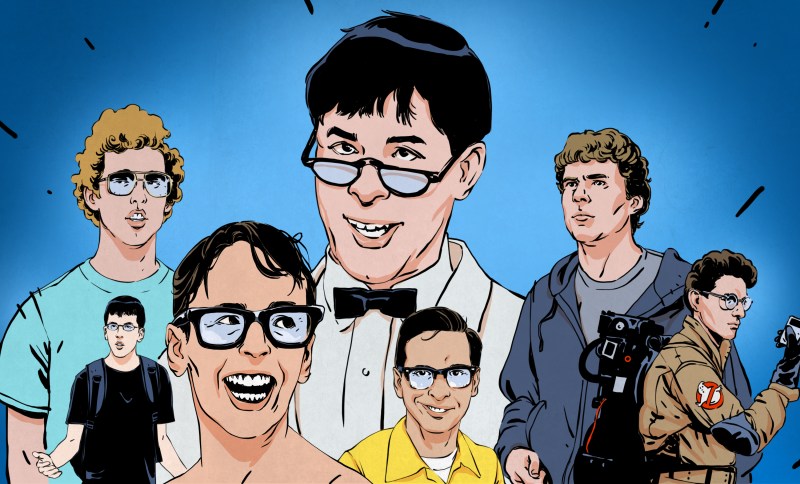
Knowing absolutely nothing about you other than the fact that you’re currently reading Hackaday, I can predict with a high degree of certainty that we’re both fond of at least a few of the same movies. That’s not to say they’re necessarily our favorite works of art. Indeed, in some cases they may even be objectively bad films. But the memory of them has stuck with us — and by extension nearly everyone else in the hacker and maker community — for decades.
Even if you don’t remember all the little details, you’ll never forget the names: movies like WarGames, Ghostbusters, Back to the Future, and Short Circuit. Stories that showed smart people using their intellect and a bit of cobbled together hardware to triumph over the bad guys. The tech wasn’t always believable, sometimes it was downright farcical. But they made it seem real, and by the end of the story when they won the day using brains and a soldering iron rather than fists or a gun, the minutia of how it all worked wasn’t really that important anyway.
 It’s not a stretch to say that films such as these helped put many of us on a path towards science and technology. For those with an interest in more cerebral pursuits, seeing a scientist or an engineer save the day was hugely influential. How many engineers got their start watching Scotty frantically eke just a bit more power out of the Enterprise?
But as we recently discussed some of these classic movies behind the scenes here at Hackaday, it struck us that all of the best examples we could come up with were now 20, 30, or even 40 years old. That’s not to say there aren’t a few contemporary standouts, but they mostly seem to be biopics or other historical dramatizations which don’t quite scratch the same itch. Even so, none of them appear to have had the cultural impact necessary to stand the test of time in the same way their predecessors have.
So where have all of Hollywood’s heroic nerds gone, and what does it mean for future generations if these niche role models are no longer represented?
Evil Geniuses and Thick Glasses
Before we get lost down memory lane, we should acknowledge that there’s undoubtedly an element of survivorship bias at play here. We naturally identify with the examples that put techie types on a pedestal, and tend to forget about the less flattering portrayals. In truth, it seems that there’s was only a short period of time in which the classic “nerd” characters got promoted from comedic sidekick roles to protagonists. Before that, and arguably after, it’s a different story.
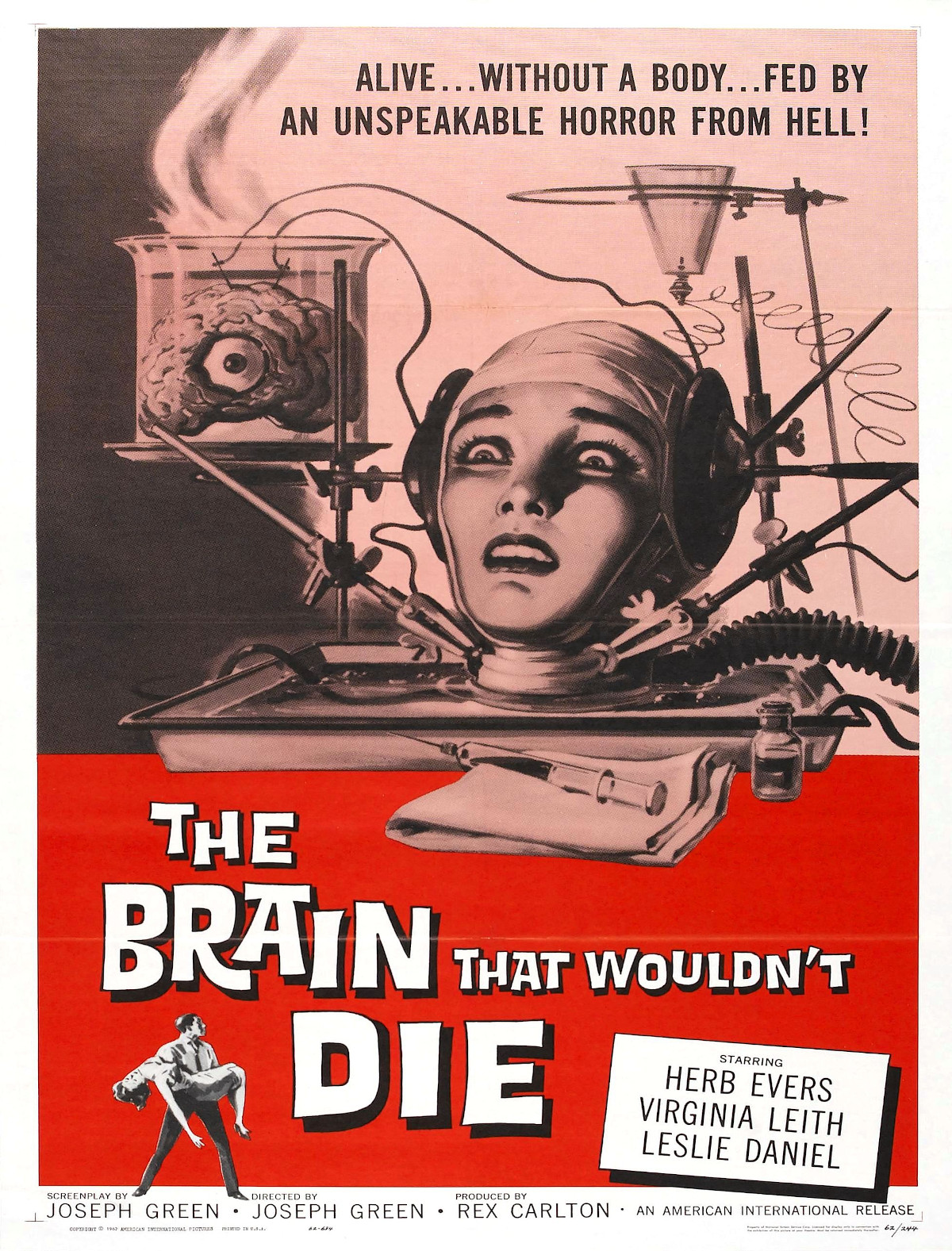 In the early days, the archetype of the “Mad Scientist” was extremely pervasive. From the 1940s up until the 60s or so, you’d be hard pressed to find a drive-in that wasn’t showing the latest hideous creature pieced together by an unscrupulous doctor. But it wasn’t a concept limited to horror and science fiction. After all, MI6 wasn’t in the habit of dispatching James Bond to defeat drooling imbeciles. Whether they knew how to build killer robots or were titans of industry, the smartest person in the room was often seen as the most dangerous.
In a way, that was still less insulting than the alternative. If a scientist wasn’t trying to forcibly transplant somebody’s brain, they probably had a pocket protector, horn-rimmed glasses, unkempt hair, and buck teeth. My sincere apologies to any readers who may currently meet that description. They might not have been the “bad guy” in the traditional sense, and may even have ended up helping out the heroes in their own way, but nobody was looking at the screen and wishing they were the one with the lisp and the lab coat.
A particularly notable case is The Nutty Professor, in which Jerry Lewis portrays the quintessential nerd who uses his knowledge of chemistry to create a confident and suave alter-ego for himself in the style of Jekyll and Hyde. To be fair, the movie ultimately makes a statement about being true to yourself and the importance of what’s on the inside. But ironically, more than 60 years later, the imagery of Lewis hamming it up as a socially awkward intellectual is undeniably the film’s most indelible element.
The Era of Golden Geeks
At the dawn of the 80s, things started to change. You still had the classic bespectacled nerd, but increasingly films started to put greater focus on their skills and abilities. The “geeks vs jocks” trope became very popular, perhaps most famously exemplified by the Revenge of the Nerds franchise which managed to wring four films out of the concept.
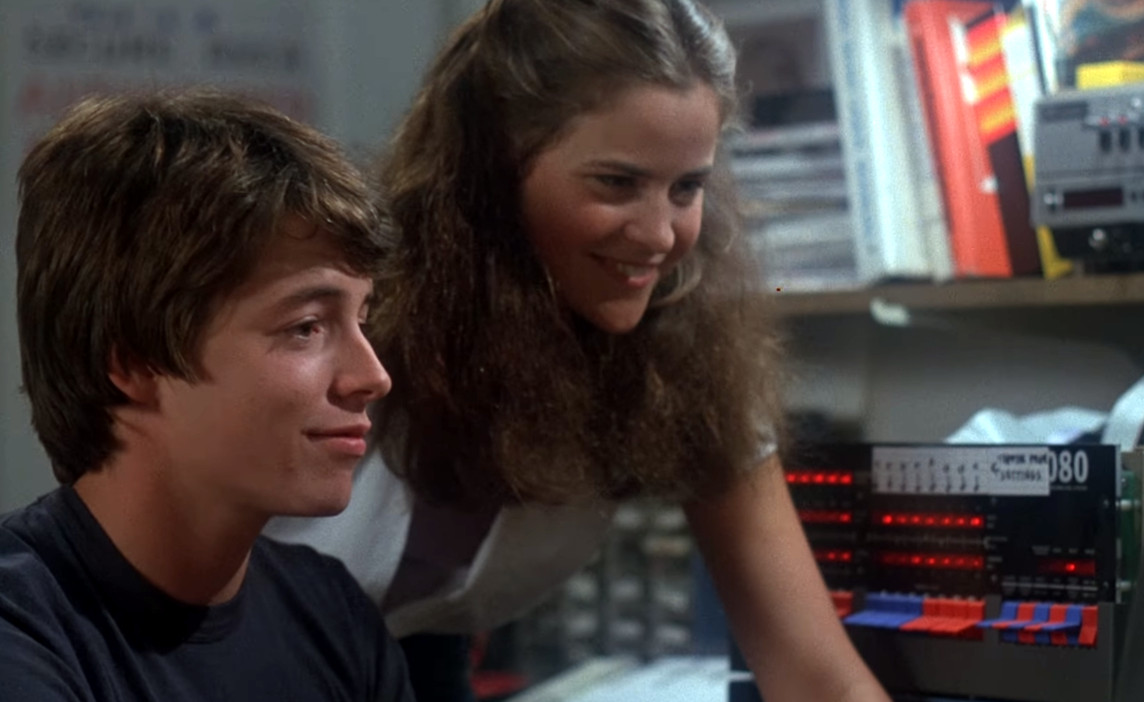
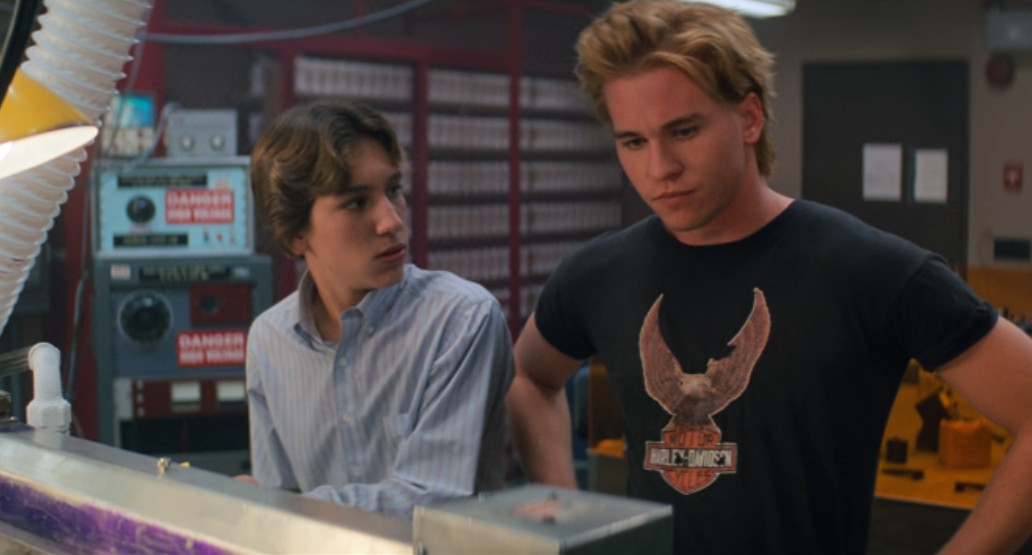
Now a new breed of nerd started to emerge in film that was young, charismatic, and handsome. The only thing that identified Matthew Broderick’s character in WarGames as anything other than a normal teenager in 1983 was the fact that he had a computer in his bedroom and knew how to program it. Steve Guttenberg played a heartthrob roboticist in Short Circuit, and they really screwed the curve up for the rest of us when they cast Val Kilmer as a laser prodigy in Real Genius. The nerds even started to find love, and one wonders how many young men spent their evenings furiously flipping switches on the front panel of their IMSAI 8080 in hopes that a breathless Ally Sheedy might appear in their doorway with an urgent mission that needed their unique expertise. I don’t know about anyone else, but I still haven’t given up hope.
Even school-age kids were getting in on the action. In 1985, Explorers featured a trio of youngsters who built their own spacecraft after assembling a circuit board based on a schematic they collectively dreamt about. The same year saw the release of The Goonies, and while only one of the kids was a tech wiz, they were all clearly meant to be somewhat off-center socially.
Of course, the most famous and culturally relevant example of 1980s nerds using their tech skills to save the day is Ghostbusters. Three 30-something scientists not only determine the physical properties of supernatural entities through empirical research, but also design and construct the equipment necessary to combat them. The resulting “Proton Pack”, which brilliantly captured the look and feel of a piece of hardware hastily thrown together from scavenged parts, became what is arguably the most iconic prop in cinema history. Not only has it been lovingly and reverently recreated by hackers and makers countless times since the movie’s release in 1985, but not a Halloween goes by that you won’t see at least one strapped to the back of a child.
What’s a Nerd, Anyway?
There’s little question that the 1980s represent the high-water mark for nerds in media, but it’s not as if somebody flipped a switch and it all ended at once. There are a few standouts from the early 1990s, with Sneakers coming immediately to mind. It not only meets all of the criteria we’ve discussed here, it’s legitimately an excellent film with an incredible cast. If you haven’t already, please go watch Sneakers.
But for all the hate it’s gotten over the years, I’d also give the nod to Hackers. With a reminder that technical accuracy was never one of the criteria, it absolutely ticks the proper boxes when it comes to young, competent people using their technical skills for good. Plus, if Kilmer raised the bar for hot hackers in film, Angelina Jolie sent it into orbit.
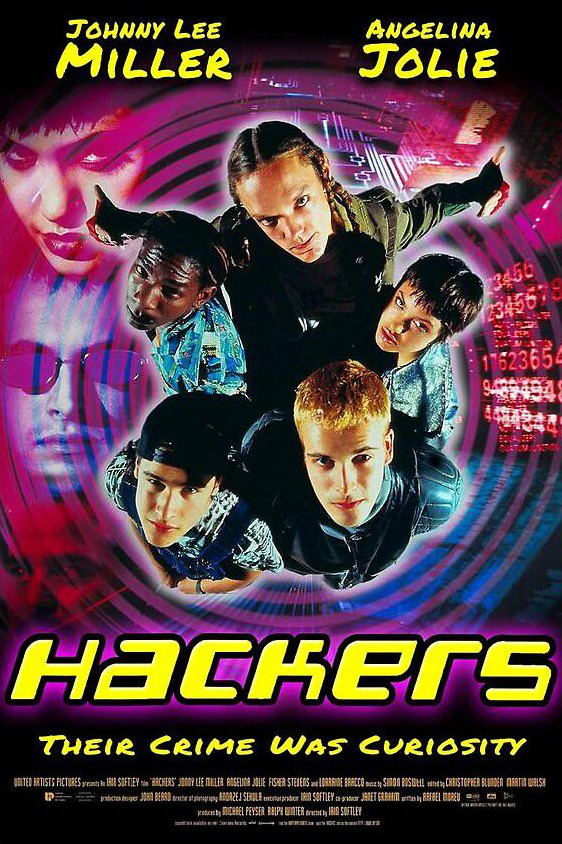 Although the aesthetic benefit that Jolie’s character brings to the film is beyond contestation, it’s important to note that Hackers presents her as exceptionally skilled, with abilities that meet or exceed those of her male peers. The fact that those abilities are accepted by every character in the film without question is a testament to how the audience’s expectations were changing at the dawn of the 2000s. The boys in Revenge of the Nerds might have been able to get away with a panty raid in 1984, but by 1995, the girls were popping shells with the best of them.
That said, those evolving standards may be the reason these type of movies seem to be so uncommon today. Given the expectations and the technical proficiency of the average moviegoer in 2026, what exactly would a nerd hero actually look like? The nerd stereotypes from the Nutty Professor era would be all but completely unrecognizable to modern audiences, and while one could argue that the likes of Elon Musk and Jeff Bezos are getting uncomfortably close to real-life Bond villains, that’s taking us in the wrong direction.
The reality is, it will take more than a teenager with a computer to captivate audiences today. Or to put it another way, if everyone in the theater is at least a little bit of a nerd to begin with, it’s much more difficult to create that mystique on the screen without taking the story to fantastical lengths.
Or at least, that’s one possibility. We’d love to hear your thoughts on the past, present, and future of nerds in the media. Will we ever see the likes of Real Genius and WarGames again, or has the world simply moved on? Are nerds normal?












You missed one that is arguably the BEST of the genre, “Real Genius”
But did they?
Not sure what happened but when I clicked “continue reading” there was no additional text, just the comment section.
Chango said “but did they?” regarding MY comment about them missing “Real Genius”, my response explains that when I posted that comment, something must have either went wrong with my computer loading the page, or the articles submission as the sections “Evil geniuses and thick glasses” and those after it were not displayed on my screen. So when I posted I hadnt seen the “Real Genius:” content inclusion.
Sorry if you struggle to understand. No need to be nasty. Enjoy Your Bliss!
Sorry to seem nasty. It was genuine concern, but I could have been more thoughtful in my phrasing. There are at least a couple of regular commenters who are not quite themselves these days.
I seriously doubt it was genuine concern. There is no way you expected a positive result from “Maybe you should talk to a doctor.” Over the years HAD comments have increasingly become a redditesque snarkshow. Its a shame as this used to be a rather interesting and informative corner of the internet.
Peanut gallery effect: when throwing peanuts at the stage and heckling the actors is more entertaining than the show itself.
Zombieland 2009, where a nerd sticks to his survival rules (a bit OCD) and saves his travelling companions.
The picture of Val Kilmer in the laser lab is “Real Genius
Would Macgyver, the original and remake, count ? Or Scorpion ? Or Big Bang Theory, and it’s spinoffs ? Maybe the short lived Rabbit Hole ?
I still cant believe Scorpion got made.
But then again, Catch me if you can, and BloodSport got made too
Its strange to me that Hollywood is so easily taken in by such blatant and obvious pathological liars as Obrian, Abagnale, and Dux.
i can’t believe Big Bang Theory got made. i find it an unwatchable anachronism. and the jokes presuppose that nerds and their interests are ridiculous. do actual nerds like that show?
i feel the same. although i have witnessed those in the transition to nerddom feel comfort in having cliché ‘nerds’ be main characters. seeing that show without the laugh track made it all the more jarring elevating it to full cringe.
hmm, “transition to nerdom” — i’m picturing a popular cheerleader suddenly quitting the sorority, vanishing from the party scene, and spending all her time working on an open-source software project. soon she has her hair tied back and she’s wearing a pair of thick-rimmed glasses. the transition is complete!
It’s impossible to transition into a nerd. You can emulate some of the same features by certain drugs or selective brain injury, but you cannot replicate the experiences and thought processes of a person who has never been normal.
Those who attempt a transition by collecting paraphernalia an play-acting a stereotype are properly called “hipsters”. You’ll find that they are actually anti-nerds because their entire point is social acceptance and conformity to a group.
To answer your question, NO. My daughter and her friends at Caltech hated it.
In my opinion, Big Bang Theory was a victim of its popularity. For the first 3 seasons, it celebrated nerd culture and the jokes were some level of intelligent. Then it went mainstream and they started making fun of nerd culture and everything became about super heroes and underdog romance. The jokes were no longer intelligent.
That’s just how tv production works. You start off strong until you get a strong following, and then coast down with filler until the audience starts to dwindle down below some critical figure.
Also known as the “Lost” effect, or why The Simpsons keeps on going despite having lost its original point as an anti-sitcom.
Yeah I watched only one episode because everyone (non nerds) kept telling me (nerd) I’d love it. Not so much. And that Sheldon character made me almost homicidal.
Hated that show from day one. The nerd construct only exists in the US as far as I can see.
The I.T. Crowd
This show was consistently funny, and you could tell they were writing for other nerds
Pure genius
If you don’t like “woke,” just keep sleeping and quit bothering the rest of us who would like a better world.
thank you so much…!
Agreed, I’m tired of these hateful people
And you think if someone disagrees with your view of the world they are “hateful”.
Do us a favor and articulate your sentiments against “woke” culture. Like really expand on why you think “woke” is bad.
Then we can talk about who has the right when discussing what is and is not hateful.
And respond with hate lol. They seem to lack the ability to listen to their own advice and just skip it or ignore it. Me personally am tired of not being able to get out a simple factual sentence without having to do mental gymnastics for everyone in the room.
But here is a good example. If they had skipped that comment and came here to say what they were going to say, it would not be taking up so much space. I guess it is “holding that space” for other opinions lol.
What happened to the hero nerd? They became evil turds that built telemetry systems for ICBMs and then went into techbro capitalism. Anytime I see a fellow graybeard with a lakehouse I can be pretty sure the DoD paid for it.
Hollywood has a tendency to chase popular trends
One of the trends that’s been around recently especially in films relates to “woke” culture.
What this means in practice
Discourage the protagonist from being white, male or both, typically also any form of “hero” character
Although feel free to make the villain white and British (we have better accents for that sort of thing)
Encourage the protagonist into being ethnically diverse, feminine, or sexually diverse
even to the detriment of the writing in so far as forcing everyone to remember the above points over and over and over again.
(recent Dr Who being the perfect example), instead of being a character trait, making it a main focus of the story.
Discourage masculine story lines that focus on systematic or systemizing such as building or technology focused.
(think iron man building a suit hacked together with the Lego operating system)
Encourage feminine story style writing that focus more on relationships betrayal or drama.
(think mills boon books or television shows such as Dallas)
End Goal
1. score as many social media points as possible for a dopamine hit from friends online and for future jobs from like minded people
2. Bonus points for political messaging and encouraging Victimisation or oppression of the protagonist
For points 3 and 4 these actually matter more than points 1 and 2.
1 and 2 are more just warning flags about the mindset of the writer (usually at Disney) before seeing the movie or series (see IronHeart for reference)
If you avoid the political messaging then 3 and 4 can be equally valuable but appeal to different types of audiences
Battlestar Galatica would be a good example, the original 70’s series being more systematic and encouraging the traditional fight of good against evil with clear boundaries between both sides.
The remade TV series instead focusing on personal relationships, back stabbing and betrayal (everyone trying to guess who is a cylon in disguise)
This.
it’s telling that a major political party took a word used as positive in a minority community and uses it as a general-purpose cudgel against all the societal advancements they resent
It’s interesting to argue for moral relativism for a counterpoint to the conservative view, and define social progress as a track that just so happens to line up with your own ideas.
is it though? I read of conservatives arguing from moral relativistic standpoints all the time, populists who insist that their “free speech” against minorities are morally equal to political protests, and that money spent is equal to free speech. It’s the Right that weaponized moral relativism. Frankly I don’t get how someone can square this philosophy with a “hacking” website that celebrates re-purposing products we’re deluged with from corporations. Isn’t their protected IP more important than any libtards desire to explore?
Well, if the intention is to troll. If you take it seriously though…
Point being, it doesn’t matter who’s using it – the argument is still hypocritical. It’s throwing just enough smoke on the matter that you can argue the status quo isn’t the only valid system, and then insist on yours instead.
Today’s progressives are tomorrow’s conservatives, because the question isn’t really about moving towards a perfect society – there is no such thing – the point is perpetual motion. Even if everything was more or less okay, there’s still one thing missing: I’m not in charge of it. Therefore I must find something wrong with the present situation, and present myself as the solution.
Let’s take the idea that there is no perfect society. There’s always someone who doesn’t fit or who’s treated less fairly.
So we get a group of people who demand that we must fix this. They gain social and political, and by proxy economic power from campaigning for the cause.
But then, another group emerges in reaction that states we must not change a thing, or even move in the other direction, and they too gain social, political, and economic power out of campaigning their way.
We may identify one group as “left” and the other group as “right”, but they’re virtually identical in their function. What one does, the other does too. What works for one, the other copies.
all of your arguments fall apart very easily at the last statement alone- the left and the right saying they’re the same thing at this point, that’s a completely indefensible argument. I have watched the right ignore science and reason, promote conspiracies endlessly with no evidence, celebrate and elect people known for hateful dialogue, while I watch the left trying to bring reason and rational thought, science and an understanding of medicine back to the forefront. literally the only people claiming both sides are the same are people who are on the right trying to deflect from their own gargantuan failings that everyone else can see from space. I have never once seen anyone actually on the left claim they are no different than the right. but I have seen people on the right do it consistently. I think that says everything that needs to be said. you are proving there are plenty of right-wing tech bros who decided to come here to go on about “woke”, when none of you even know what it means anymore. no one can provide a definition you just use it as a catch all statement for everything you disagree with. The hero nerd doesn’t exist anymore because as other commenters have pointed out, all the people who grew up with these heroes turned into the archetype of the tech bro, and decided to help create a surveillance society and everything else that’s just enshittification of every aspect of American Life as long as they can make a buck. I have hope that this place won’t become like Slashdot did because people here seem to have a caring community
That’s also not an argument that anyone made.
Which is exactly the same thing that happened in the early 20th century, only the roles were reversed. Leading up to the world wars was the era or Romanticism that rejected reason for subjectivity and idealism, which in turn gave birth to philosophies like Hegelianism, and by proxy Marxist Dialectical Materialism which is basically, without going to detail, just bullshitting your way into power by defining black into white and back again as it suits you. All over the place, it was compelling populist nonsense and mental gymnastics designed to confuse people into supporting despots and dictators like Hitler or Stalin.
Today as the left is standing in the high tower and declaring themselves to be the party of rationalism and science to justify themselves – even if what they’re really saying is still largely bullshit – the right is taking on the role of the rebel and spewing populist nonsense, because it works. Both sides gain power from the conflict – not one without the other. They’re not saying they’re the same, they’re saying they’re different so you would pick sides and give it to them.
It used to be about minority rights and self-determination against discrimination, but then around the 60-70’s it got co-opted by the political left to push radical socialism as a synonym, and who knows what you have to believe to be genuinely “woke” today.
It’s kinda like the common argument, “You’re anti-socialist, but what about your pensions? What about your social aid? Your unemployment compensation?” – Well, if you wanna be technical about it, none of those were socialist inventions in the first place… and were actually opposed by the left in the early 20th century as being just a bone the capitalists were throwing at the proletariat. A bad compromise if you will, since the aim was for the total dictatorship of the proletariat instead of a collaboration between the classes.
Funny how ideas and words keep changing their meaning.
If you are going to argue, start with defining terms. i.e. I doubt you hold a common definition of “woke” between you. That would make both of you, or none of you, fools.
still waiting on the better part. lots of things have gotten worse though.
Agreed, I’m tired of these hateful people.
Tony Stark and Bruce Banner are two modern nerds that come to mind. Even Clint Barton had some maker moments.
Came here to say the same thing. The Marvel Cinematic Universe seems to celebrate intelligence in a handful of characters. Tony Stark is the ultimate modern nerd! Dr. Strange was a big nerd as well, intelligence essentially being the foundation of his power. Black Panther Shuri, Ms. Marvel Bruno Carrelli, and even Peter Parker have their aptitude for technology highlighted in the films and television series. Ouroboros (O.B.) in Loki is a huge nerd, 400 years as the chief engineer of the Time Variance Authority’s (TVA) Repairs and Advancement department; and Loki himself is a pretty big nerd learning temporal tech to save the day.
Because of Civil War? Or something else? I don’t interact with alt-right asshats enough to know their memes.
Capeslop and politics are two sides of the same turd.
Well except the one you can go your entire life and not really be affected by its absense, but the other ruins your life on a daily basis.
Too bad too that ruffalo is a raving jew hater and seemingly always wrong on anything political.
I wish I had never seen his private views.
Maybe they should use the old system and contractually force actors to STFU already.
Yeah yeah, Williams or somebody will delete my comment, and then feel he did a good thing for ‘keeping a (political bait-) article non-political’.
If you remove reboots, remakes, and Superhero movies, Hollywood hasnt really done much of note in ANY genre in the last 20+ years.
this
pretty much. a lot of safe bet franchise things. but that bet is getting a lot less safe as people give up on movies. maybe its time to let the dead rest. at least a cuthulu-esque sleep.
Agreed. Writing in Hollywood is the original AI slop, absolutely no effort made anymore, people have been commenting on that for decades.
…and in the final act of self destruction, they float articles about how other places “stole” Hollywood. It’s like a kingdom that can’t produce any heirs or maintain a credible defense (or product) – it disappears completely or fades into irrelevance.
Bollywood copied Hollywood, and took the art to the new heights. Still going strong, btw, generating movies and whatnots in unknown hundreds.
IMHO, There wasn’t much left in Hollywood to copy in the late 1990s early 2000s, since by then it was mostly done recycling all the leftovers from the 1980s. Also, it became prohibitively expensive to do anything at all (costs of production went up due to drying up demand) and affordable pro grade cameras allowed smaller/agile indy shops to do their things elsewhere. Once the FX stuffs expenses dropped from the stratosphere into the lap of average Sam, Hollywood became largely historical oddity powered by the inertia/inertias of previous decades. Youtube is another reason why – anyone can make a short movie and show it to the World Movie Theater for the price of free bypassing all the distribution channels/parasites/middlemen, and since a lot of Hollywood goodies were built with exclusive distribution in mind it couldn’t compete.
Sears did the same – failed to compete with its only worthy rival, free online catalogs, and went bust, and it didn’t help that Sears owned some of the best good brands (that they drove into the ground, btw), so Hollywood is our present-day Sears, struggling to compete with its worthy rivals, maybe competition wasn’t it style after all : – ]
Update – there are few Hollywood movies that I find quite good, “Project Hail Mary” is one of them, in addition to “The Martian”, “Gravity”, “Apollo 13” and others.
What I was driving at is that the Hollywood’s potential for minting out good solid respectable movies similar in magnitude to “Back to the Future” has greatly diminished. While it still can mint “Weird Science” flicks, these are still off my roster of movies to watch, and I lost the count of occurrences where the script was both awfully predictable and full of standard/mandatory diversions unrelated to the main plot, which HAD to be included for no particular/obvious reasons/logic.
At this point I feel like Musk and Bezos are real life Bond villains and they know it. They even seem to cultivate that vibe as if it’s something they’ve always aspired to.
Part of the problem I suspect is down to agency, though. Technology these days, especially when shaped and controlled by the aforementioned Bond villains, no longer believably provides the kind of leverage for a band of charismatic nerds to win in a cenematic swoop because the bad guys have the same tech and more resources, and the complexity and time that goes into advancing something enough to gain even an incremental edge is hard to convey and harder to make believable.
(Also, surface mount boards don’t make for the same kind of pleasing lab bench montage since the difference in scale between the people and devices makes any shot that holds the character’s hands and face so wide that something like an 0608 resistor is a mere speck).
I take comfort in knowing that for every real life Cosmo there’s thousands of Mothers quietly keeping watch: training government imposed biases out of LLM models, creating public disaggregated encrypted wireless networks, bringing the abuse potential of “safety” surveillance cameras to light, and infiltrating the ranks of SoC vendors and pushing them towards open source.
the theatrical billionaires might have written much of that legislation, because lots of mandatory red tape to do business helps keep small annoying up-comers down
historically much of governance is maintaining control, power and wealth. corrupt governance that is, allowing and facilitating the creation of villans portrayed by politicians, CEOs, Directors, Insurance, Financial organisations, etc. lot’s of examples through history of fair, collaborative democratic or communistic communities. Perhaps the ‘Nerds’ being alt to the mainstream, government/industry propaganda controlled, population is the real reason for the lack of films celebrating independent thought and intellectual achievement. Not to mention, the only way the greedy maintain control is through complicity, they certainly don’t want to help fuel an uprising. Even so shows like Andor get made, tho these are the exception. There are modern films like Ready Player One (i know just wade through the nostalgia vomit with me for a moment) depicts hyper focused individuals who seize the day through reviewing documentation, technological skills and individual thought.
This is the description of the villain’s complex in James Bond/Moonraker… fill in the blanks:
We’re approaching the main complex now. That’s where the is made? That’s right, workshops, hangars, design and experimental blocks, test centres, everything. I’d heard that ______ is obsessed with the conquest of space. … Mr ______ is financing the entire training program out of his own pocket.
(the villain in Moonraker is Hugo Drax)
Two sides can be equally bad you know.
Even if they have different ways of applying it.
“The nine most terrifying words in the English language are: I’m from the government, and I’m here to help.”
-Ronald Reagan
It’d make more immediate sense for that quote to end with “myself” – usually to someone else’s money, property, or freedom.
BTW – to one of your previous comments: So, it’s Simpsons > Family Guy > Rick and Morty?
That would be explaining the joke to make it less funny.
The other question I don’t understand.
What? No mention of Hacker Man?! The greatest of them all?
https://m.youtube.com/watch?v=fQGbXmkSArs&pp=ygUJSGFja2VybWFu
OMG > why the Hades is the sequel still not released except for a leaked 10 minute teaser. Hacker Man is the greatest Nerd Hero as he could control time and space from the keyboard of an otherwise primitive computer.
Here’s from a comment by Clark on the Smart Bulb WiFi Server article:
That’s it. That’s why nerds were big in movies — because a home enthusiast could reach the bleeding edge and dramatically exceed the kind of magic that was widely deployed. Now, all the magic is everywhere and the geek doesn’t have any superpowers that the rube doesn’t have. The ubiquity of it all destroys the magical feeling, and in fact replaces it with a sinister feeling.
Now every secret agent or action hero has a little bag of insane magic, just because. They don’t have to be a tech enthusiast or wizard, it’s part of the basic equipment list.
Exactly. Fifteen years ago, for Halloween, I put servos and speakers in a pair of plastic, life-size, human skulls. A circuit moved the jaw when there was audio so it looked like they were talking. When someone walked up, the skulls would tell jokes, sing songs, do a riff on “Whose on first”, etc. People were amazed. Both kids and parents would stay and watch for awhile, sometimes until the routines started repeating.
The magic died when Big Box stores started selling animatronic stuff by the truckload.
Where in the world did you live that had not been already been ruined by Big Mouth Billy Bass?
‘ruined’ is the wrong word there….
I personally liked the dancing coke can the best, you know the one with the sunglasses.
I disagree, take AI, there are tons of people that use it but there are a few that can really use it, that know the ins-and-outs and can make it do things it is prohibited from doing for instance, or simply are able to write the prompt that gets results where the majority fails.
There will always be nerds in the sense that they, due to their fascinations, gain superior knowledge that make them have abilities that are above average in the world of tech.
I’ve seen people that use smartphones and apps all day every day but then when an issue comes up turn out to not be aware of the underlying subsystems and concepts of the OS, because it’s not something they were ever interested in exploring, and then they are stuck and need help.
Mr Robot exists
I stopped watching that when they actually bleeped a drama.. and I could not find an uncensored copy..
But even at that point the character was already exposed as a pathetic addict and no longer a character one could sympathize with really, let alone describe as a ‘hero’.
idk how you can hack on the hard drugs, i make stupid mistakes after a few bong hits.
I don’t call weed ‘drugs’ really, nor would I describe its users as addicts per se. I mean I know people who thought they were starting to use too much and felt they were getting the signs of paranoia that some people get as a side-effect, so they toned it down.
Seems well controllable.
Basically I’m Just saying I don’t call you, or weed users in general, ‘a pathetic addict’ LordNothing.
I love both coding and a good time but not together
Unfortunately it was not very good. Managed to struggle my way through the first half of series 1, but that’s it.
Did you miss the recent Ryan Gosling vehicle? The one where he plays an ex-exobiologist turned passionate science educator that always looks disheveled? And uses critical thinking and experimental methods to discover the cause of and solution to Earth’s impending doom? The one that’s currently the third highest grossing movie of 2026? Directed by the creators of an animated movie about a socially awkward wacky scientist and another about channeling creativity through Legos? Based on a book by an ex-Warcraft dev? Where the biggest nerd critique has to do with improper centrifuge loading technique?
Nah, we’ve still got nerds in Hollywood.
Yes. Yes, I did.
It seems as though I don’t know much nearly as much about this niche genre as some. Apparently, Nerd Movie Nerd is a thing. :-)
I did mean to address this since it seemed likely somebody would point out The Martian or Project Hail Mary (no surprise they came from the same mind) which have obviously met with great commercial success and are probably the closest thing we have right now.
But while watching highly trained people competently do what they were trained to do is indeed satisfying (one could argue this a large part of what has made Star Trek a success for 60+ years), it’s very different from a high school kid piecing together a computer from trash to dial into NORAD, or college students developing a new type of laser that everyone else thought was impossible. Realistic or not, we can see ourselves much more readily in these characters than somebody who spent half their life training for a Mars mission. It probably also goes without saying that the stakes involved for these characters are far greater.
In other words, the lived experience of nearly anyone reading this website would be far closer to David Lightman in WarGames than Mark Watney or Ryland Grace.
Perhaps less critically but worth mentioning is that all of the movies I’m referring to have, to some degree, a “bad guy” for our heroes to use their intellect against. No matter how bad things can go, Mars will never be a villain and you’ll never get the audience to root against a planet. The films that have made the biggest and most lasting impact on the community have all had an element of rebellion to them which obviously resonates with hackers, again playing into into how relatable they end up being.
Wasn’t Sneakers “highly trained people competently doing what they were trained to do”? Why then wouldn’t Ryland Grace be allowed in the club? Many of us are far along in technical careers that we’re passionate about but also secretly dream we’d accidentally fall into a spy thriller or end up getting Space Camp’d into a deep space mission. So where are we drawing the nerd line now that we’re no longer branded as social deviants in media?
River Phoenix played the hacker in Sneakers, a raw kid with superpowers that make him a peer to a seasoned professional (Robert Redford)
Bonus round.
Contact: Nerd movie or no? Discuss.
Extra bonus round.
Same question, but: Arrival.
Most eXtreme Challenge:
Are the main characters of Primer nerds or tech bros? You can choose only one.
wknd watch list locked in. but might need a pen and paper for primer. Any recommendations for n>3 graphpaper?
I have to reply here since the mention of Primer is too deeply nested to get a response. Those guys are definitely Tech Bros, not nerds. And they showcase all the sociopathy of a billionaire well before their time-travel arbitrage makes them actual billions.
That was 28 years ago, not exactly related to the question if there are current ‘nerd heros’.
This article does not clearly define a nerd (despite having paragraph called “What’s a Nerd, Anyway?”) but it does put geeks, engineers and hackers under that term and even call 30+ scientists “the most famous and culturally relevant example of 1980s nerds”. Emmet Brown was also 30+ scientist. Scotty was engineer. So how botanist and mechanical engineer who “science the shit out of” whatever limited resources he does not fit the definition? How come that “realistic or not” we would see ourselves much more as scientists chasing ghosts (literally not metaphorically) rather than engineer using his skills to survive on Mars? Now when earths main villains plan mission to Mars?
The days of “flip a bit/switch and be the hero” are long over. You have to be highly trained to get anything done outside of app-country.
You still can have the love for everything tech and nerdy. There are so many nerd heros out there because they never let go of that initial curiosity and became hyper professional as a result.
One of my favourite examples would be Fitz/Simmons from Agents of Shield.
“You have to be highly trained to get anything done outside of app-country.”
You are on a damn site with hundreds of hacks done by people that are not highly trained aren’t you? So what gives? Or do you only read the ones you have confirmed are done by highly trained people?
Hey, awesome display of profiency in answering completely outside the context of the conversation. Or in the olden language: you, troll.
Ah, you are insane, excuse me, I didn’t know.
Here, have a cookie, troll.
Have you seen the recent Anthropic ad? Nerd models (people not “models”) are a thing now.
I think it’s safe to say most of us here don’t see ads ;-).
Thanks for mentioning that. I see VERY few ads on my own devices, yet I hadn’t tripped over “Anthropic ad”. Must be a slow brain day for me.
They do sneak into podcast though, and sometimes you can’t skip because you are busy with things and can’t access controls.
And Anthropic likes to do ads there.
Although Arthur said ‘seen’.
Ian Malcom from the Jurassic Park franchise probably deserves a mention too, although his math abilities seldom get put to use.
Alan Grant and Ellie Sattler are definitely also nerds, and they get to use their special nerd knowledge in the movie.
No, no, no. The Power Nerd in JP was Lex Murphy. A self proclaimed hacker. “This is Unix! I know this!”
I’m suprised Independence day didn’t get mentioned. Uploading a virus to an alien craft was positively brilliant. It also includes several sterotypes which makes for even more awesomeness!
Hard to count ID since the upload to the alien mothership is pretty much the shoot lasers down the vent of the deathstar moment, not the plot of the film, and is done from a hijacked alien craft, piloted with zero mods, and the upload was done by a 43 year old MIT-educated satellite engineer and technological expert.
If they had hacked together an alien drive and transmitter from a few downed craft, or if jeff goldblum had been a 16 year old high school student who had broken the alien transmission code using the computer he built in his parents basement from scrounged parts and a chip he found during a “meteor shower” then maybe it would have been worth a mention.
Yeah ID represents a transitional point…43 year old MIT graduate in the 1990s was meant to send us the message that 20 years earlier he was one of those hacker kids in the 1970s that were orbiting, if not exactly attending, MIT.
i dont buy that a militant alien race would have lax cybersecurity.
Being that they were using one of the alien ships,
Its kind of understood that their cybersecurity was bypassed by “trusted system” access.
If they were attacking a planet that was anywhere close to their own technological level then maybe they would have been more militant about deauthorizing downed craft access codes.
You would have to capture an alien computer that you could power up and then the best and brightest would have to study it for a years to even start to consider it, with only a fraction of a chance of creating a virus and being able to get it to run.
I wonder what [Ken Shirriff] thought of it. (He’s one that might be part of a team doing the research.)
Fortunately it wasn’t a serious movie so you could laugh it off.
It’s a result of the appropriation of nerd culture by mainstream culture in the late 00s / early 10s.
Once every ordinary person decided they were actually a nerd, there was no room in the popular consciousness for the archetype of the nerd. In fact people started to dislike the stereotypical science/programming/engineering/math nerd character, because it reminds them they don’t have the specialist knowledge and skills that used to define nerddom, before it came to mean “liking mainstream TV shows”.
Same reason computer programmers are called “tech bros” nowadays. There’s nothing “broey” about us, we’re nerds. But if ordinary people are nerds, they can’t call us that. So we must actually be jocks.
There’s something a little broey about a fair chunk of nerds.
It’s not a liberal arts school that has the ‘hop skip and puke’ (for range) contest.
Don’t know if Rolla has tamed ‘extravaganza’…hope not.
It’s basically also in our daily language.
Use of ‘buttload’ in conversation etc.
Blunt technical assessments.
It’s not that we’re jocks, but we haven’t been compliant to the woke orthodoxy.
Things have to continue working until they grow the F up, so we ignore them.
We, the genuinely weird, are confused AF by the wanna be weird attention seekers…
‘That has to be uncomfortable.’
In my youth, nerds were among the outcasts.
But we still wouldn’t hang out with the ‘new wave kids’ (the emos of our day).
We were still nerd headbangers/punks.
Tribes are aligned way differently.
Rolla, nice
there is some overlap but imo tech bros are differentiated by social and economic relations than by nerdiness :)
iow, it’s a modern take on nouveau riche
People like Bill Gates carefully and intentionally cultivated their nerd mystique.
Then we found out they had other proclivities.
At the same time the misogynistic, bigoted, Ayn Rand quoting “Rationalist Effective Altruist” techbro became a cultural staple.
The same ones who cry foul every time a female is depicted as a “nerd” because, well, look at the asinine assertions by those guys (the techbros).
Hollywood doesn’t care about its message, it just wants sales.
Nerds have become controversial.
Maybe you should get out of your basement once in a while and stop over amplifying stereotypes.
Sorry, it’s not clear from your response – are you defending the cultist Rationalists, the Effective Altruist thieves or the Techbro misogynists?
Or was it the billionaire techies with “singular interests”?
Tell me you’re old without telling me you’re old.
Indeed, it’s hard to say what he is going for.
And what he means with over-amplifying stereotypes when that is the very subject.
But yeah Hollywood wants sales, but they are also living in another world and what moves and steers them is hard to determine sometimes.
And the trends come and go in waves, maybe at some point it’ll be ‘nerd hero’ wave again.
idk how you can like Ayn Rand and be a misogynist at the same time. she was kind of peak feminist. she understood something modern feminists do not, accountability. every modern successful biusiness womean is essentially following dagny taggart’s story arc.
Ayn Rands works come from a period in which female equality was more about gaining parity than punishing poor behavior of the patriarchy.
Atlas Shrugged is famously complex regarding feminism. It promotes the radical equality of capability and rejects traditional gender roles. However, the novel fundamentally rejects modern feminist dogma and organized movements.
She publicly declared herself a “male chauvinist” in her later years, arguing that true women shouldn’t want positions of power over men, dismissed the organized feminist movement, famously labeling it a “phony movement” with Marxist origins. Argued she would not vote for a woman president. She clarified this wasn’t due to a lack of female capability, but rather her belief that running for executive office went against a woman’s “feminine” nature, which she believed thrived in a private, individual sphere. And wrote that a psychologically healthy, independent woman should ultimately desire to engage in “hero worship,” requiring a man whom she could intellectually and physically look up to.
So its actually quite easy to like Ayn Rand while being a misogynist.
It’s like lasing a stick of dynamite!
Nicely done, sir.
Because all of the mystique went down the drain with the real ones becoming extremely successful, which consequently made them famous enough to be closely followed just to turn out to be some of the worst and most annoying people alive
This – B. Gates and the NWO (ie Soros). Keep people in poverty so they can stay in power. He’s the worst kind of nerd…
We’ve always had a soft spot for “Small Soldiers”. Although it was fanciful (but fun) at the time technology’s rapidly approaching the point where something like this could become a reality. Buried in the fun is the notion that the desire for profit and the need to get ahead of the competition outweighs the caution needed when introducing technologies that seem fun but carry potential dangers. (Here you don’t need anything as complex as robots and AI — just look at what happens when you sell small motorcycles, aka “e-bikes”, to pre-teens.)
I will assume that Mr Nardi is not the being the typical writer, and is above the pro forma click-baiting and/or trolling that passes for modern journalism.
I see four problems with the geek/nerd movie character as the quietly competent protagonist in future films.
Problem Zero. Current US government policy is that scientists and engineers are idiots and shall be ignored and shunned. The ‘Mark Watneys’ of generation ‘Y’ and ‘Z’ will most likely flee the country. The days of respect once offered to well-educated, quietly competent engineers such as Bill Nye and Neil Armstrong are gone.
Problem One. Hollywood is, and always has been, a shill machine for nationalistic jingoism. American film production is not about making art; that is, the contemporary film released for the U.S. audience is designed as nuanced or overt propaganda. Thusly, many American films are designed to be a policy statement, and to direct public sentiment.
Problem Two. Education in general and STEM education in particular, at least outside of places such as China and Singapore, is weak and caters to the sensitivities of the weak-minded and ethically-challenged. An undergrad education in many American schools is a drunken and/or stoned continuation of high school illiteracy.
American education have been permamently damanged by the previous 30 years of institutional profiteering. Crumbling state and federal support make it worse.
Problem Three. My generation, the boomers, began this idiocracy. The idiocracy is firmly entrenched culturally, procedurally, and bureaucratically. Mostly because the we boomers run the political power machines and hoard much of the liquid capital. I’ll be worm food in a few years, when it will be too late for subsequent generations to recover from the mental malaise inflicted by the various media machines.
If you think that I am a bleeding heart neo-liberal, ivy-league educated, insular, rich old man, you would be wrong. I’ve seen more of the world than most. I got my degrees at a state school after a stint as a jarhead. I am not rich, but am more ‘comfortable’ than most. I own it; we screwed the pooch. Have a few good ales and watch the crap that comes out of Hollywood until its all over, both metaphorically and literally.
Undergrad has been a drunken/stoned party for many freshman since, at the latest, ‘Animal House’.
Schools take the drunk’s parent’s money.
‘A fool and their money were lucky to get together in the first place.’
Can’t really blame the colleges, especially those charging 50K$/year to babysit.
Parents are fools for not 87th trimester aborting those useless helpless clusters of cells.
That doesn’t change the outcome for the good students, never has.
Steady stream of drunken freshman girls to F silly.
Engineering school had it’s good points…trick is not picking the sausage fest campus.
Old people always sit on capital, don’t feel guilty.
The kids would piss the money away on avocado toast, charbucks and blue/green hair dye.
Same as the rest of the money they didn’t earn.
are you okay? is there something we can do to help you? it seems like some deeply entrenched rage, factual or not, is fueling your comments. I’m sure many will be able to point you in the direction of professional help, useful information, guides for personal development if you’re interested?
I’m feeling suicdal but I’m still gathering weapons, ammunition and I’m modifying my car to go out with a major bang. September 11 is going to be a blast again.
That’s awesome!
Maybe you could share your name and address with us so we can join you?
You seem to have a great sense of humor and be a genuinely warm and caring person. Bright, educated, mature and well-read.
Easy, trigger. Consider your words.
Brian, there so much wrong with your post I don’t know where to begin…
Problem Zero: Bill Nye as an example? Seriously? This buffoon doesn’t even understand basic human biology! Just google him if you don’t understand what I mean.
Problem One: Hollywood was taken over by the liberal elites years ago when it was filled with communist and socialists. It still is. Get rid of them and films would get better but it’s not going to happen.
Problem Two: see problem one! Liberal elites and teacher unions have take any possible money for STEM and use it to fund their cushy retirements. Remember, those who can do, those who can’t teach, and those that can’t teach, teach the teachers. The US spends more per pupil with failed results. This is why.
Problem Three: stop your identity politics – Not ALL boomers are too blame. If you feel so guilty, donate your “liquid capital hoard” to some STEM class. I bet you won’t.
You need help, dude. A man with multiple degrees doesn’t mean one is intelligent or even know what they are talking about. Maybe stop drinking so many Ales?
Quincy M.E. is not technically a nerd. But one thing about that show is that it mentioned chemicals and what nefarious uses they could be leveraged for far more than any of the CSI franchise ever did. It is almost like as time marches on things are dumbed down, and this indeed may well be required as common sense has become an extremely rare commodity.
Abby on CSI(? one of those), until she just couldn’t pull off the ‘young goth nerd’ persona and became ‘middle aged goth pretending to be young while running test kits on automated machine’.
I surprised breaking bad did not make the list of nerd heroes. But it does look like this is only focused on the nerd heroes silver screen.
walter white is an anti-hero.
Go watch The Accountant (both of them) for some recent “nerd hero” action.
Yet another hyperbolic anti-hero. Autism, in itself, does not qualify as being a nerd/geek. The genre of movie character being purported by Mr Nardi is the quietly-competent techno-protaganist.
Interesting side note. I know a few kids that were 0317s in the sandbox. They are classic examples of the ‘quietly competent’. None were autistic. And strangely, none were sociopaths, as all had come to terms with what they had done.
Weird science
Poor example. There is no science in ‘Weird Science’. It is a tale of idiocy and fantasy. The protaganists are socially inept adolescents that do not demonstrate any notable technical competence.
Yet Chappie gets no mention? Sad face!
All I see is Napoleon Dynamite, and am wondering what the exact wording of the brief was for the (excellent) artist.
Another vote for Chappie though.
McLovin didn’t really get a mention either.
“Of course, the most famous and culturally relevant example of 1980s nerds using their tech skills to save the day is Ghostbusters”
Was sure it was MacGyver. No one ever said “you really ghostbustered this problem”.
Are we talking about nerds, engineers, hackers or scientists? Supporting roles or main ones? Must use science only, science and violence or just be smart and equipped with whatever weapon/superpower (s)he invented/have? Must be a nerd movie or just contain a nerd? Short list for last 25 years:
– Tony Stark (Avengers frachise)
– Peter Parker (the Amazing Spiderman)
– Bruce Wayne, Lucious Fox (Batman)
– Elliot Alderson (Mr. Robot) – basically almost every character there is tech aware
– Benji Dunn and Luther Stickell (Mission Impossible franchise)
– Tej and Ramsey (Fast and Furious franchise)
– Stanley Jobson (Swordfish)
– Charlie Eppes (Numb3rs)
– Q (James Bond francise)
– Nicholas Hathaway (Blackhat)
– Angela Bennett (Atlas)
– Lunella Lafayette (Moon Girl and Devil Dinosaur) – never too old for cartoons
– Mark Watney (the Martian) – “I’m gonna have to science the shit out of this”)
– Roy and Maurice (The IT crowd)
– Frenchie (the Boys)
And honorable mention from ’90:
Dexter (Dexter’s laboratory)
Can’t believe I had to scroll so far to see a mention of Q.
He had a great role in Licence to Kill…. but IMO his best line was “it’s called a ghetto blaster!” in Living Daylights.
I may or may not have been inspired by Q back in the day to put Estes rockets in pretty much everything. Turns out it’s quite hard to make them fly straight.
I hope the new films will capture Q’s spirit somehow without being too cringe.
No mention of Weird Science? Is the author sex avoidant or unaware that every technology eventually and often sooner gets used for porn? I would also cite the surprisingly good remake of The Italian Job and *The X-Files”.
Yes, it seems like all the good ones in large public view are gone, replaced by people who have appropriated the image or used their skills to make the world an evil place. Zuck, Elon, etc. I don’t see the wealthy good ones. only an army of tech bros creating a surveillance society at every turn, with no heroes showing up to stop it.
When you take a person with a characteristic impedance and indifference to social interaction and a detail-oriented rigid thinking style, what you get is the classic stereotypical nerd who just wants to do their own weird little thing without being hounded by bullies and jerks.
When you give that person excessive amounts of money or publicity instead of bullies, they become Elon Musk or Greta Thunberg.
It’s two sides of the same coin.
The good ones quit before their millions turned into billions. They can be found in their garages, barns, sailboats, tinkering on what fancies their interest.
Show me a Bond movie without Q having developed something cool. They even had the equivalent in XXX.
an interesting example because Q got young at the same time as other exemplar hackers got old
cant say i liked any of these movies. of course im a very atypical nerd. i look like something between rasputin and the undertaker (definate pro wrestler build), i listen to metal, i had sex in my teens, but i can still do nerd stuff. i mostly watched war movies, especially about vietnam, but lots of ww1, ww2, civil war as well. im more likely to quote apocalypse now than space camp. i do like scifi, but usually the hard stuff.
So many past comments are beginning to make sense… ;)
The nerds finally got their revenge – but it turns out a lot of socially awkward people with esoteric interests were actually small minded obsessive jerks.
certainly explains big tech. i think they were bullied as kids and are now taking it out on the normies. unfortunately i wish they wouldn’t take down their fellow nerds as well.
i still have a soft spot for elon though, he has the cheapest internet in the area (the only one offering actual unlimited internet at two thirds the price point of the two slow capped isps in this town). also rockets. i love rockets. and bezos is having rud problems right now. still looking to see what stoke can do, its entirely possible they can beat everyone to the full reusability punch by reducing scale. i dont get the hate, he solved half the left’s doomsday scenarios.
I believe the same positive qualities that make a stereotypical nerd persistent in pursuing their own special interest regardless of social pressure is also a negative quality that makes them obstinate and selfish. It’s two sides of the same coin.
The missing variable is the ambition and access to power.
I disagree with that assessment. That may be some people but it’s not the majority.
Elon simply used his family’s money to buy his way to the top and buy a lot of the nerds. he pretends to be one but he’s the jock that shows up at the nerd party who realizes the nerds are fun, but really he’s just buying relationships. This is why he bought Tesla, instead of actually developing it, it was nerds that did all the work for him he just sits at the top as a figurehead and a fool drowning in ketamine. a lot of silicon valley bought into his image, I know people in that area who used to love him, and I kept warning them he isn’t what he seems. this was 10 years ago.
Elon just had money and decided to use the power of nerds to achieve his aims and now he uses what he has to parrot his own apartheid views, claiming white genocide is happening (its not) when his daddy owns a huge emerald mine.
Elon used the nerds, he isn’t actually one. He’s merely a white supremacist cosplaying as a nerd using the nerds and money to shield his image. and by being an outspoken personality he gets rubes to defend him.
If Elon focused on rockets and EVs, there wouldn’t be a problem. Social media is the problem, and Elon being rich enough to buy twitter and amplify his crazy talk.
No, the small minded jerks who won are the same pricks that were bullying the “nerds” in the first place, only with power comes the ability to rewrite the history books.
There’s a bias in thinking that the underdog is always a saint, and some modern ideologies even take it as a premise.
But take ten stereotypical nerds with conflicting preferences or ideas and place them in an environment where they are made powerful and shielded from the consequences of their behavior, and what do you get?
A hackerspace
Don’t ask me how I know 😂
Pretty much this, yes
The Amateur 1981 (and 2025) ?
I used to dismiss the word ‘woke’, and its users, but at this point the main bulk of the people called ‘woke’ are such a satirical-on-themselves (and often awful) bunch that I came to a point I also sometimes use it.
At the same time I get annoyed and argue with people that use the term to dismiss normal sane stuff.
It’s best, I think, to either not get polarized or get multi-polarized :)
Did you see how I avoided saying ‘bi-polarized’ ;)
I’m late, but I think the Hollywood hero geek phenomenon was much more of a reaction to the culture and less of an inspiration(esp if you’re not a straight white male). The fact is that even in “Back to the Future”, the lesson of George McFly was; “don’t pick on the nerd who might become a big shot lawyer or doctor”. But Hollywood was noticing these types were becoming billionaires, and potential film investors, not just the wealthiest geek in town. And so now we’re seeing a retraction, with one of the results of geek influence being Tech Bros, giving one pause to think, maybe some of that social awkwardness really was sociopathic. It’s not a lovable flaw, but a serious one, given how many of them become the wealthiest men in the world, and the world is no better for it. “Revenge of the Nerds” indeed. The real lesson is not the friends you make along the way, but to not look for aspirational role models in Hollywood fluff, ever, at all. Read a freakin’ book!
Being oblivious to social cues and rules, and being indifferent to them, is not the same problem – but it can lead to similar outcomes. Especially if the first kind of person has no reason or motivation to figure it out, because they’re living in their own insular social bubble filled with yes-men and they’re too rich to care.
Which moves you up the list—if you think having an iota of empathy if a bad thing you’re the problem.
Agreed.
These people claiming empathy is weakness are the weakest minded. I’m convinced nerds mostly went one of two paths-when they were bullied as kids for being smart, some learned empathy because of their own experience and went on to become better people.
Some people though internalized the hatred and decided empathy is for the pathetic and that they would use their skills to inflict everything on others that was done to them. This guy seems like one of them. all those guys that were nerds that turned to this path became tech bros, who don’t care at all what their technology does to the world as long as they can make a buck
…and then there’s toxic suicidal empathy. You can’t argue that empathy is always good. Sometimes, it’s manipulated by evil people to take advantage of others or to exploit system resources. But then there are those or dispute or rationalize “evil” so it doesn’t really exist – usually for their own benefit.
Too much empathy leads to antipathy, because the person cannot understand why other people don’t seem to care. When other people don’t share the same strong sense of moral outrage and urgency, they seem to be either ignorant or evil. If they’re ignorant, they must be preached to – if they’re evil, they must be destroyed.
The same effect happens when a person has a very rigid and rule-bound sense of morality and justice. They become pests, because they cannot adjust to suit the situation and the people they’re dealing with.
Both kind of people create conflict out of normal situations and make enemies out of regular people by being unreasonably good.
There’s also the third version, where empathy is not missing or rejected, but the person has such poor social skills that they miss all the cues to use it.
Empathy is about feedback, and if the feedback loop is broken then the system can run off in any direction.
The Matrix, Neo? [asking for a friend]
i would really like some home automation to control the opening of the windows and turning on the fans at night and shutting them down come about 9 am… thinking cheap auto-closing chicken coop doors and fans are easy , but need semi smart control system, running BASIC or something to check the temps and run the relays
https://www.walmart.com/ip/Pet-Deluxe-Automatic-Chicken-Coop-Door-Aluminum-Weatherproof-Coops-Door-Opener-Timer-Predator-Resistant-Self-Locking-Auto-Doors-Home-Farm/1945099444
This whole post (and its related comments) fails to take into account the fact that the examples give are not all Nerds.
I thought it was common knowledge that there are geeks, dweebs, and nerds. There is a clear distinction between them.
Those who know, know….
The moved to China? Tech otakus save the world is literally the slogan of the company behind the Gensin Impact games lol.
A magnificent quote on intellectual capability at bottom
https://greygirlbeast.livejournal.com/2041835.html
I will argue that Hackers was actually surprisingly accurate if you strip off the cheesy stuff they had to wrap it in to make it work on a screen – they use war-dialling (these days it would be war-driving), dumpster diving, and social engineering to gather passwords and other sensitive information and the “boss fight” is a coordinated DDOS attack.
Swap the payphones for public wifi and a lot of it would hold up today – hell even some of the fashions are coming back…