
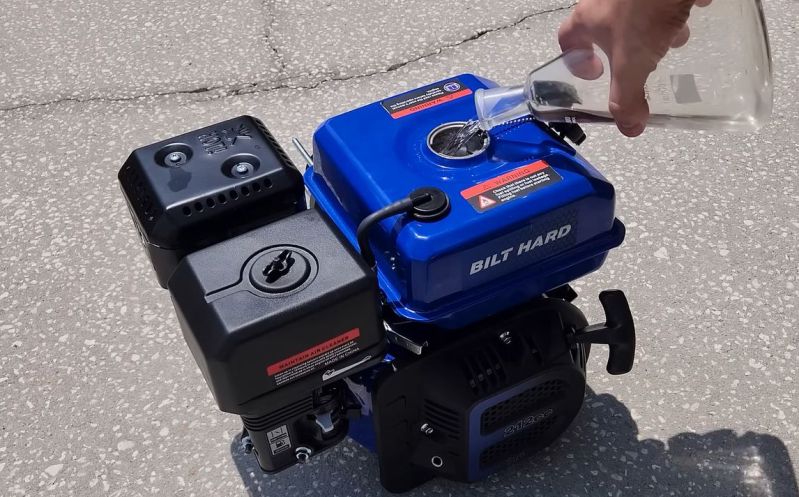
In these trying times it seems appropriate to work through some ‘what if ‘ scenarios, such as the local gas station suddenly not having any more gasoline to sell you, or said gas station ceasing to exist altogether. In that case it can be incredibly useful to be able to create your own gasoline alternative in the form of ethanol. As demonstrated by [Hyperspace Pirate] in a recent video this process is fairly straightforward once you have procured an appropriate feedstock, such as here sugar (sucrose).
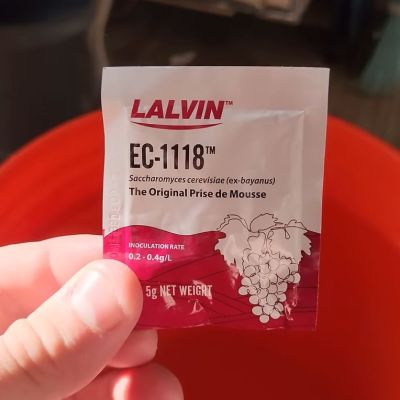
Although baker’s yeast (Saccaromyces cerevisiae) is more commonly associated with the production of ethanol-laced drinks, there’s nothing that says that you cannot distill out the approximately 10-15% ethanol that results from a yeast feeding frenzy and resulting waste products.
How to do this distillation step is explained in the video, with the mixture heated and put through a self-made reflux column to deal with the fact that the water/ethanol mixture is an azeotropic mixture, meaning that a lot of water is expected to make its way out of the condenser along with ethanol without this measure to condense as much of the water vapor before it can make its way to the top of the column.
Ultimately the conversion rate of plain white sugar to ethanol is about 54%, with the rest turning into CO2. With an appropriately converted combustion engine for running on 100% ethanol, it runs pretty well, though the final cost per liter of ethanol will heavily depend on your feedstock.
With the full costs of the electric heater of the distillation column taken into account – at 2.57 kWh/L – as well as the cost of the off-the-shelf sugar, [Hyperspace Pirate] with his Florida kWh cost of $0.12 paid around $2.62/L, or $9.91 per gallon. Even with how much prices at the gas pump have shot up recently, you’d pretty much need to find a free source of feedstock and otherwise optimize the process for it to make much sense, even in this economy.
That said, it’s crazy that the world of Mad Max doesn’t run on ethanol. If tomorrow a certain bubble were to implode and the global economy fell apart as a result, producing bioethanol would seem to be a highly marketable skill.












Continuous feed vacuum distillation cam significantly reduce the energy required to separate ethanol from the other constituents.
… and solar power is pretty cheap these days, a set of panels, battery and inverter with 1kW peak output costs around 1kEUR, I guess prices are similar in the US (well…. you got tariffs, so, uh, maybe?) and could reduce your normal energy bill (when not distilling ethanol – which may or may not be legal where you are, check the rules before moonshining) by quite a bit. Essentially my washing machine, dryer or dishwasher have no energy cost (oh, and my 3d printer, too, just not all at the same time).
For this application, solar thermal troughs would be more practical and affordable. Some well shaped aluminum and properly placed pipes can produce all the heat necessary for distillation without needing to bother with electricity,
As for the legality, In the United States, you can legally produce up to 10,000 proof gallons of ethanol per year for personal use. However, you cannot legally just start distilling; you must first apply for and receive a free Alcohol Fuel Producer’s Permit through the Alcohol and Tobacco Tax and Trade Bureau (TTB).
I’m skeptical about the throughput. 1 kW boils two gallons of water in an hour, and that’s just the energy to begin the actual distillation process. You must get the process done before the sun goes too low, otherwise all that heat is lost to waste, so you’ve got maybe 6 hours per day to make ethanol using your solar still, including the pre-heating.
The reason why solar thermal plants typically don’t meet their design goals is because of clouds. They cannot instantly respond to sunlight because of the thermal mass in the system, so when it’s partially cloudy they never get up to temperature to spin the turbine properly, and so a partially cloudy day means wasted production. The same effect would happen to the solar still as well. About half the days it’s too cloudy to produce anything.
That is where overcapacity comes in: the 1Kw is the output of 1m^2 (about 10feet^2). If you add 10* more surface, you can handle cloud cover much better. You trade this for measures you have to take when the sun is at full blast and you have to get rid of 10 kW thermal…
You wouldnt want to direct heat your feedstock with the solar trough. You would want to heat a heat transfer fluid. By regulating the flow rate of the transfer fluid you can compensate for reduced solar exposure. Typically this is done by using a self activating thermal control valve and a pressurized system.
There is no need to wait for the entire stockpile of low proof alcohol to heat up, using a heat exchanger allows you to pump your heat transfer fluid, and your low proof alcohol through continuously, or intermittently if your HTF production is insufficient.
The issues of scaling an industrial solar thermal power plant are quite different from using the technology for local small scale distillation. But yes depending on your locale the cloudiness may prohibit practical operation of a solar trough system.
In my location roughly 1/3 of the days per year are considered to be sufficiently cloudy to prevent solar trough operation. With roughly 240 “valid days” and ~6 hours of peak sun hours per day with single axis tracking, without any thermal storage accumulation, you have 1440 hours of operation per year.
With a US federal limit of 10000 proof gallons per year (5000 gallons pure ethanol) To process your maximum allowed capacity you would need a system heating capacity of approximately 120,000 to 160,000 BTU per hour requiring a total of 75-100m of 1m wide parabolic trough.
Eight 1m x 12.5m troughs sitting side by side is not a huge footprint/ Especially compared to the ~2 acres of sugar cane, 2.5 acres of sugar beets or 5-10 acres of corn needed to produce enough feedstock to meet these goals.
After dehydrating with zeolite you would have ~21 gallons of pure ethanol per production day for fuel use. Thats 13.6 gallons of fuel (before mandatory denaturing) you could burn every single day of the year, rain or shine under current US allowances.
Yep, but with overcapacity comes cost and practicality concerns.
There are ways around the issues, like using high temperature oil for heat transfer and building a sand battery to buffer it, but that goes to the old triad: simple, cheap, effective – pick two.
Yes, but in 6 hour stints. Can your still be started and stopped like that, and still reach full capacity?
@dude regarding start time
What you probably envision as a still is a far cry from how continuous feed stills like what Ive proposed work. Heat transfer fluid is pumped into one side of a heat exchanger, feedstock is pumped into the other side, then dumped into a separation chamber where the raffinate drops out and is piped out, while the alcohol vapor is condensed and diverted into a separate collection point. As long as the heat transfer fluid is at temperature and available the process is immediate and continuous. The rate of both pumps is variable according to the temperature of the HTF. Hotter HTF allows faster feedstock flow, Cooler HTF necessitates slower flow rate. The process is stopped entirely if the HTF from the collector drops below a minimum threshold temperature.
That’s the question: how “continuous” is it? Can you stop it for 12-48 hours and just pick up where you left for 6 hours, and then back to idle again? The whole thing needs to reach stable operating conditions – you can’t just turn these things on and off instantly.
So it’s a matter of how quickly your collector and your transfer fluid can heat up at sunrise, or after a cloud has passed over, but I think that’s assuming we’re not starting from dead cold – that we’ve got hot fluid in the system already, everything is up to temp or close enough, and we’re just waiting to open the valves.
If the system runs down overnight, how long do you need to cold boot it?
A 2 inch OD 1.5 inch ID pipe collection pipe, giving you around 30.3 gallons of initial working fluid. A single 1m x 100m reflector would take approximately 2.5-5 minutes to reach 100C from a 20C ambient start given that configuration and volume in peak irradiance
As a feedstock flow rate of ~0.58gpm would hit your 21 gallon pure ethanol per production day. Assuming a 30 degree drop in HTF temperature would give you a required HTF flow rate of 11gpm.
The reflector would be capable of raising the 70C output back to 100C in approximately 98 seconds, which would allow a flow rate of ~18.82 gpm. 72% higher than your required 11gpm. This gives a good margin of excess for process inefficiencies, intermittent clouds etc.
That’s quite a peak irradiance. If you intend to heat 30 gallons of water by 80 degrees in just 2.5 minutes, you need 255 kW of power, which would be 2.5 kW per square meter. That’s triple the power you would realistically get out of the collector.
Also note that while solar irradiance may approach 1 kW (more like 800 W/m^2 typical) in the middle of summer, you get maybe half of that during other parts of the year:
https://www.researchgate.net/figure/THE-CHART-OF-DAILY-VARIATION-OF-TOTAL-SOLAR-RADIATION-AT-HORIZONTAL-LEVEL_fig2_337958957
A 1 x 100 m collector would actually collect between 40-80 kW of power in a typical location.
30.3 gal or 115 liters of water demands 115 kg x 4.19 kJ x 30 = 14.46 MJ to get back up to temperature. If that’s over 98 seconds, you’re still demanding 148 kW of power out of the collector. That’s too much – you’re not getting that.
Since you are the expert, “Nope youre wrong”, do the maths to answer your own initial heating time questions, design a theoretical system to accomplish the task. Post your results and have pride in having contributed more than nay saying for once.
Double it, triple it, quadruple it if you will.
depending on which of your NAY figures we target one of those will do the job.
Even then it would be a small system capable of producing a large quantity of ethanol fuel, provided you had sufficient surplus feedstock.
Also note that the daily solar irradiation curve is sinusoidal. Your 1 x 100 m collector would start at around 45 kW in the morning around 9 AM, and peak 80 kW at noon, then fall back to 45 kW in the afternoon, over six hours. Half that in the winter – unless you’re living in the tropics.
Assuming you can throttle the operation dynamically between about 20 – 80 kW depending on the available sunlight, the original estimated 1440 sunlight hours reduces to roughly half or 720 effective hours per year at full capacity.
Your solar distillation plant is actually fully operational just 8% of the time (8760 hours in a year) versus a continuously operating still that can run all day long in three shifts with little down time. That’s another aspect of throughput: how well are you utilizing your investment into the plant.
I’m not interested in that. We’re already getting to the ballpark figure that we need about three times as much collector area. This is not disputing your idea, just clarifying it.
Another correction that needs to be addressed is the variable amount of sunlight available over the course of the six hours, and between different seasons, which together reduce the effective peak sunlight hours from the previous 1440 to around 700-800 over the course of an actual year. That is, if you can fully throttle the production up and down to meet the collected power.
If we normalize the figure to hours of peak production, you can expect an utilization factor of around 10% for the distillery as a plant, compared to a grid connected distillery that can run continuously 24/7. That’s not necessarily a deal breaker, but it means your investment costs are ten times greater because you get less use out of the equipment. You could buy a smaller system and simply run it all the time.
Again: simple, cheap, effective – pick two.
And if you already have the solar and battery, why not get an electric motor too? :D
While producing fuel alcohol from farmed sugars is a common thing,
The real future lies in supercritical water hydrolysis of cellulosic waste into simple sugars for use as feedstock for fuel production. At a temperature of 400C and a pressure of 25MPa water depolymerizes tough cellulose directly into valuable fermentable sugars between 0.02 and 0.20 seconds seconds without needing harsh acid or enzymatic catalysts.
This process can work with everything from Corn stover, wheat straw, rice straw, bagasse, Seed husks (oat, rice, and cottonseed hulls), fruit and vegetable peels, spent grains from brewing, Sawdust & Bark, Small-diameter wood, logging slash, tree trimmings, Waste Paper, Cardboard, Textile Waste to many other waste products.
The sugars produced are not only useful for fuel ethanol, but also as feedstocks for other processes like lab grown meat and dairy production.
Thank you for chipping in with alternatives. This is why biofuels fail – nobody wants to look at things differently. Cellulosic ethanol should be at the forefront here, not subsidizing what we already know how to do.
Though, if you do it like the rum producers and South American fuel farmers, the loop closes almost completely. Raise the sugarcane, juice and ferment it, run the stills off the bagasse. Still only using the sugar, but the cellulose byproduct covers the input energy burden.
. . . And since nobody else said it yet, this whole youtube-a-day thing is getting old. I love hyperspace pirate – he actually does it the hard way, shows his work, and does the data analysis in a hilariously informative way. But come on, at least cut some preview deals or something with these guys instead of just posting what hit your feed three days ago.
While buring works for the rum producers….
Using solar troughs to produce the required heat for producing the rum would be environmentally cleaner, and free up the bagasse to be used in biofuel production to power the machinery used to plant, harvest, and process the cane.
oops
buring=burning
Burning plants grown for it is generally carbon neutral. Since the waste you put out is consumed to make the next batch.
It depends on how the plants are grown.
For example: https://link.springer.com/article/10.1007/s13593-023-00925-5
The article describes an “energy trap” in farming, where, the more biomass and energy products you try to extract out of the farm for other people to use, the more you have to supplement using input investments like fertilizers or fuels from the outside.
In other words, farming is “neutral” insofar it is sustaining the farming community that recycles all the outputs back to inputs. When you start exploiting it to e.g. make ethanol fuel for other people in other places, you have to replace what you took out of the system. You put stuff in, and you get stuff out.
What is the stuff you put in? Presently: fossil fuels.
Yeah, you need to be careful where your nutrients go. However, if the ethanol production is handled on sight or crop waste is kept/returned then it should be possible to keep it neutral since (IIRC) ethanol is just carbon, hydrogen, and oxygen, and so is in the atmosphere.
The concern would be letting nitrogen go (which can’t readily come from the atmosphere) and other things that would require fertilizer.
If you push the production volume up, the soil can’t keep up with the demand and you have to start adding fertilizers to increase yield.
Biofuels also fail because most of us don’t have nearly as good a setup for it as the south americans. But we do have solar panels that collect energy much more efficiently than plants, and we have batteries that do a pretty decent job at this point without costing an arm and a leg. So other than as an octane boosting emissions reducing fuel additive, there’s no point really leaning into ethanol in other countries now – maybe if we’d done it 50 years ago it could have worked out, but it’s too late now to be worth it. And for the ever popular SHTF scenario, unless you constantly keep tons of processed sugar or a silo of grain around, this version of the process isn’t going to cut it anyway. Hydrolysis… maybe. You still better want to have some solar and batteries around, with which to run things like lights, small electric tools, maybe a chest freezer, etc at minimum, quietly and stably without intervention.
A couple of acres of sugar beets a year could hit US allowed home fuel production volumes. Of course SCWH of crop waste would be a better plan if you could manage a small scale reactor.
Beyond burning fuel, if Direct Ethanol Fuel Cells come a bit further then cropping for KWs might be a reasonable concept as well one day.
Sugar beets might be better than corn, but let’s say you had one of the most efficient engines in the world in everything you own – a prius type, at about 40% efficiency, instead of the much lower amount an actual gas powered generator, saw, etc will get in the real world. If you’re right, and your farming and distillation goes perfectly, 13.7 gallons a day gross production is 34 kWh of work per day, which is significantly less than I often use. Besides, out of that you still need to take all the energy you spent farming the land and making the fuel, so your net gain is much lower. Maybe you can use those big troughs for distillation, which are an investment that can’t do anything but produce heat, but hey.
Some posters have also mentioned the idea of using solar electricity to power the distillation, which is kind of ironic. Because if you are willing to use solar panels, then with less effort than the troughs you could spend about 20-25 cents a watt on propping up whatever the cheapest panels are along a fence line or something. At 25 cents per watt and 5 hours a day average, you can get your daily 34 kWh for less than $2000 worth of panels – not even enough to cover a roof. You’d be better off with more than that, of course, and the storage and usage side can be more expensive – but if you’re wanting to be independent from the fuel supply chain, then rather than become a legal-limit ethanol farmer, you’re probably better off sticking with finding ways to use electricity for as many things as possible. Saves on maintenance too, not having to deal with gummed up carbs and making gaskets and filtering and reusing oil because you can’t buy any in the SHTF scenario under discussion. I won’t necessarily say all your bigger machines are as easy yet, and I could see still burning wood and stuff in such an event, but a lot of stuff really is too much to bother with if you’ve got to make all your own fuel.
I have a solar air conditioner / heat pump. No batteries, just runs off some cheap panels I attached to an old swingset. If we had an extended summer outage, I’d set it very cold so it runs harder during the day and then takes longer to warm back up overnight, just from the thermal mass of the building. Or vice versa in winter, but in winter I could also boil some water or heat some rocks on a wood stove and bring them inside to warm up. No need to overcomplicate things.
Corn syrup is glucose. Yeast can use it directly with no energy needed to break the bond as with fructose, etc. I don’t think it makes a big difference, but it is different. (High Fructose Corn Syrup is not the same as corn syrup. Strangely, glucose does not taste as sweet as the other sugars, but it is the sugar our cells need.)
25MPa is about 250 bar or 3600 psi that is more than the pressure inside a scuba tank. Heating it to 400C sounds particularly dangerous to me. Bomb level of danger. But it does sound interesting. Do you have any papers
Roughly the same as the temperatures and pressures used for ammonia production via the Haber-Bosch process. True, a lot of people died before they got that process safe, but it’s in widespread use now: Producing hundreds of millions of tons per year, and incidentally keeping most humans fed through fertilizer production.
The same could be done here.
The short resident time allows for a very small volume reaction vessel.
1/2 inch schedule 160 inconel 625 has a maximum allowable working pressure is approximately 10,900 psi (75.2 MPa) at 400c.
An 8 inch section of this pipe can act as a reaction vessel capable of a 4-6gpm flow rate with up to a 0.2second reaction time if keeping the cellulose content around 5%. This setup allows processing between 757 and 1135 grams of cellulose per minute with around a 79% sugar yield by weight.
As for research papers, flex your googlefu, there are quite a few out there. Supercritical water hydrolysis and oxidation process applications are rapidly expanding. The applications are widespread and rather exciting.
EDIT: A 1/2 inch schedule 160 inconel 625 PIPE has a maximum
A well-known issue associated with ethanol, aside from its tendency to attack certain types of rubber, is the formation of formic acid during combustion in the presence of water.
Ethanol is highly hygroscopic.
Manufacturers of flex-fuel vehicles advise against leaving ethanol in the fuel tank for an extended period.
Thing is, this is a SHTF solution, if your only source of fuel is making some moonshine then so be it.
Ethanol is hygroscopic, but not highly hygroscopic as compared to e.g. road salt, syrups, certain concentrated cleaning products, etc. Also the treatment products for when your gas tank has water in it are all made of alcohol. Flex fuel vehicles don’t need to worry excessively much about water when running on e85, because with that much ethanol the carrying capacity of water before separation occurs is enormous, and if it doesn’t separate then it will almost certainly burn. After all a flex fuel vehicle has to monitor its air fuel ratio all the time and adjust the injectors to compensate for varying fuel, so it’s unlikely to lean out or anything just because of a little water.
Freeze distillation would seem like a pretty easy way to go, even if it might be a little slower.
certainly less risk of accidentally causing a fire or having leaks when things evaporate.
freeze distilling is not only slow, its energy intensive, and doesnt concentrate ethanol sufficiently for fuel use.
Using home freezers you can only get to about 30% ABV.
Using a ULT Lab freezer you can reach around 90% ABV.
Whereas, Heat distillation can reach around 95% ABV
and Vacuum distillation can reach 97.2% ABV (while also reducing fire risk)
Freeze distillation started because people living where it freezes in the winter can just leave the container of alcohol outside overnight. You don’t need a home freezer for that.
The point is that the resulting ABV of freeze distillation is too low for fuel use. The home freezer vs -80c ULT freezer (which is still too low for fuel use) was meant to illustrate the shortcomings using easy to comprehend comparisons.
It’s not an understanding issue, I just don’t think it’s fair to say incorrect things just because the conclusion is correct (that you shouldn’t expect to freeze directly to a high enough concentration for fuel use). If you use freezing to get to the 30% mark and then you do something else from there, you still may have done a good thing if it makes the second stage’s easier.
You can already get to 20-22% with alcohol resistant distiller’s yeast, so the freezing step would not add that much benefit.
I dont think its fair to presume something incorrect when the vast majority of people on the vast majority of days do not live somewhere where the temperature is cold enough to freeze their way to higher concentrations of alcohol, so in MOST cases a freezer of some sort would need to be used to freeze distill, and would require more power for less concentration than other methods, and come up woefully short of anything close to usable as fuel, which is the topic at hand.
Freeze distillation is highly inefficient because it doesn’t cleanly separate the two: a lot of ethanol gets trapped in the ice. The faster you freeze it, the more ethanol is left behind. The slower you do it, the more energy you spend just keeping the system cold.
https://www.mdpi.com/1996-1073/2/1/25
Making ethanol under “Mad Max” low levels of technology doesn’t leave enough surplus to run the rest of the society around it. It would likely be a net energy sink. For example, the EROI of corn based ethanol even with modern industrial farming and distillation is between 1-2:1.
Related:
https://www.researchgate.net/figure/The-Net-Energy-Cliff-figure-adapted-from-Lambert-and-Lambert-in-preparation-3-and_fig2_259079397
It’s great for a shtf situation, I got a still I can use for this. I wouldn’t want to put it in the fuel tank though. It might get you out of trouble quickly, but it will destroy everything it touches.
I’m currently trying to find the right (and affordable) equipment to remove ethanol from fuel (I already know how, with water). Even E5 here in Europe might be contaminated by Ethanol. If I can remove that and have good clean fuel, my vehicles would last a lot longer. It eventually (and sometimes rather quickly) destroys everything. Steel fuel tanks, rubber hoses, gaskets, aluminum etc. So everything it passes. The fuel tank down the tube to the carburetor, the intake manifold, the cylinder, everything it touches can’t handle the ethanol and will eventually destroy. Eventually can be rather quickly, depending on the vehicles.
Have you tried dumping water in the fuel, and then separating it? Ethanol prefers to mix with water more than with gasoline.
The next question is, what do you use as an octane booster after you’ve removed the alcohol? That’s part of the reason why it’s there, so we don’t need to use lead or MTBE.
Back in the day when they weren’t adding ethanol to gasoline, we used to buy it separately and then simply pour it in the gas tank to get rid of the water that condenses into the fuel in winter time. Otherwise it would keep accumulating at the bottom of the tank and eventually get into the fuel system and break stuff.
Every time you fill up a tank, dump in a liter of alcohol as well. Could be methanol, ethanol, propanol… just something that dissolves in both water and gasoline. People have been doing this for a hundred years with no ill effect. It’s only when the alcohol concentration goes above 10% that it actually starts to dissolve metals.
Propanol is very well behaved, ethanol is still fine if your system’s made for it, but methanol can be a bit worse. Agreed that adding alcohol is the way we’ve always been dealing with water at the bottom of the tank, and never was it a problem until people got really bent out of shape about hating ethanol.
The fuel antifreeze additive was “technical alcohol”, usually a mixture of ethanol and methanol. You don’t need much, just 1-2% in the fuel, not 5-10% like they’re adding to the “E” fuels.
There are good reasons to hate ethanol additives, because it produces acetaldehyde in a cold engine and blows it straight through the catalytic converter, which does a number on the air quality on cold winter mornings. It’s a major contributor to lung cancer and asthma.
It really doesn’t destroy things that are made for it, there’s plenty of very high mileage vehicles with no issues whatsoever – but since you mention a carb and you’re surprised that E stands for ethanol, I guess I should be glad you’re not running leaded fuel or something. I tried ethanol free fuel before, but it gummed up just as much if exposed to air and the one and only time I ever had problems with water in my fuel I just dumped some alcohol in to reabsorb it and let it burn off, and then it was fine again. Frankly I suspect e85 would last a lot longer in a tank than modern pump gas, even ethanol-free, especially since water won’t separate out like it does with the lower concentrations. Maybe the high dollar race fuels might last better, but then again so would the modern gas in a well-sealed container. It’s usually the air exposure that gets you. Ethanol can’t absorb water if there isn’t anything to absorb, too.
The main difference is in finding your engine will not run on fuel that is 2 years old or even a year. Where as gasoline without ethanol has no real age limit. I don’t know the process or what happens. I do know it is most noticeable in 2-cycle engines. Maybe it is the collection of water over time if not completely sealed. Maybe the highest volatiles do something. I was skeptical of this for a long time but recently saw the results several times. I have not had time to look into the mechanism.
Plain sugar doesn’t contain enough nitrogen for the yeast to really thrive. Need to add yeast nutrients to ensure proper ferment.
There are also “Turbo yeasts” which include nutrients, and usually a yeast strain that can tolerate up to 20% alcohol.
Yes, some of the makers of home stills sell “super-yeast” that goes quite high. As well as flavor packets to imitate various spirits.
Which is addressed in the video at least.
Finally got time to watch the video…
While he got the engine to run, at 93% ABV he isnt doing that engine any favors.
Wish he would have taken the final step of dehydrating the ethanol with Zeolite. 24-48 hours and a final filtration would give a much better result and improve engine longevity (provided all rubber and seals are ethanol safe or swapped with ones that are)
A really out there idea, is there a way to make a engine that runs on say molasses or sugar granules? only thing I can think is steam? it would be too viscous for diesel injection? or would it?
it’s called muscle, usually it is embedded in some kind of animal, which also provides small repairs, fueling and replacements to some extent
a hot bulb engine will do it. you might want a heater on the fuel line like biodiesel cars run to help the fuel flow.
$2.62/L ist not far off the gas prices in germany. We hit $2.3/L today at the gas station. So getting electricity from solar power and cheap sugar would make it a deal :-).
I was looking at this and can’t see a way to beat the roughly $10/gallon. Corn syrup is ideal for yeast. It is glucose and no energy is needed in order for yeast to consume it (Or people. It can go straight into the blood and directly to the interior of cells). Cane sugar and beat sugar and grape sugar are basically the same and do take energy for the yeast to break a bond in about half of it. The yeast tends to use all the glucose first, then the fructose.
Anyway, bulk pricing of the corn syrup versus other sugars all comes out about the same cost per unit of ethanol. If the feed stock was basically free – meaning very low maintenance and easy to process plants it could get interesting. But I suspect we are looking at a return to a pre-industrial approach where around 1/3 of all farm land was to grow the “fuel” for the draft animals – horses, donkeys, and oxen, and big dogs, etc.
I just run my car and power tools from electricity.