

In the sweltering temperatures of an unusually hot European heatwave, I found myself having a chat with a friend of mine from my university days. After discussing the health of his cat who had solved the problem of a fur coat on a hot day by flattening himself out on the concrete floor in the coolest place in the house, we moved on to tech matters. We’ve known each other for not far short of four decades, so this is familiar territory for us. The problems that come with taking a prototype to manufacturing, a process which even the most seasoned of engineers can slip up on.
The Difference Between Making, And Making For Manufacture
If you’ve ever taken a project and replicated it, you will know the progression. If you’re making five or ten widgets, you can debug and rework as needed, tweak things, and get things going. If you’re making more then this, the process consumes a greater proportion of your time, until a point at which manufacture becomes impractical. Maybe that’s around fifty boards, sometimes more or less.
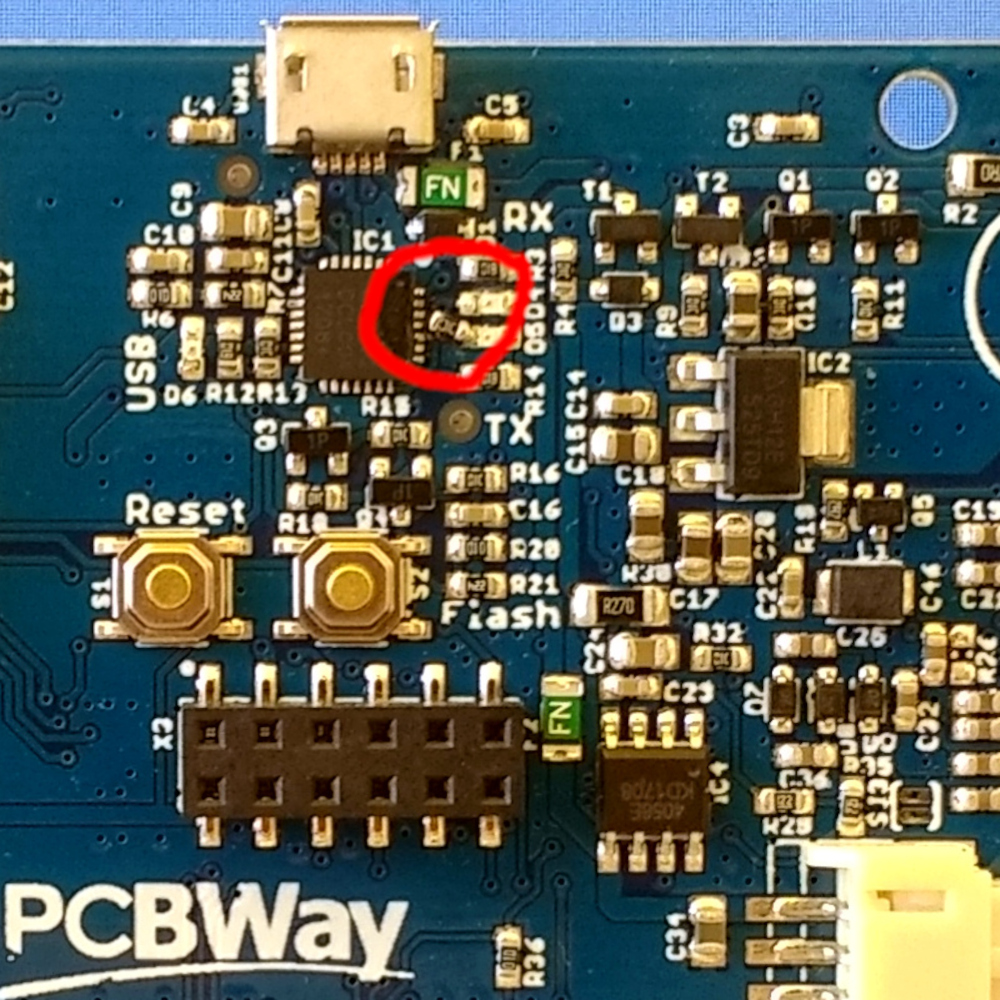
The skill a professional engineer picks up here is designing for manufacture. It’s something I picked only progressively over the years, and learned with a bang when I became peripherally involved in the production of electronic conference badges. You learn to be much more exact in your PCB design to avoid those reworks and bodge wires, you pick your parts with much greater care, and pay far more attention to power supplies, decoupling, thermal issues, impedances, and ground isolation. Something that works has to become something that always works, first time. You go from having several spins of the prototype PCB to having maybe a couple, and you reach a point at which you can order 5000 boards and have less than 50 of them that need attention. My friend describes himself as more of a software expert than hardware, but he’s learned this process over the decades far more than I have.
One comment he made hit the mark so well that it prompted me to start writing this: that when hiring recent graduates they would design things that could not be volume manufactured, while the new hire apprentices’ designs could. This fit so well with our common experience when we came through an engineering education that it posed the question, were we failed by it? We both attended the University of Hull, on England’s north-east coast, but this isn’t specific to Hull or even our generation as the problem of inadequate preparation applies to so many other institutions. Last year I talked about a couple of young engineers wrestling with an analagous experience here in the 2020s, and they were a long way from the Humber.
Do Universities Secretly See Their Job As Training More Academics?

My overwhelming memory of my degree course was shared by my friend, that about half of it was composed of useful stuff, and the other half of it was either trying to teach you to be an electronic engineering academic like the people delivering the lectures, or a course that seemed only to be there because they had someone who could teach it.
My Achilies’ heel was the mathematics, something I was later told improved in later years when the engineering department wrested its students away from the maths department. We had a very small amount of practical work, including simple transistor circuits, digital logic using real 74-series chips, laying out a PCB using crêpe paper tape on acetate film, and oddly considering it was outdated even in the early 1990s, wire-wrapping.
It’s easy to sit here and say that a university course teaches too much theory and not enough practice, but the fact is that universities aren’t there to teach you to solder. Indeed, while it’s a super-useful thing to be able to do and I’d urge every electronic engineer to learn it, soldering your own projects is not what makes you an engineer. Instead there has to be an exploration of where the boundary lies between the theoretical and the practical, and education should straddle that line rather than stay only on one side of it. It’s in deciding where that straddling point stops that the key lies.
There are university courses that manage that boundary by splitting it entirely. They combine time in industry with time studying, and a student on one of those courses would in theory learn the skills of a real-world engineer in their work placements. There are also industry sponsorship schemes placing students into industrial environments, but they are so few and the competition for them so fierce, that they might as well not exist for most students. Even the world of hackerspaces which gives the students a rare chance to mix with professional engineers in their off-time, is actively discouraged by universities. For a student in a full-time, study-based course, the challenge comes in how to bridge that gap into real-world manufacturing despite all these challenges, and learn something useful without the luxury of a real-world environment.
Torturing The Students With Diabolical Designs
The temptation for most courses is to start yet another group project. A team of six students are tasked with getting something working together, and learn stuff. The trouble with group projects though is that they either completely don’t work like our early 1990s assignment to make a telephone exchange from a Transputer link adapter chip, or a few participants end up doing all the hard work like my two young friends mentioned earlier. Group projects are inexpensive for an institution, but they look better than they really are.
The hardware hacker world has been marked by a series of epochs, as new technologies bring with them a flowering of creativity. There’s one of those that I think has the potential to delover something impossible back in the 1990s when I was a student, and allow individual students to learn the art of manufacture without a group project in sight. I’m talking about inexpensive PCB manufacture, which allows multiple spins of a design to be completed with a bearable wait, and for not a lot of money.
So if I wanted to teach a bunch of students about designing for manufacture, I’d give them a ready made small project in software form, as EDA files, and as a BOM with a board assembly house. Of course, the project would be fatally flawed but fixable with probably two or maybe three spins, but I wouldn’t tell them that. Instead their first task would be to send the files off and receive a ready-made PCB, or if I was feeling charitable I could give them that first spin ready-made, and tell them to get on with it.
I would throw everything I could at this unfortunate design, a wrong-but-plausible footprint, badly thought out earthing, an accidental oscillator, and all the really annoying things which we’ve all in our time found. I am sure you could think of more diabolical but superficially plausible features. Their task would involve diagnosing the board and redesigning it before sending the files off to the assembly house. A week later they’d have that next spin, they’d have to hunt down any remaining bugs and repeat it all, and so on. I learned this process with my friends in the making of an event badge for 5,000 people, and I think it’s possible that you could learn it as a single trainee engineer with a much smaller board.
It may be unfair to throw all that is wrong with engineering education at the door of universities, even though it’s certain that there are some extremely low hanging fruit. But arriving in the workplace completely lacking an essential skill is perhaps the point at which something should be said. The question is, when it comes to designing for manufacture, is anyone listening?












The ones you really want to hire are the ones that already know about PCB traps because they’ve done their own projects off their own backs before even starting university.
Was thinking exactly the same thing! Your journey to become an engineer starts long before uni.
A number of years ago the local Vo-Tech closed its Electronics department.
Equipment ended up in a “garage sale”.
I bought a Lab-Volt 6800 trainer for $10 or so (someone is asking over $1K for one on eBay currently).
The trainer had a small key locked door in which the instructor could introduce 10 or so “faults” into the processor circuits for the students to troubleshoot.
The day after the sale I found a bunch more of the trainers along with add on modules, in a large dumpster (tip -Jenny) free for my taking.
My point is, there were some troubleshooting lessons available to students back then.
I got a ‘computer science’ degree and engineering was specifically not taught. There are two big state schools here and engineering was the purview of the other one. I thought it was pretty ironic at the time that most of the students probably got more out of the intro-to-java class than the whole rest of the degree. Most of them were totally green, and were destined for “dot-com” jobs. But for me, i actually wanted the CS education and i enjoyed it. But i came in already having a lot of personal projects under my belt.
I always figured real production skills are learned on the job. Certainly in my software world, every business i meet has its own internal culture built around testing / reliability / deployment. Even someone with relevant real-world experience is going to have an experience of learning the way-it’s-done-here, the problems we run into in our specific problem domain.
Anyways i was surprised to see the suggestion that when designing for production you have fewer prototypes. Surely, as you get better at anything, you’ll have fewer failures. But personally, whenever I aim for production, i have more prototypes not fewer! I keep iterating until everything works on the first try. Whereas for my one-offs, i use many halfway-broken things.
My biggest wish from hardware engineers is actually that they would have more prototypes. A lot more prototypes. When something goes into production, it is still a prototype and the lessons learned from user complaints and warranty service and so on should continue to inform production, even after a thousand or a million units have already been shipped. But so many devices these days, it seems like they ship their first production run and then they throw away everything they learned and start designing next year’s model that’s pointlessly from-scratch instead of iterating on the previous model. When i upgrade a piece of hardware these days, i always expect to find a new set of different quirks (maybe it’ll hurt me more or less depending on my habits). I rarely see a monotonically-decreasing number of bugs. Drives me crazy.
In the first years of, for example, smartphones, the 2012 model was so much faster than the 2010 model that a total redesign didn’t sting. But for 10 years now, each phone is basically the same as the last, and the only thing that has genuinely improved is the quantity of RAM in the base model. Why can’t we have one that is supported for 10 years (a decade!) instead of a new random set of bugs every time through. This is as relevant for OS updates as for new hardware purchases.
Nah, that’s called the “minimum viable product”, otherwise known as prototyping in production. You have to be Lean you know. Disrupt the market and break things quickly, otherwise you’re just sitting there burning money.
That’s because the “ideas guy” CEO likes to hire and fire people, and call in outside help from engineering companies to “fix it really quick” instead of waiting for the team to figure it out, so the employee turnover is fast and nobody really knows their own product because they didn’t actually design half of it.
no, you’re wrong about minimum viable product. there is no complete product development cycle. the development cycle never finishes. there are shades of gray but there is no perfect endpoint. if you did a good job designing and testing then the problems that the users reveal after deployment are minor or rare. but there will be problems you cannot learn about until deployment. this is axiomatic.
there is no such thing as a fully mature product. the closest thing is a product where the faults are minor enough that the advantage of continuity with the past (backwards-compatibility) is greater than the cost of not fixing them.
You’re not thinking deep enough.
The ideal minimum viable product is the promise of a thing that gets people paying you even before any prototype is built, before any actual development cycle begins. The fact that you have to sell them something so you’re not sued for fraud then means that you have to make a prototype that does something. It doesn’t have to be any good or special though. If it doesn’t work or the customers complain too much, you just quietly bury the project.
“Minimum viable PR” would be to not tell people about this so that they don’t send you angry threats and try to regulate you
The innovation cycle, for smart phones, had passed by 2012. At that point it is iterative development, improvements in small increments.
Winning form factor is a slate and the winning color is black. The keyboards and sliders did not make it.
I’m sure a guy from the car industry could say the same thing. I noticed that the two seams, on all cars, are in the same place since 2010. Only thing that seems to change are the headlights.
Automotive guy here …… 100% yes. Even worse with (motorcycle)engines. There are some engines around in flagship models which originally got designed in the 80s and only got iterated ever since. (even tho its more a ship of theseus thing by now)
Practical work in the university is needed but Undergraduate curriculum is often already fully packed. Industry partners could help out creating internship opportunities but exceeding regulation burden and ascension of AI will make opportunities for young people even more rare.
So fully packed that unimportant things are being deleted.
A few years ago I checked out the degree sheet for Electrical Engineering at my old school. Most of the engineering science requirements had vanished. Thermodynamics and such. Just one slot for your choice of a three hour engineering science course.
A sad change from when I was a freshman. I still remember being in a lecture hall with all the other soon to be freshman. The college was very proud that every flavor of engineer had the same basic engineering science courses.
Also gone was the stand alone course in Engineering Ethics.
We may have gone to the same school. :-)
My university came under heavy pressure from the legislature to improve the four year graduation rate. It wasn’t unusual for EE students to take 5.5 years. All departments were ordered to get their BS and BA programs down to 120 credit hours – EE had been at 130 and rising. Classes got cut, yes, but most of the labs went from 1 credit hour to 0, without any change in content.
Then the funniest thing happened – the accreditor said “tell me again why this isn’t called the MATH department?” Turns out, by the time you take all the math requirements, you had nine of the ten math and/or stats classes needed for a math minor.
And yet, here’s the problem – some EEs are going to need 3 semesters of calculus, 2 of DiffEq, 2 stats, and Linear Algebra (see “M”‘s comment, below). Other EEs are going to need Elementary (formerly “Abstract”, formerly “Modern”) Algebra, Number Theory, Method of Proofs, a couple of Calculus-based stats classes, and a couple semesters of Linear Algebra.
A lot of the challenge is trying to prepare students for the Engineering Fundamentals licensing exam. For EEs, this is useful for power generation and distribution people but useless for almost everyone else. I think it’s time to make Electrical Engineering and Electronics Engineering separate (again). I mean, it’s the Institute of Electrical and Electronics Engineering, right?
Question: Would Electronics Engineering roughly be Computer Engineering? (That’s what I’m currently studying)
Is Electronics Engineering basically computer engineering?
The labels aren’t really transferrable between nations.
Where I’ve seen Electronic distinguished from Electrical:
Electrical were basically power.
Electronic got the rest of EE.
CompE (when I double majored) was EE with about 20 units of CS/math crossover.
The second degree took an extra semester (prereqs stacked, couldn’t do it in a semester).
Automatically added a math minor.
The math classes were cake, CS students held up the bottom of the curve.
I don’t recall if CompE dropped any EE classes, likely did.
I was doing both, I got to have (control systems/digital controls/EM fields) fun.
CompE faculty saved us from a Cobol requirement, the CS faculty were A-holes.
Everybody who went through my engineering program wished they had done more hands on stuff as part of their coursework. At least until the upper years when there was tons of labwork. The kids who were ahead of the curve learned PCB design over the summer. At the same time though, while they never taught us how to lay out a PCB, I would have absolutely no hope of understanding the Black Magic Book on high speed layout without the years of calculus. You can copy other people’s rules of thumb, but some stuff simply has a really high barrier to entry if you want to really understand what’s going on.
There is a course called Electromagnetic Compatibility I took as an elective in my bachelor’s program that is sadly no longer taught as my professor retired. It describes the black magic that can happen on a PCB in the language of physics. I highly suggest the textbook as a reference. Be prepared for RF concepts. It jumpstarted my RF career.
Back in my day (yes, it IS that far back) I was a Teaching Assistant in a hand-on microprocessor course at an engineering university.
One of the first days of the course, the poor (not necessarily money-wise 😉) students were confronted with two boxes, each with five coloured jacks, Orange, Red, Black, Brown, and Blue as well as five leads, Orange, Red, Black, Brown, and Blue garnished with a banana plug at each end.
One box had an 8080 microprocessor with a bit of RAM and a ZIF socket with A ROM, while the other had a power supply for the ±12V, ±5V and ground..
The class was divided into groups of four and their first job was to connect the two boxes with the cables and verify that the processor would get an LED to blink, which was pre-programmed into the ROM.
One team asked me for help because their setup didn’t work and I took a look at it. I then told them to inspect the setup themselves and pointed to the plugs and jacks that were all connected. I asked them if there might be a system to the whole endeavour.
That didn’t help.
I then told them to have a look at the colours.
Didn’t help either.
When I tried once more to get them to realise their fault — they had managed to completely mix the colours up, not one plug was connected to a jack of the same colour as the lead in either end and not one lead connected two jacks of the same colour which, statistically speaking, is rather unlikely — they rather aggressively (several expletives included) said for me just to tell them what to do. (And no, there was no time-related stress. The course was voluntary and there was no fixed curriculum they had to get through.)
So much for trying to be pedagogical.
With a slight bow and possibly a smidgen of sarcasm (nah, couldn’t be), I told them it might be a good idea to match the colours of the leads to the colours of the jacks, which obviously did not improve anything as they had fried the processor. With a fresh box and the right colours they at last started their afternoon of discovery.
You didn’t put in voltage protection on boxes like that? SHAME!
yeah, I’ve watched that occur in the past, not in a teaching environment, but in a system that I deployed with instructions and color coded cables and jacks….How many times can someone screw that kind of stuff up. I found out.
One of the interns I taught was colorblind. That’s when I figured that keyed and differently sized connectors were the more reliable option.
That to me sounds very anti-pedagogical. You set them up with a mystery and asked them to figure out arbitrary rules that only you know, because they can’t assume which wire color system or standard you’re using, if any at all.
Here’s a box for you: there is a hall switch inside, and out comes blue, brown, and black wires. You have a power supply with red and black outputs for plus and minus. I want you to connect the wires to the power supply and a lamp so the hall switch turns the lamp on. What’s your solution? I’m not giving you a data sheet for any of this.
(Hint: what I’m not telling you is that this setup follows a particular color coding that is common in the industry. Let’s see if you can figure it out.)
Another hint that I’m not telling you: if the black wire was white, this would make a difference in how you have to connect the lamp.
I also helped out in a beginner lab, decades ago.
Needed extra credit in bench lab.
Had partied hardy, been tardy…
In my defense I already knew how to do basic stuff w ‘scope, beer tastes good and I was living on a college campus with many future flunk outs, some of who had boobies.
The 1st year EE lab TA chewed me out for bending up a pin on a TTL chip in a proto board.
Waaay too hard to find.
Like the freshman weren’t all going to accidently bend up a pin soon.
I quickly understood why engineering faculty don’t learn student’s names until they finish the weed outs.
Unprepared is average.
Add a color blind student to Mr Ts scenario. Just for fun.
there’s a value in having instructions. and providing clear instructions serves the pedagogical purpose of teaching people how to follow instructions.
but there’s also a lot of world that is undocumented, implicitly-documented, incorrectly documented, or didn’t-read-the-document. so good pedagogy should teach people what to do in that situation as well.
the thing is, you can’t engineer just by parsing documents. it’s a real ‘zen and the art of motorcycle maintenance’ thing — the working motorcycle is not just a collection of parts combined with an assembly/maintenance manual. the working motorcycle exists in the minds of the technicians or it can’t roll itself down the street. the mental image is indinspensable to function.
so fundamentally when you come across a question like how to hook something up, you use a kind of role play, and you imagine the mind of the guy that first solved this conundrum. and if you can do that, then you will be more efficient and make fewer mistakes even in environments where there is a lot of documentation. and if you can’t do that, you’re toast. at best you might be trainable but you can’t be educated.
i imagine the failing of these students is that they didn’t realize they were making a choice. hopefully the thing they were lacking was simply the awareness that one jack has a different function than another jack. that’s a stunning ignorance but it’s a barrier you can surpass by education. if they knew the jacks had different functions but couldn’t imagine the mind that assigned color to function, they’re hopeless.
Yes, and that is: get more information by any means at your disposal. Read the data sheet, ask the person, grab a multimeter, open the box and see for yourself.
If the teacher is being a smug and not giving any hints because the “solution should be obvious”, then that’s a bad teacher. Especially if there are punishments for trying to obtain information by experimenting, such as frying the CPU. That’s outright bullying the students.
There are many teachers like that who believe they’re very clever with that sort of tough love approach, but they don’t realize it’s their own understanding about the students that is limited. I’ve seen students who didn’t initially know that you have to complete a circuit: they thought the signal just “comes out of the wire”, so they didn’t hook up the ground at all in a similar task. You don’t know what the students don’t know, or what mistaken notions they have accumulated, so you have to explain at least something. You’re there to teach them.
It’s rather that they could not make the assumption even if they did. There’s an old joke that says, if you don’t know what you’re doing, just connect color to color and the rest to ground – if it gives off smoke, then do the opposite.
it’s important to ask students to figure things out with insufficient information. as a teacher, you can’t learn about students’ priors without making them to expose those priors.
you’re making up penalties and bullying. the thing you’re objecting to is a thing that was in your mind, not in the story you’re replying to. relating stories to other people about the experience / intuition weaknesses of your students can only expand the knowledge that not everyone knows what you might assume they will.
There is no solution with insufficient information. If you have no way of obtaining sufficient information, you’re just making guesswork.
In the story the students were, I quote, aggressively asking what they were supposed to do with the thing, and I think that is the correct approach to the case if the teacher refuses to divulge the information. If it comes to that, there’s something wrong with the way you’re teaching.
The question demands the students to figure out how to connect A to B without giving sufficient information to so so, because the teacher is refusing to tell you the rules until after you’ve have failed the attempt.
Guessing wrong will result in frying the CPU, which means you cannot correct your solution because the correct solution will then fail as well. You have to get it right the first time by chance, by a guess, or you won’t get it at all. In other words, the teacher has set you up to fail. That is bullying.
My first thought would be “How do I know the color coding isn’t a trick?”
I’d like to hear more about how universities “actively discourage” maker spaces.
It doesn’t need to be a trick to be nonsensical, much like how small children can draw pictures that on the face of it look like a mess of crayons, but they can still explain what’s in it. It makes sense to them, because they know what it is.
Think of a TTL serial port. TX is green, RX is yellow. At the other end, you have to cross them over to make it work but that means plugging green to yellow and vice versa. A contradiction to the rule of plugging color to color.
So, to solve that issue you simply flip the colors at one end of the line. But oh, now RX can be green and TX can be yellow depending on which end you’re looking from. The color no longer has universal meaning, and the rule of plugging color to color depends on the case.
Of course the professor can tell you exactly what it means, because they know each case.
“Think of a TTL serial port. TX is green, RX is yellow. At the other end, you have to cross them over to make it work but that means plugging green to yellow and vice versa. A contradiction to the rule of plugging color to color.”
You make my point for me. I’d still like to hear more about how universities “actively discourage” maker spaces.
I fail to see how that is topical.
I hope you’re not literally saying that a motorcycle only goes if the technicians who made it are thinking about it, because that would be some serious woo.
If you are saying that someone needs to have an idea of how the thing is going to function before it can be made to function, that too I would like to counter with the fact that design by committee exists, and can produce functional things where nobody really understands how or why it works. It just does, albeit poorly in most cases.
the motorcycle only goes if the technicians have the idea in their head. obviously, it can run (for a short while) after those technicians die or forget. but the continued operation of the motorcycle is ultimately dependent on the continued existence of the dream.
the whole dream does not have to live in one person, but it cannot function without the dream. the dream is as important as the physical object and its formal documentation.
What that sounds like is that someone needs to have an understanding of how it works besides having a formal description of what it is. I don’t think that is necessary.
Who dreams up the world – the bits that no consciousness has ever been aware of?
seems like you’ve hit on a decent way to distinguish between nature and technology. the distinction is that the dream must exist for technology to work. i think that holds up.
the other answer is also obvious: the dream of nature lies in god’s mind. i think that also holds up. i hope you’re understanding that i am defining god in that sentence…god is the thing that has the dream of nature in its mind. once you know that attribute of god, many others can be inferred but it leaves more questions than answers imo.
That sounds to me like the distinction between natural and supernatural. The trick being, what exists is natural. Technology is an extension of nature, whether you demand someone to “dream” it up or not.
Yes, but that is also begging the question. You define god to fit the idea of the dream, but never question whether the dream is even necessary, or whether it simply collapses semantically to mean “the world knows itself”. I.e. the information contained in everything, that defines everything, is the dream you’re talking about.
Sociology reduces to psychology
Psychology reduces to biology
biology reduces to chemistry
chemistry reduces to physics <-Physicists stop here.
physics reduces to math
math reduces to philosophy
philosophy reduces to masturbation
Stop it, you guys are in public.
I’m exercising my radical freedom.
The answer to the puzzle is that industrial Hall/Proximity sensors usually have brown and blue for plus and minus, and black for signal, but the signal might be NPN or PNP so it can switch either to positive or to negative, except if there’s both a black and a white wire present. Then the black is PNP and the white is NPN.
Except when it just isn’t so. These are just conventions, not rules, but sometimes they are standards, and some just don’t follow them even when they should. There’s no reason that students should somehow intuit that color and matching colors should have some universal meaning.
If my students started blindly plugging colored wires to colored jacks without asking any questions, I’d say stop and ask them what do they think they’re doing – because they’re likely to be jumping to conclusions without verifying that it is actually correct, or they’re just trying to solve the puzzle by superficial pattern matching without understanding the meaning of it.
The only class at university that I used frequently in my working career was technical communication/public speaking. The background I got in engineering was useful in talking with engineers, but I never calculated anything. I never used any advanced math. I guess the economics class where I learned about internal rate of return/future value of money was useful – but I never needed to do the calculations myself, all I needed to know was the Excel function.
You could have had a lot more fun in college majoring in business or something else easy.
Political so-called “science” even.
I’d like to bring Hans Rosenberg to your attention. He is all about this exact problem.
He has a Youtube channel where he posts videos about electronics design, explaining where theory and reality mismatch, why that happens, and how you can solve it. Imo his channel is one of the most informative channels on electronics design there is. Do not pass his videos by!
https://www.youtube.com/@HansRosenberg74/videos
Absolutely!
He is very instructive. Recommended to watch.
Shame his course is so expensive.
Group projects:
The criticism is that two people do all the work.
Those two are the only ones to get anything out of it.
They also learn the lesson of slackers, for what is unlikely to be the first or last time.
Just like with bullies, the slackers learn their lesson on the next project.
Where the two that did all the work on both teams become a single team of 4.
Leaving the slackers with nothing.
Slack must be shared, those that take it all are A-holes
Better than the business outcome, where a slacker politics, gets to pick the next team and picks wrong.
Manufacturing Engineering is a separate specialty.
For dogs sake don’t try to shoehorn all that into EE and ME.
Few engineers will end up having to ‘design for manufacturing’.
Future engineers should be soldering in middle school, perhaps not well.
That grows out of the future engineer’s natural ‘explosive pyromania’ psycho sexual development phase.
Accept that Engineering school teachers you how to learn technical details and processes.
If you learn too many technical details in Engineering school you’ll be stuck when those are obsolete.
Your expected to learn ‘More in the first year on the job then 4 years in school.’
It’s not really true, but by the time your working the job, you’ll have forgotten not knowing a bunch of stuff.
I don’t think this complaint is limited to electrical/computer science engineers. You can find all the comments re: mechanical engineers in the automobile industry and their (presumed) disdain for auto mechanics. I do think there would be some benefits to make those engineers have to do basic repair work, and that it might improve their designs/make them more practical.
I realize that there are other factors they have to consider (weight, aerodynamics, physical space, etc.), but if they had to work on repairing those designs later they might handle it differently. There is probably some of the same truths when it comes to PCB designs vs. those having to do assembly/repair.
MBAs ruined the automotive industry.
As they do anything they touch.
Next time you see one, kick them square in the crotch.
There is no way to make a good wet belt driven oil pump.
But the engineers were required to try, despite the lessons of timing belt driven water pumps.
As to the ‘impossible bolt’, that’s just an MBA ordering a big drivetrain into a small chassis.
Sometimes it’s WORTH it though, e.g. lifting a big block off it’s motor mounts to change the plugs.
Only a fool buys a mid engine car, then complains that work is expensive and everything is ‘engine out’.
‘timing chain driven water pumps’
Nothing wrong with timing belt driven water pumps.
When they leak the water doesn’t dump into the oil.
Duh.
dr farnsworth: you say the water pump seized, and the timing belt, to shreds you say? and the valvetrain to shreds you say.
all can be avoided by driving the water pump off the accessory belt, or off the rear of the camshaft like the ford duratec v6 3.0
Water pumps don’t seize, they leak, by design.
When they leak, it’s usually past time to replace the timing belt.
Once you’ve got the timing cover off, you’d be insane not to replace all the wear parts accessed.
Doesn’t that duratec have a wet oil pump belt?
Where does the water go when the cam driven water pump eventually leaks?
Into the oil?
Accessory belt is the best place for a water pump.
Timing chain unacceptable.
Hard no on those engines.
I’d buy a water cooled German car first (a very old one).
the oil pump is direct drive from the crankshaft, see 13.30 minutes in to video, and the water pump is external and belt driven. it’s a brilliant design by all accounts.
https://www.youtube.com/watch?v=E_OmCdYt6Ms&t=85s
Anything that has a bearing can seize. Anything that hasn’t got a bearing is already as good as seized.
Automotive water pumps have bushings with designed in weep holes, when the wear is a problem they leak.
I suppose you could get one to seize, if you tired hard.
Weld up the weep hole so it holds water long enough, but I bet it then leaks from the shaft.
Anything can seize, but after decades of experience, water pumps don’t.
All bets are off if you buy from Germans or something else equally stupid (Brits).
They’re liable to re-engineer their water pumps to turn on sapphire jewels next year.
Truth is, the Germans never really got water cooling.
German cars peaked w air cooled designs.
I digress.
Bob: I was thinking of the mini Duramax. That POS is infamous.
In my experience, having group projects limited to two or three people is good because there’s not much room to accommodate a slacker, but it still gives them a chance to specialize: the pcb person and the software person, for instance.
Too much theory and not enough practice.
We should scrap universities and replace them with a wikibook, and AI assistant and hands on and DIY projects.
if you don’t need to know theory then you don’t need an engineering degree. that’s why technical school exists, to create technicians. that’s why we have different words for technicians and engineers.
Think that was sarcasm. Hope!
If we only had technicians, we would be masters at using incandescent light bulb, but we would still be using, well incandescent light bulbs.
If we only had engineers, we would have great LEDs but we wouldn’t know what to do with them.
The practical solutions available for incandescent light bulbs would put them at roughly 20 Lm/W maximum as compared to the practical solutions available for high quality LED bulbs at 100 lm/W before you start to cheat with significantly lower CRI and making apples to oranges comparisons.
Given that lighting accounted for roughly 15% of total household energy consumption prior to the adoption of LED lights, and household energy consumption accounted for roughly 20% of total energy consumption, the impact of changing consumer light bulbs from incandescent to LED was on the order of 2-3% of the total energy consumption. It really didn’t make any meaningful difference on the demand side of things.
Though the results are subject to the Jevon’s Paradox where, if people spend less money on lighting, they tend to compensate by adding more. That ended up happening with people adding way more LED lights, mostly closing the gap to incandescent bulbs and resulting in no real savings of energy whatsoever.
You can make an average engineer without hands-on practical but you can never make an engineer without engineering theory. That’s the reason degrees are so focused on paper and books. I see it every day in my practice. You can absolutely learn on the job how to work with physical pieces, whether it’s soldering a board, machining a gear, or welding a beam. You many not be an expert like the technician or field installer, but that’s not your job – your job is to know enough to not paint your manufacturing end into a corner.
The ability to work through, say, a stress profile in detail and know, without breaking half a dozen models, where the shear failure will occur and how to design around it requires first principle knowledge – and you’ll likely never get that no matter how well you can weld. It’s even more important to be able to design things so that when they fail, they fail in the way you want them to – in a way that may compromise the part but keep the user safe. It may not matter in, say, website design or conference badge manufacturing, but when you get one chance to build something and failure results in people dying, you need to trust that they’re not guessing at the math and science. That said, most great engineering programs give the students ample opportunities to do the hands-on practical work, usually as extracurricular teams, so they hit the job market with (some of) those skills already in hand.
I definitely agree about things being too academic. I decided to take a year out working for an electronics company (Racal) before going off to study Electronics at Southampton. It all just seemed so pointless after actually working in the field. I ended up quitting and switching to Economics – mainly because I knew nothing about it and it seemed like I’d get more out of that.
Looking back at my engineering education, it was mostly theory. I learned about data structures, algorithms, recursion, discrete math, hardware description languages. This was in the 70s. Not much of this stuff was actually realisable in a semester. We’re talking mainfrmaes, timesharing and Teletypes. No word processors, crude graphics on a Tek storage tube display or a Calcomp drum plotter.
I managed to get some practical experience over the summer, working as a temporary test tech on a disk drive assembly line. I also acquired the [defective] guts of a video terminal, which I spent the next semester debugging and getting operational, so I could use it instead of the Teletype (wow, 300 baud!).
My own efforts at learning debugging, how to read schematics, understanding equipment by disassembling it, were key when I finally got a full time job. After that , it was OJT (and quite a lot of learning). University teaches you HOW to learn, but what you learn is (or was, for me) foundational. The tools I used as a working engineer were unaffordable by the public university I attended. Luckily, I was a quick study.
Universities provide theory and no applicabel job training
Years ago, I worked with an EE who I don’t think ever even changed a tire, much less built anything. We referred to him as “Mechanically Declined,” from an old Far Side comic. He was given a simple project to monitor two slow pulsing inputs with an off-the shelf microcontroller board and produce an appropriate output for a length of time proportional to how long it took for the two inputs to accumulate a certain number of counts. He copied a circuit from somewhere and handed it off to a technician to build a prototype and design the circuit board.
The tech did as he was asked, and soon found the circuit was severely under-designed. The tech replaced the appropriate parts, created the board layout, and the EE sent the order out for 150 boards, removing the tech’s initials from the board design so the engineer could take full credit. (Petty? you bet.)
The boards came in and the first installed board failed within a few minutes. The engineer came storming into the tech lab, waving a burnt board and screaming about the tech deliberately making him look bad. The tech looked at the board and quietly asked, “Why did you substitute 1/4 watt carbon resistors when the design I handed you specified 1 Watt metal film? And where are the heat sinks on the driver transistors?”
The engineer insisted the tech was just trying to run up the project costs for no reason while insisting, “Resistors are resistors!”
The tech handed him back the board and flatly stated, “Then there’s obviously no problem with the board,” and went back to what he was working on.
Some time later the engineer’s boss came in with the burnt board in hand and asked what the problem was. The tech showed the boss the prototype he had built and the parts list he had specified, explaining why the larger resistors and heat sinks were required. The boss politely asked if he could order the correct parts and re-work the boards, ASAP. Several techs then spent a couple of days rebuilding all the boards to meet the deadline.
The engineer ended up being moved to a position where he supervised other people’s work, but was never to my knowledge allowed to design anything new.
Don’t get me wrong, he was actually a pretty nice guy most of the time, just totally clueless about design and stubborn as a mule. I still wonder how he ever graduated.
Maybe I have an unusual experience: we’re picky with the interns we accept. But just about every one has shown up already knowing how to use kicad or eagle, at least passable at soldering, and able to throw an op amp together with almost no risk of design error that’ll make it unstable. I talk to them about their senior projects and they’re making stuff like guitar pedals with dsp’s inside, and one of them is doing all the DSP code, or working on the mechanical design, and sure they make mistakes all over, but they’re not terrible mistakes. Where they struggle is with stuff you don’t see in school or often in personal projects: what makes a good current sink? What’s a four quadrant power supply? When is four lead resistance needed? What are kelvin connections for current measurement and when do you need them? How do you lay out ground for high speed stuff? Very little of that is stuff you learn through DIY or technician courses, and it would be nice if they got to use sourcemeters in school but they don’t so they show up and learn it here. That seems entirely reasonable to me.
But, they’re all as smart and more experienced than I was when I started this job.
Isaac Asimov had something to say that is as true now as when he wrote his story, “Profession” in 1957. It greatly influenced me and shaped my career. https://www.inf.ufpr.br/renato/profession.html
Universities should teach fundamentals which will remain valid during their entire career.
They should not teach stuff that will become outdated in 3 years. That specifically includes details of which button to press to splugle the frobnitz in SpazCad 3.17.
Employers will train people to use SpazCad 3.17 (and 3.18).
+1 to you. Your education does not stop after graduation. If universities taught the skills of one particular career class, not only would it be chasing a moving target but then it would be on your employer to teach you fundamental electromagnetism or thermodynamics. Is that better?
Funny. I remembered that Asimov story just the other day, out of the blue. I had read it many years years ago.
What prompted the recall was the current rise of specialty AI agents: Snapshots of current knowledge, captured, and sold as purchasable commodities. What is the value of those canned-intelligence agents? And who trains the AIs? Eerily reminiscent of the story. Asimov was prescient in ways he didn’t even know.
“Employers will train people to use SpazCad 3.17 (and 3.18).”
And there’s the problem there. Companies low-balling on the education front. Sometime one has the learn on their own time and dime how to do SpazCad.
I stand at my machine shop door everyday begging students to take advantage of the opportunity in front of them. Our programs are very hands on 1.5hrs lecture 4hrs in labs. We have materials available ready to go. We have Bridgeport’s, lathes, haas 3axis 5axis millturn, EOS metal printing, 30 x 3d printer farm, water jet, injection molding, vacuum forming, casting, metrology toys, destructive testing, dmg 5axis, wire edm, drill edm, robot arms, and full electronic lab next door. Small class size usually under 8. Vermont State University Randolph.
I see a lot of students scared of loud sounds and dirty hands. Lacking basic hand motor skills. Everyone seems to blame the school/administration/cost. I see it as a greater problem. Simple things like write your name on this role of tape, peal it off and rip it to than stick on your bin, may sound simple but you would be surprised.
Computer skills have disappeared, understanding of folders, file names, settings, excel, etc. As someone that grew up with computers in the 80’s I always thought the younger generations would have a better grasp of what is going on with the tools they use everyday, it has gone the other way.
As another machinist I would say your shop is extremely well equipped. Look to Adam at LaneyMachineTech on Instagram as an ideal example of what a modern machining and manufacturing teacher looks like, and how he has to deal with similar stuff.
People really underestimate dramatically the deep need America has for technical instruction at a national level. Good technical colleges, especially community college programs that make it affordable to learn serious manufacturing skills are how I started after I transitioned away from a career in language teaching after the recession.
Don’t give up, find Adam and reach out. I feel like we should build a network nationally of people doing what you’re doing. Not everyone young is clueless either, recruit in hackerspaces- youll find more technically competent people.
I asked if I could have access to my university’s machine shop. I was told I would need to be a mechanical engineering major, had to take an entire semester of safety classes, and even then could only use it for a course project. It was made quite clear they were not interested in anyone actually learning practical skills.
Years later, another student said the “proper” method was to simply sneak in and not tell anyone.
Was my experience as well.
Except the sneak in part.
Machine shops were locked down like the supply room in the chemistry building.
Not quite as well.
You could get to the machine shop halls from the steam tunnels.
But it was easy to see that it was a bust if you did anything.
Looking back: I completely understand not letting rando freshman engineering students loose unsupervised.
The path to access was long.
They weren’t training machinists.
The shop was there to teach the ME’s how to communicate with machinists.
NOT just make things themselves.
Some of the ME faculty were the rarely observed engineers with tool and die maker level skills.
To be able to use so much as a drill press, you had to convince one of those guys you were not a hazard to yourself and explain your plan.
Odds were high he would do it himself, rather than let you become ‘lefty’.
You’d get a lesson on tolerances.
Get to hear about impossible shapes/cuts etc.
Challenged to design a fixture or perhaps get introduced to the right tool. (great stuff really)
Saw it second hand, IIRC we were building a race car in club.
Design was a committee of engineering students and a low dollar class spec.
We spent too much on engine and it got claimed…
In other words we were STUPID AF, overconfident and argumentative.
that’s the attitude I’ve seen too, when I was originally an engineering student at Pitt, they wouldn’t even answer my questions that they had a machine shop. students weren’t allowed into that, ironically I later worked for someone who was an engineering student there who started his own shop.
I think a lot of that stuff comes from the fact that their just aren’t qualified teachers to supervise people properly for insurance purposes and so liability red tape blocks a lot of people off from practically learning machining..
I am trying to rectify this in my hacker space and teach complete beginners how to use a mill and a lathe, I just taught someone yesterday who had never touched a machine tool how to mill a custom wrench. I think a lot of things come down to there really aren’t many people willing to just step up and be the person that takes responsibility to teach people how to use machine tools.
Be that person for others, whatever your field, so that others can learn practical skills. do whatever you can to cut back on red tape and satisfy the insurance junkies that keep good equipment locked away from people who want to do things. teach safety but get people making things. it matters so much.
As a professional electronics technician who has worked with the output of countless engineers, their disconnect from reality in their designs frustrates me. Some examples:
– Component leads that must be soldered in to a PCB, but they are located between many tall components. Bonus points if one of them if a meltable header.
– Locking connectors without enough space around them to unlock and/or get fingers in to do the same.
– Cable holes that are the exact diameter of the cable you are trying to put through them.
– Tuned carrier plates without enough clearance to screw holes or edges to solder on stubs for tuning.
– Use of FPC cables for items that require frequent disconnection/reconnection.
– Double sided boards that have BGA ICs that overlap.
– SMD boards that use 0201 size components where no space or proximity constraint exists.
– Ground pads that are just a hole in the ground plane so that the ground plane just takes away all of your heat.
I can’t see a real problem with that one – the pick and place won’t care, will be able to hold more of the smaller sized components even which reduces the manual effort restocking the machine! If you are going to use SMD the small fiddly nature of the parts is pretty universal no matter which scale of SMD – you won’t really enjoy hand placement even with the larger ones, and the costs of the different sizes never seem particularly significant when I’ve looked at a component.
Not sure I really see the problem with FPC cables in that usecase either, seems like there are plenty of advantages to using them that can make them the best choice, as they do cycle pretty well in my experience and as long as you have decent access its not particularly tricky either.
Why you’d pick them or not over something else is going to depend on so many more variables than just just ‘frequent’ cycling – rather more annoying and fiddly to cycle than a USB port for instance, so if you mean constant every 30 seconds cycling as your ‘frequent’ its probably not for you though nor is USB-A as you’ll flip that thing 4 times before it goes in… But also have to ask do you want some retention feature so this cable won’t just fall out trivially too – USB-C is commonly abused off spec as a quick to cycle and relatively cheap/available option, but its retention is basically nill, especially after ‘frequent’ cycles..
It depends what your expectations are. If you’re working for a large organization, you’ll only ever contribute to a small portion of the product. There are engineers that only work on the factory side (your 1% failure rate needs work), some only work on board layouts, software, BoM… technical design. Architect is probably the one who needs to know how to make something, but mostly writes docs and tends meetings.
Making products is awesome, but making the prototype is only a small portion of the engineering work.
Engineering programs started failing students when practical application was phased out in favor of theory. It became worse when the supporting fields like physics, calculus, and chemistry were completely divorced from their applications in the curriculum. At one point, when the field of engineering was defining the steam age, students had to build a working steam engine to earn the title Engineer.
Some of us need a physical model, hardware, measurement tools, and an integrated lab to make thermodynamics stick. The same goes for chemistry and physics. How does it make ANY sense to decouple the chem labs from the lectures?
It might also help if the universities didn’t hire math teachers that spoke broken English. I hit a wall with integration and none of the tutors or math teachers at Georgia Southern spoke English well enough, or had the patience to break the concept down for me. We had a beautiful campus, but to hell with the students that didn’t get Calc II on the first pass, or were visual thinkers.
Talking to engineers who went through college when I did in the early 2000s and to freshly graduated ones, its somehow gotten worse. Either you waltz through the engineering programs only struggling here and there, or you do not belong regardless of the way you learn best. Its lectures and theory only.
And what’s worse is these people go on to design engine parts made of plastic because it worked on paper. They put oil filters in places where they are guaranteed to cause a horrific mess, and starter motors INSIDE transmission bell housings. In the defense industry they design absolute garbage like the Mk38 Mod II and the LCS program.
University of Waterloo’s solution for this is their co-op program: internship experiences as a graduation requirement. It’s not just a single-semester internship either: you have to alternate between coursework and internship until you graduate.
I don’t know how effective it is at solving the issue – but I guess that is one option.
Economically sanctioned South Africa solved this problem in the late ’60s/early ’70s. It was called a Technicon, and it produced technologists suitably trained in different engineering fields. It was sitting about halfway between a university degree, and a college certificate (equal focus on theory and the practical application thereof). Generally it takes about 5 years before you can leave a degree’d engineer on his own, and about a decade before he could manage a fairly big project by himself. The country could not afford the wait to get new technology implemented. The technologist idea allowed a newly qualified engineer to continue with brilliant out-of-the-box designs, while being assisted by a technologist who made sure it could actually be manufactured, maintained (these days engineers leave this part out), and would be cost-effective. Worked a charm…
Unfortunately the newly transitioned-to ANC government in the early ’90s didn’t understand it, and ended the program/qualification track. Now they are paying the price for that, and still don’t understand what its purpose was…
The situation may be poor for electronics but it’s dire for mechanical engineering as far as I can tell – the modern scourge of mechanical designs that work fine in CAD but are nigh on impossible to manufacture or assemble seems to be widespread, as if no-one is actually being made to physically make things and physically test them.
I’m a firm believer that when hiring engineers you should be looking for ones that actually at least tinker with something as a hobby, be it bashing metal or writing code.
Yeah, it applies to all disciplines…if you have no passion for it, you are going to suck at it…
Making timepieces like mechanical watches.
Uni is a debt scam.
Speak for yourself
I think we are conflating a number of problems and ignoring that there are vast differences between universities, countries, and courses. It’s genuinely unhelpful to lump all of these together and tar everything with the same brush, or even claim it’s the average.
The problem (in my view) starts with companies expecting too much from graduates and ends with university courses trying to teach every single aspect of current theory in a fixed time AND add practical skills, to students who picked a course because they want some cash, not because they’re interested. What’s worse is that students are getting less and less willing to put hours in (for some valid and some nonsense reasons) – when I did my degree each week we ran 28-29 contact (lecture) hours for 4 years, 6 hours of labs plus coursework/homework/reading. I was EASILY putting in 40-45 hours a week, every week, for 4 years. Plus, on top of that, I a social life and made my own project hardware/software.
When I moved to another uni and did some teaching some 10 years later in a similar field, the students were ranting about how they don’t have time for anything with 12-16 hours lectures a week and an extra year of course time. I asked about a few colleagues, they all had the same. I don’t understand where this discrepancy appeared, but clearly if you’re wanting to become a fully skilled engineer based on part time tuition, you’re going to struggle.
Do I now like to recruit engineers with practical experience and good understanding of reality? Yes. Are they significantly better than theory-only engineers? Not necessarily. It depends on the quality of the engineer, and the purpose of their role-to-be not the content of their course. Companies these days get upset when their shiny fresh graduate can’t draw a decent part with correct dimensions and tols, or get upset that they can’t produce a PCB without hitting every first-time trap. I personally don’t care if they can’t draw a thing, that’s fairly easy to train when they’ve landed and companies SHOULD and sometimes DO account for this in the first 12 months of a graduate’s onboarding. It’s a lot better than getting a cad monkey who can follow drawing standards but doesn’t understand the basics of what they’re designing. The company should be aware that if they want someone skilled at what they do, they need to train them, that takes years and money and makes them worth keeping happy and well paid. That takes time from existing engineers, and it should be a basic expectation and pleasure for the existing engineers to help the newbies – we all start somewhere.
But the reality is that everyone wants to not have to do anything. Students don’t want to have to study, and often want high wages when they start because “I’m an engineer”. Companies want hit-the-ground-running engineers but want to pay peanuts. What that creates is discontent, lack of loyalty and high turnover.
Hi, I’m a full professor in mechatronics (and a few of my projects have landed on HaD over the years, too). I teach our fourth year team design project, which is core for our program: you don’t graduate from my university with a mechatronics degree unless I pass you. I see it as my most important and urgent role to ensure that all of our graduates can do the following:
1. Use the engineering method.
2. Deconstruct a problem and plan a project.
3. Work effectively in a team (no slackers!)
4. Design a PCB.
5. Write embedded code in C.
6. Design for 3D printing (other manufacturing is taught elsewhere).
7. Solder SMD parts.
8. Write professional reports and emails.
9. Effectively participate in meetings and present presentations.
You’ll note that these topics are lean on theory, and that’s intentional. I expect students in fourth year to already know how to math effectively, but I don’t believe you can be an effective designer (or manager) of engineering systems if you don’t understand the practicalities of hands-on making. My lectures also cover a few other topics (eg. practical guides to stepper motors, RF module selection) that are useful for their projects, but the above are what I consider the most important. I’m always disconcerted when I find EE students asking for copies of my PCB lectures because they aren’t actually taught it!
I notice a few folks in here decry the value of an engineering degree, and while I have sympathy with their stance I do feel that universities have an essential role in teaching high-level intellectual skills vital for advanced engineering. That said, I think one of the problems we have is that society (and to a lesser extent many academics) has denigrated technician/trades qualifications and their associated skills – they are seen as less prestigious and thus degrees have become viewed as vital to worthwhile remuneration. As a result, folks who would find more fulfillment doing technician roles are pushed to engineering schools which they do not relish. It should be possible to make an excellent living (buy a house, etc) without a university degree, but that’s not the present world we’re in.
I was in agreement with everything you are saying except the last sentence. There’s plenty of HVAC and electronic tech opportunities out there were you can make a very good living wage. Add other trades like welders and plumbers. They may or may not require a tech school education.
I do agree with you on your last paragraph, but I don’t think anyone decry the value of a degree’d engineer. You cannot have the “practical”, without the theory. But yes, western culture has a habit of focusing too much on a university degree. When the majority of your society ends up as degree’d individuals, it upsets the balance…the pyramid turns upside down (i.e. a company with only managers is a bit useless, wouldn’t you agree?).
However, being proficient in the practical does not always mean being proficient in the practical application, or design of the technology. There are engineers that will design the most advanced, and most reliable toaster on earth, using materials and systems that will make it financially non-viable for sale in any capitalist society, or impossible to mass-manufacture. You yourself have mentioned the key point here…reality. The reality however is that degree’d engineers, no matter where they qualify, do need time before the reality between theory, and the viable application thereof (not always the ideal application thereof) catches up with them…i.e. experience. Experience cannot be taught, it takes time.
The very same can be said of an individual that started off an engineering-related career in a college…it will take time before experience teaches him or her on why certain things were done the way they have been taught.
Beyond knowledge there is understanding (the key quality we want in our engineers), and as humans we gain understanding only via two mechanisms: experience and/or suffering (i.e. making mistakes). There are just times that society cannot afford the mistakes of someone’s path to understanding…
I’d have to disagree a fair bit – the skills to learn, communicate, break down and then problem solve that complex problem that lead to competence in advanced engineering can be found in many other ways. You can teach yourself pretty much all of them even! I’d also suggest if you are waiting that many years to get kids on that path it is far far too late for university to really build them into engineers from scratch – its a finishing school that needs the right foundations, and those foundations be they the crazy uncle with a workshop, or lower level schooling deserve a fair bit of credit too!
So while University are certainly one way to gain the skills and knowledge its far too elitist to claim they are essential to advanced engineering in my view. The apprentice (if such things still exist in your area) learning in the real world from the grey beards will likely learn the lessons faster and deeper in many niches of engineering – Maybe the University would end up with a little more breadth of knowledge around the topic as the more academic tendencies of the institution show, which is also a good thing, but the real world practical experience likely ends up giving a far greater depth in their niche of advanced engineering practices.
Interesting article. Thanks for sharing. I have always seen university as an opportunity to be shown “open doors” of possibilities. Experienced professors to show what’s out there and what’s possible for young ones to follow. Not necessarily pass through any of those doors. It is impossible for university to pass 40years of experience within one semester. IMO it is for a student to see what’s interesting and dig into it (eg. Start building PCBs and learn through failure). I studied automation and robotics. I remember we had a subject about welding (is it a good analogy for soldering?). Different type of welding. We did not do that ourselves. Ever. Engineering was about the process and technology. Hands on was for technicians. It was seen that having an engineer to weld would be a failure of education. Engineer is to design and architect.
Currently I’m working as a SW engineer. Many graduates are coming are useless (sorry). But now and then one diamond shows up and turned out he knows serious software engineering because that was his/her passion and they did at home more than university ever asked for. By analogy they crossed one door and became good.
As someone who started as an academic, but became a machinist and watchmaker after college, I think that is a shallow approach on their part. I absolutely think engineers should be forced for a week to learn welding, for a week to learn machining, especially the pencil test (where you demonstrate how a normal milling cutter works by holding a pencil straight up and down and seeing if it can touch all parts of their parts)
We need more cross disciplinary training, even if it’s for only a week at a time on a subject, so that people who are designing actually understand how the processes the create what they make affect things.
there’s a reason DFM (Design For Manufacturing) became an acronym for the industry, it was because so many designers didn’t consider all the processes that make their object and the process limitations, and how they affect what they are designing and either add large amounts of time or cost or both to the process.
” Of course, the project would be fatally flawed but fixable with probably two or maybe three spins, but I wouldn’t tell them that.”
I don’t think that’s a very good idea.
If someone is young and inexperienced and you as the “professional” give them something flawed rather than debug it and learning they might automatically assume they themselves did something wrong. They might be looking for the flaw in their own assembly work rather than in your design. That could be very discouraging.
I think it might be better to tell them. “Here’s a design that is 90% of the way there but your task is to find and work out the final bugs.” I think that’s going to be a lot more productive.
Many good points above:
Design for manufacturability: Make it easy to assemble the widget.
Design for repair: Make it easy to nondestructively disassemble the widget.
Experience: knowing what actually works, from relevant hobbyist and professional activities.
Openness: Listen to people who know better than you. ( Hint: some of those people will only say “We’ve done it this way before”, which you should understand as “You’d better damn well try it this way.” )
To which I would add:
A prototype can be jiggered to work on typical specs, a volume production widget needs to work with worst case components.
A designer often needs to know which parts sources can be trusted, and specify those sources.
at Thomasmore university in Belgium we have a totally different approach. In our “practise enterprise” students design their own stuff from scratch to end up with a final product, from the first bachelor year onwards. Lecturers assist in their design if they are stuck.
This is a good approach if they are involved with every part of the creation process including the physical. I genuinely feel that’s what’s missing for so much technical education at least in the United States.
As a software engineer one thing missing from my education was how to determine the problem to be solved. In all my coursework the problem to be solved was explicit and concrete. In real life the potential users are nearly always incapable of describing the problem needing solving. Through experience I’ve found the best way is to observe them working and ask questions. At times it’s useful to sit down beside them and do the work myself.
Good! I’m known among my very small circle of friends for:
“What problem are we tryng to solve?” and
“If you haven’t done the experiment, you haven’t done the experiment”.
It’s clear that universities DO NOT “actively discourage hackerspaces”. I find that fascinating.
I started as an engineering student, but I always wanted to make things. ended up specializing in just Japanese rather than mechanical engineering and Japanese because I realized engineers don’t actually learn how to make things. They sit at a desk and design.
Later became a machinist and watchmaker after college, after teaching for a few years and doing translation work, a prototype machinist as well as a lead programmer for a machine shop under engineering and worked closely with them, and I teach machining in a hackerspace, including to electronics specialists and people who have never touched machine tools.
The number one problem I see in America in manufacturing- regardless of whether you’re trying to design circuitry or make a physical part- is that the people who are involved in the design decisions often have no cross-disciplinary understanding of critical parts of how their object is being made. they don’t understand certain features are horrible for welding because it will distort their object, and they design parts with features that are physically impossible to machine regularly.
I know the main article was in regards to EE work, but DFM (Design For Manufacturing) became an acronym in industry for a reason- it’s because so many designs don’t have all their parts thought out with actual physical production in mind. that can be electronics assembly related, for physical part related, or process related. DFM is a fundamental concept in my mind and it should be taught to every engineer, and anyone involved in designing something that is going to be manufactured or made in some way. It should be a fundamental concept on the same level as teaching mathematics or physics, if the end goal of what your trade is leads to the creation of something.
And I absolutely think engineers should be forced for a week to learn welding, for a week to learn machining, especially the pencil test (where you demonstrate how a normal milling cutter works by holding a pencil straight up and down and seeing if it can touch all parts of their part). It is honestly Insanity to me that it’s not normal thinking in 2026 to encourage cross-disciplinary technical understanding in America. That seems like a no-brainer to me. It’s almost as if everyone teaching has never stepped outside the bubble and dealt with manufacturers enough themselves. that might be why most universities also don’t teach GD&T (geometric dimensioning and tolerancing) in engineering schools when they absolutely should be doing it everywhere!
I think that is a shallow approach on the part of universities to block out and discourage things like hackerspaces- and makerspaces. Like I said I teach in a hackerspace, and it’s the one place I can think of where professional engineers mingle with average people, and tradesmen, and there’s an opportunity to learn the skills and discuss freely. It’s literally the forum from ancient Rome where public debate could happen and learning is facilitated.
We need more cross disciplinary training, even if it’s for only a week at a time on a subject, so that people who are designing actually understand how the processes the create what they make affect things, but unfortunately technical training still seems to be stuck in the 1950s in America
It’s not a secret. Unis are for academic training.
We used to have polytechnics to train people in practical skills, but some idiot politicians closed turned them into unis because a “two tier” system “made some people feel less valuable”. Which is crap. Doing what you’re good at – whatever that may be – helps people find value in their work. And we should value people as humans rather than for their academic qualifications.
Bring back proper practical courses.
Graduated BS ECE from Georgia Tech in 2009. Did not actually need to touch a soldering iron to graduate, much less PCB layout. Soldering I had done even as an elementary schooler (although, trying to use a soldering gun to make small circuits didn’t work well, unfortunately this was pre-internet days, and somehow my mom got bad guidance on what I’d need). PCB layout I wouldn’t do till a decade later, when I made a few PCBs at home, and now more recently this year, where I’m sending off designs to Aisler. (I will note that life took me a different direction, so it is only the past couple of years that I am working in a technical profession – surely if I’d gone into industry after graduating I would have picked it up sooner).
Wrt standards, XKCD 927 applies https://xkcd.com/927/
We’re used to black as ground, but here in the US, anyway, vehicle trailer wiring can have white as ground. At least red is (usually) hot there. The great thing about standards is there’s so many to choose from.
As for education, a century ago when I did it, I was doing “electronics technology”, which was TV and VCR repair. I didn’t have all the calculus and engineering requirements to take the “electronics engineer” class. But the professor for that class never set foot in the lab, total theoretician … so I ended up running the lab for two years. For a class I wasn’t able to take. Because I had actual sensible, hands-on experience, versus the theoretical. Because you don’t necessarily need three years of calculus to pick a resistor that could have 10% variance anyway.
When An Engineering Education Doesn’t Teach You How To Really Make Anything, then it is NOT Engineering Education.
Don’t forget that for-profit education, too, is not really in the business of giving you good education, but in the business of profit-making for its investors. From that point of view education fees than not merely quadrupled, but grew almost ~20-fold since 1990s is quite logical – corrected for the REAL dollar inflation (as opposed to the meager “reported” one), plus generous amount of profit thrown in to attract more investors, and not merely nostalgic graduates from the past. Yak Breeding in Mongolia Major, check, History of the US Cinema Major, check, what else, History of the Political Science in Delaware Major, check, oh, Gender Studies as told by Kadrasians (mis-spelking intendented) Major, check.
(yes, years back I happen to have a manager who was majoring in the History of the US Cinema – IT operations, no less, supervisor, aha, yeah, he might a well studied yak breeding – at least he would have helped with yaks in Mongolia; rewind to present and find me saddled with English Major managers who should have kept out of IT by court rulings, check).
Look at the ratio of non profit/state schools to for profit.
Everything you say has happened at non-profit/state schools too, only worse.
The problem is that all kids think they need to go to college now.
For most, it’s a waste of money and time.
As it was 40 years ago.
But there were fewer and many of them were just going to get a job with dad’s company.
Rich kids can afford to waste 4 years and 200K on a literature degree, now it’s also average kids.
Also don’t forget the kids who only waste 1 year and end up in the ‘square root club’ (the square root of your GPA is higher then your GPA).
At least they got a bunch of ‘memories they can’t recall’.
I have zero sympathy for a fool who spends $50/year to earn a useless degree.
They can spend the rest of their lives paying on that student loan.
Serve as a warning to others.
Also note: the rich kid that deserves to flunk out, doesn’t, even state schools want the ‘full price’ money.
The fool who spends peanuts getting the same useless degree from a state school is squandering the subsidy.
State schools simply shouldn’t offer *studies, journalism, communications and other useless and/or ‘undergrad babysitting’ degrees.
They’re not doing the students any favors.
Teachers yes (otherwise unemployable), but students are getting screwed (without so much as a kiss).
When we had an opening a few years ago, I interviewed six shiny new Electronic Engineers. When I got to the question whether they had ever built and soldered a circuit, they looked at me as if I were off my meds. The replies took the form, “We don’t need to build circuits. We have simulators. Get it working in simulation and send it to production.”
When I finally hired someone (not one of the six), he insisted on building a sensor management circuit on a simulator. I gave in, wanting to see if his method really worked. He wanted to have 100 boards made, but I held out for 10 to start. Sure enough, when powered up, everything was drowned in a giant sine wave.
The spec sheet for the switching regulator had a mistake in it, or else the part didn’t meet its own specs. In any event, a hand-designed piggyback board fixed the problem.
I worked my way thru university from 68-72 as first a computer (mainframe) operator, and then as a system programmer for that same mainframe. My degree was in ChemE and I got a lot of foundational education there, but having to make software work in a production environment gave me the feeling for making sure that the stuff I produced worked. The interns who were able to design stuff for manufacturing also probably worked in an environment where they had to live with, and deal with, stuff that was not designed to be maintained.
Later in my career I had an old engineer opine to me that the people who knew best how stuff worked were the people who had to maintain it and keep it running – the designers might understand why they did things the way they did them, but they often do know understand how the stuff (both hardware and software) will actually be used when they do their design.
An engineering degree was a much more practical education in the days of yore, the change to the current academic / theoretical focus came about during / after the 1950’s space race because “you need math to get into space”.
I learned a lot of engineering theory in school, but I learned the practical side from ham radio and DIY projects. When hiring an engineer I look for someone with practical experience.