
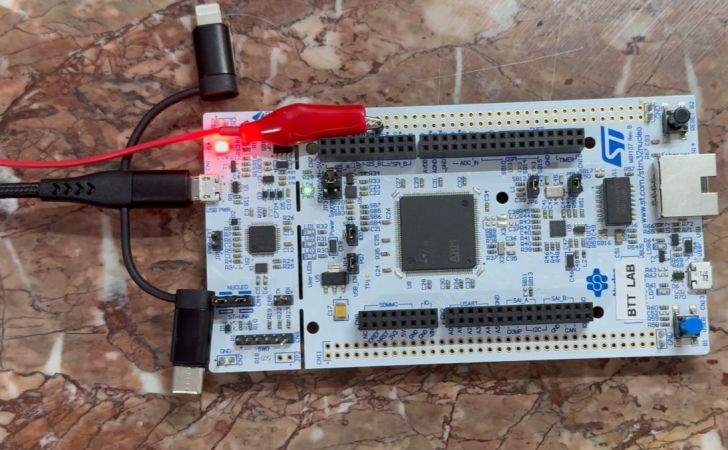
Simple DIY STM32 Oscilloscope Project

In part one of what is intended to be a series on developing an STM32-based oscilloscope, [BTTLab] demonstrates a how to use the built-in ADC of an STM32F207 MCU to develop a straightforward single-channel oscilloscope. This can be followed along both via the YouTube video and the GitHub repository for this single-channel version.
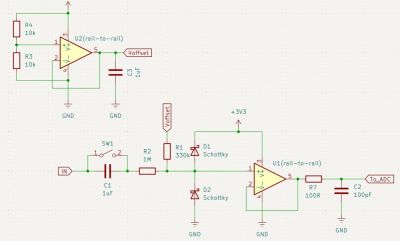
Oscilloscope front-end protections. You want this. (Credit: BTTLab, YouTube)
Oscilloscope front-end protections. You want this.

Of course, an MCU’s ADC generally won’t hold a candle to a dedicated ADC for oscilloscope purposes – along with the typical beefy FPGA-based processing – with even a basic Rigol DS1054Z hitting a cool 1 GSPS, but the 2 MSPS at 12-bit resolution achieved by an STM32F207 isn’t shabby either. For more basic, low-frequency circuit and protocol debugging it would already be enough.

One thing briefly touched upon in the video is the front-end. The ADC’s inputs are rated for a specific voltage range, typically 0 to 3.3 V when running the MCU off 3.3 V, so you do not want to put higher or negative voltages into said ADC input. This is where measuring something like AC becomes rather tricky and you can get some exciting releases of magic smoke.

The demonstrated single-channel oscilloscope firmware uses the ST HAL, so it might be somewhat easy to target other STM32 MCUs as well, though naturally ADC performance will differ per MCU family and sometimes sub-family, so make sure to read the datasheet and programming manual before you dive in too deep.

Continue reading “Simple DIY STM32 Oscilloscope Project”

Building Custom Backyard Solar Lights

In this modern age, if you want a truly swish garden that makes your friends sad when they visit, you need good lighting. [technocraftStudio] has been working on just such a project, creating custom wedge lights to illuminate garden beds in style.

You might look at the plastic housings involved and assume that they’re 3D printed, like the vast majority of such projects we cover these days. Instead, the enclosures are crafted out of PVC plastic, harvested by flattening sections of pipe with a heat gun. It has the benefit of being highly weather resistant, and cheap to boot. The lights themselves are small LED panels mounted on aluminium plate as a heatsink, and fitted with an acrylic diffuser to spread the light out more evenly. Power for the lights comes from an 18650 lithium-ion cell, charged by a pair of solar panels hooked up to an MPPT charge controller. A TP223 capacitive touch module is also included in the design to allow the lights to be turned on with just the touch of a finger.

The result is a surprisingly stylish bit of garden furniture which provides warm, even light and, ideally, needs a minimum of maintenance and attention since the sun provides the power. We’ve featured some other great solar lamps before, too, like this lovely Pokemon-themed build. If you’re building your own solar projects at home, or doing weird things with PVC, we’d probably love to hear about it on the tipsline!








