Raspberry Pi Locks Down RAM Upgrades

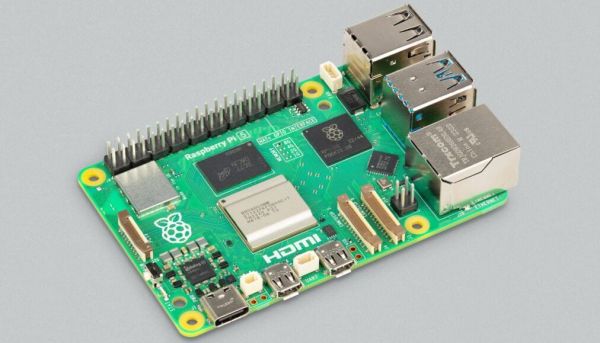
In a recent video [Jeff Geerling] addresses an issue discovered with the Raspberry Pi firmware, specifically how since around 2024 the firmware locks down what RAM size and even module is supported. This isn’t an issue that is widely known, probably because most people just use the board as-is, but it can be an unpleasant surprise for those looking to upgrade or repair their Pi.

Naturally there is a valid reason for wanting to prevent unscrupulous RAM module changes, with a [Geekworm] blog post from earlier this year detailing this exact issue and how each board is marked with a specific code that identifies the model, RAM size, RAM manufacturer and such. Based on the earlier linked forum post and also a 2025-era GitHub ticket on the rpi-eeprom project, the resulting symptoms seem to vary from not seeing the additional RAM to the board not booting at all.

Although you can go back to an older EEPROM firmware image to work around this, it’s still very annoying that this is even a thing. As also noted by [Jeff], the primary frustration here is probably one of ownership. When you can upgrade the RAM on just about any device you can buy, including a modern GPU and even Apple computer, but not on a Raspberry Pi board that loves to flaunt its open source/hardware credentials, then something is very much off.

In the end it’s highly unfortunate that Raspberry Pi has chosen this path that feels a bit too much like the hardware pairing that companies like Apple got rightfully called out on.
Continue reading “Raspberry Pi Locks Down RAM Upgrades” →

Tiny Scratch-Built Cyberdeck Is In Mint Condition

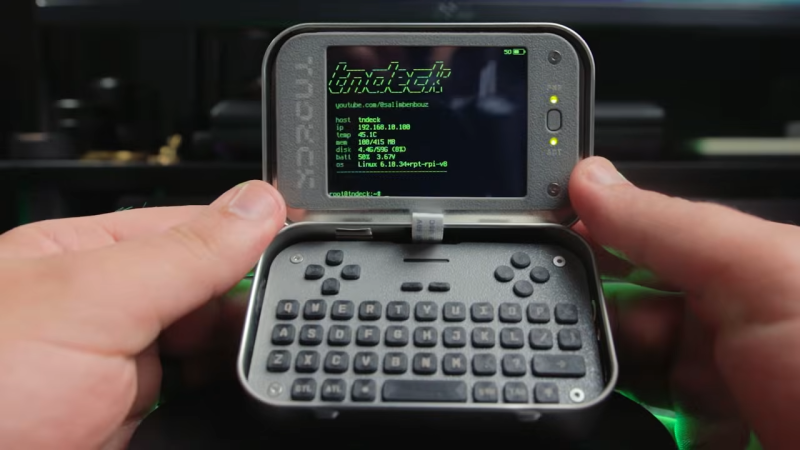
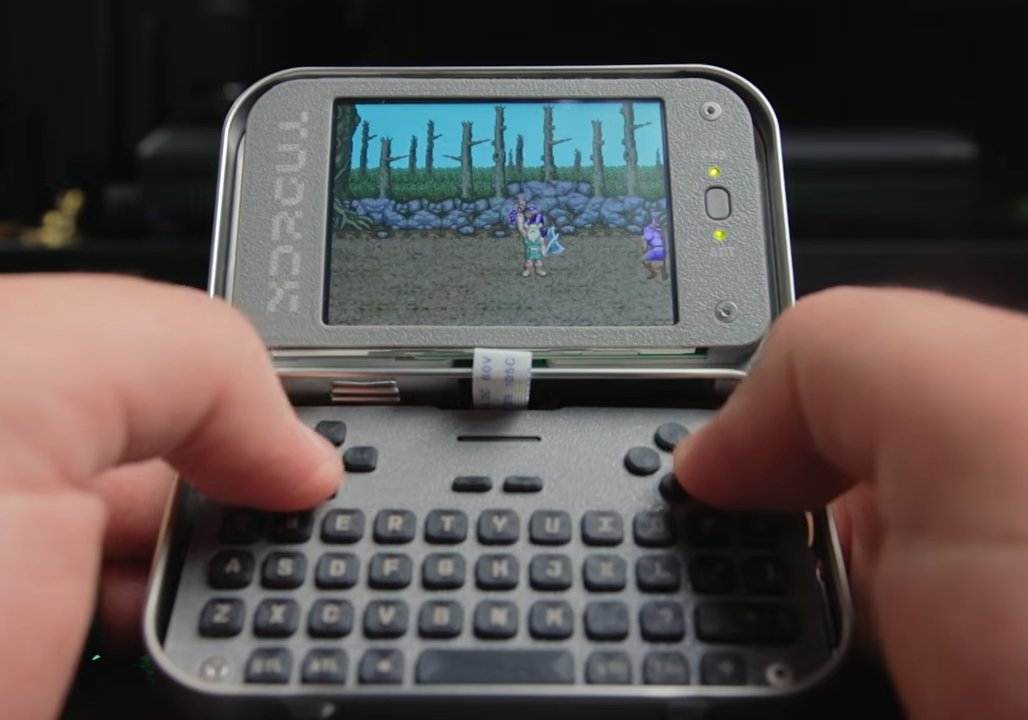
[Salim Benbouziyane] shows off his TN Deck, a tiny custom cyberdeck built into an Altoids tin. It’s a skillful build that really makes the most of the available space, and includes not only screen and keyboard but also rechargeable power supply and speaker.

The TN Deck is built around the Raspberry Pi Compute Module Zero, which is essentially the same as a Pi Zero W but in a more compact, castellated PCB form factor intended to be integrated into other designs. [Salim]’s custom PCB also handles power, sound, and puts a custom keyboard at the front running QMK, which is pretty much the best choice for custom keyboards and macropads of all kinds.

A D-pad and some gamepad buttons come in handy. The slot in the center is for the speaker.

The keyboard itself is mostly 3D printed. Each button consists of a dome tactile switch on the PCB, covered with a thin and flexible membrane printed in TPU and topped with 3D-printed keycaps. The markings are courtesy of [Salim]’s desktop IR laser marking machine, because a little trial-and-error with lasers can yield good marks on 3D prints. [Salim] says the keys don’t have much travel and the ergonomics aren’t the best, but what it lacks in comfort it makes up for in small size and economical design.

We also really liked [Salim]’s use of a printed drill guide for putting precise holes in the Altoid tin for things like an audio jack, taking the guesswork out of tool positioning.

Some cyberdecks are made to suit specific needs, and others are made for the love of the game. The TN Deck is one of the latter and [Salim]’s previous CM Deck was a bit of both. We can’t wait to see what he makes next.

Continue reading “Tiny Scratch-Built Cyberdeck Is In Mint Condition” →