Sip-and-Puff Touchscreens And Grilled Meat During World Create Day

In the last few weeks, we’ve been seeing a remarkable growth in the entries to The Hackaday Prize. This is due in no small part to World Create Day, a worldwide celebration of building stuff. It’s a worldwide buildathon with hackerspaces all around the globe. Now we’re getting a peek at the results of these gatherings, the videos are posted, and we’re simply gobsmacked by what was created during World Create Day.

Spinal Cord Hacks

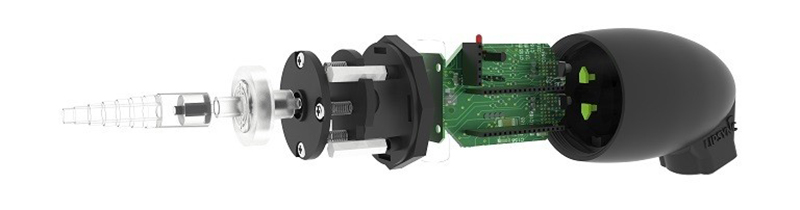
The gang over at the Blusson Spinal Cord Center in Vancouver put together a two-day event for World Create Day. The goal of this event was to build a lipsync; a device that enables people with limited use of their hands to use touchscreen devices. It looks like a ray gun, but it’s actually a sip-and-puff device entered into last year’s Hackaday Prize.
Gardening in Cyprus

The Limassol Hackerspace in Cyprus had what is probably the best World Create Day out of all the hackerspaces who took part. Why? Grilled meat, of course.

Instead of trying to improve the entire world, the team at the Limassol hackerspace decided to think locally. Improving their own hackerspace with an automated irrigation system for their vegetable garden, planting vegetables, and building a barbecue took up most of the events of the day. One member even built a few serving platters out of sections of a eucalyptus trunk. These sections of tree cracked, but with the clever application of a CNC router, this hackerspace was able to inlay a few butterflies in the wood. It looks great, and even better with a pile of skewered, grilled meat.

The Osaka Makers’ Space

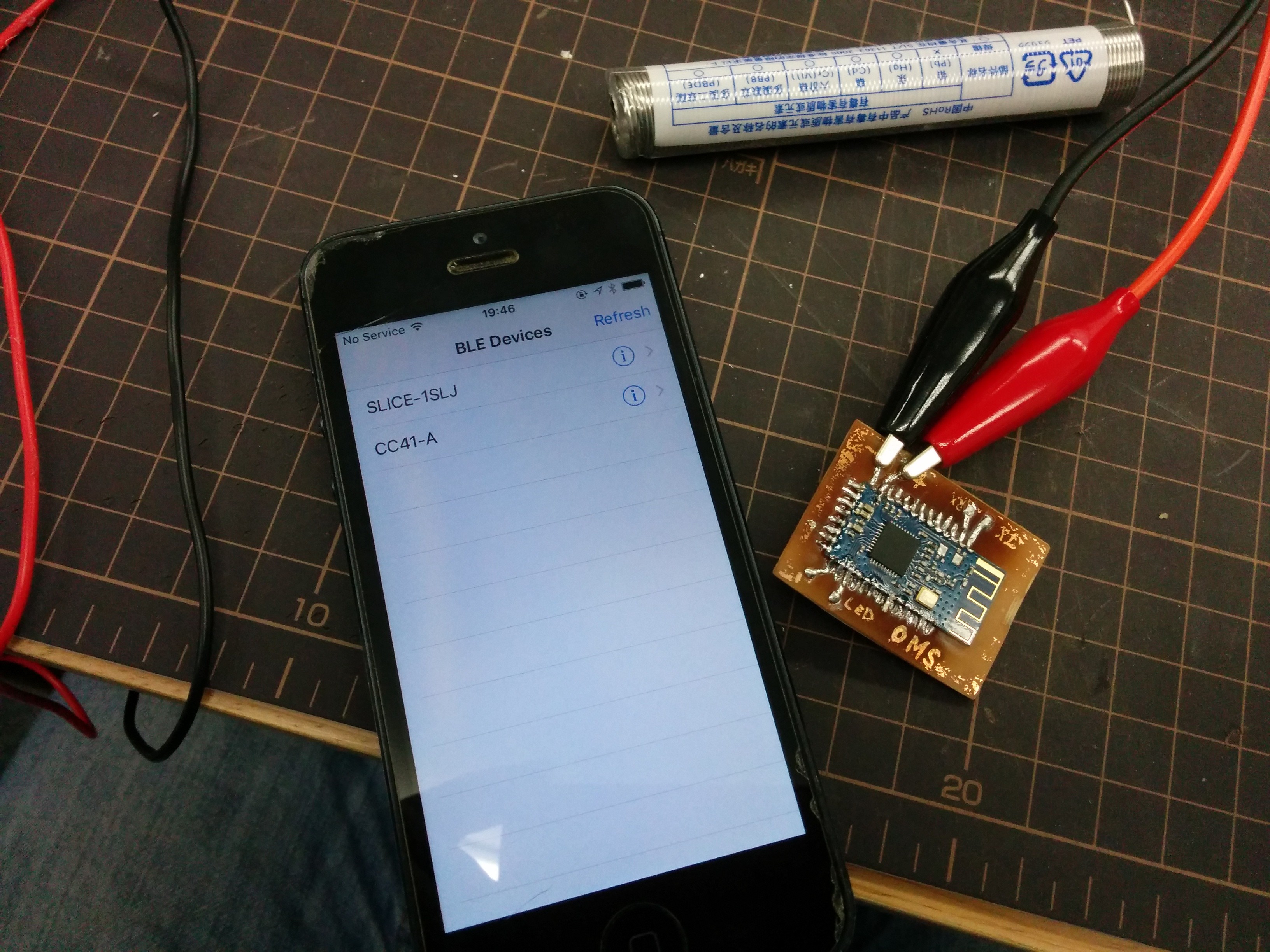
A few of the members at the Osaka Makers’ Space — like most of us — are interested in miniature robot battles. The first part of the event was, of course, spent tinkering with these tiny robots. A few members of the space made a breakout board for a BLE module, coding it so it could be voice-activated. No, that’s probably not the best way to control a battling robot, but you should do what you want, not what other people think is best.

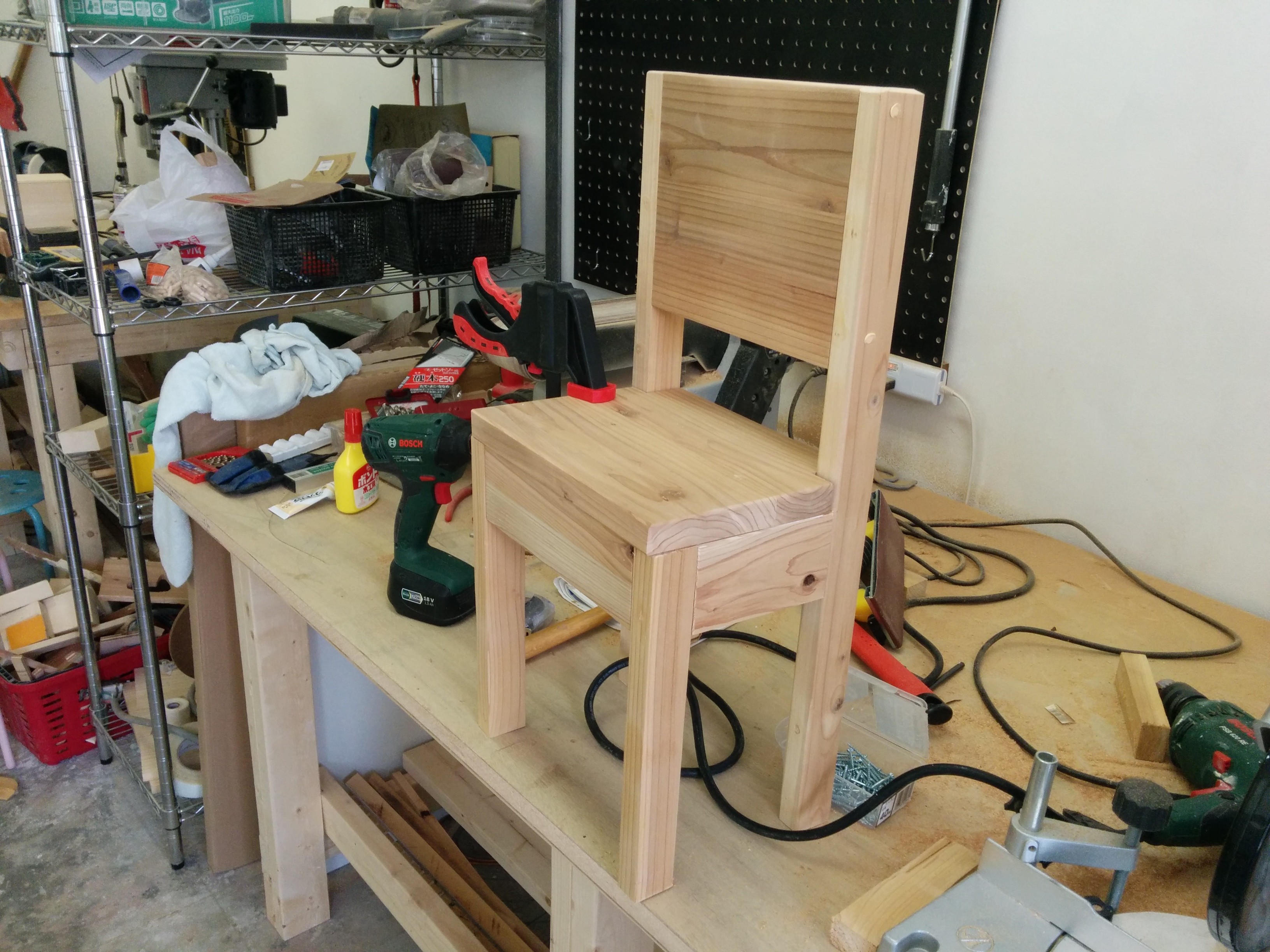
Also during World Create Day, a few members of the space built three tiny chairs for children. The kids, unfortunately, were busy watching Sesame Street. But hey, at least the screw holes were doweled up. Also on the roster for Osaka’s World Create Day was fixing a broken MacBook Air. The fan quit, and the repair involved soldering wires from the fan to pads on the motherboard.
La Orotava
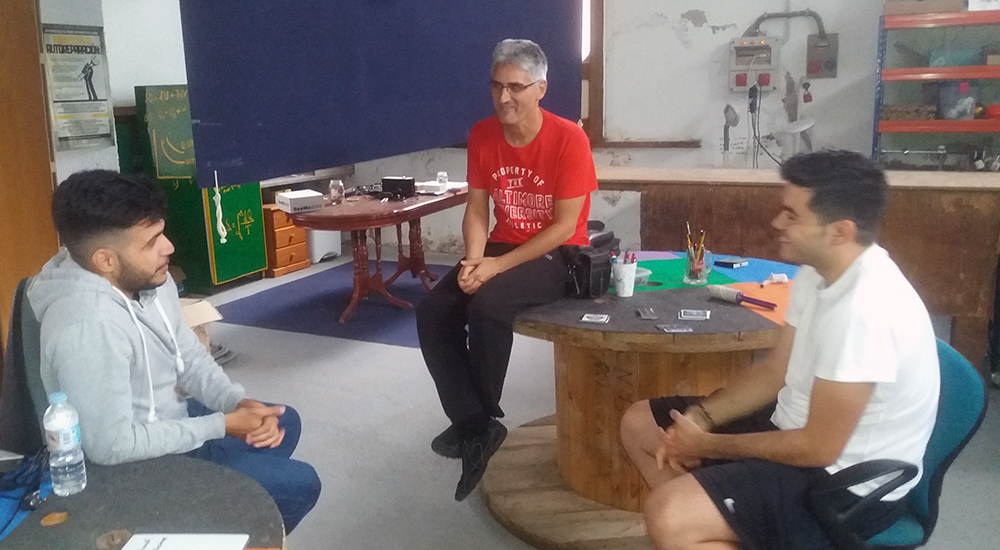
The folks at the Orotava Hackerspace put on a great event for World Create Day. Wait, where’s Orotava? It’s a town on the island of Tenerife, in the Canary islands. No, the birds are named after the islands, and the islands are named after the dogs.

While they didn’t have hordes of hackers come to a Hackaday meetup on an island in the middle of the Atlantic (St. Helena meetup, anyone?), the Orotava hackerspace did have a few people show up to discuss Hackaday Prize projects. The interesting projects generated from this discussion included an automatic farming robot, mobility problems for mental patients, and a low-cost bandsaw.


JB Weld Fixes Cracked Cylinder Heads

There are persistent rumors that the main ingredient in JB Weld is magic. This two-part epoxy that you would normally find on a shelf next to your basic 5-minute epoxy, Titebond, various cyanoacrylates, and Gorilla glue is somehow different. Stories of ‘some guy’ in the Yukon using JB Weld on a cracked engine block abound. These stories are of course met with skepticism.

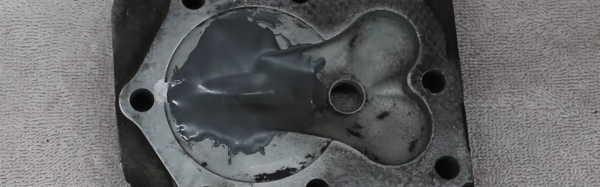
Now, finally, we have evidence you can use JB Weld to fix an engine. [Project Farm] over on YouTube gave it the ultimate test: he took the cylinder head off a lawnmower, took a grinder to the head, and patched the hole with JB Weld. The head had good compression, and the engine actually ran for 20 minutes before the test was concluded.

If this were a test of a field repair, it would be a test of an extremely crappy field repair. [Project Farm] made no attempt to ensure the piston didn’t make contact with the blob of JB Weld, and in fact, there was some slight knocking from the piston tapping against a blob of epoxy. Still, this repair worked.

While this serves as proof of the feasibility of repairing an engine block with JB Weld, there is one ultimate test of JB Weld epoxy: build an engine out of it. For years, I’ve been casting my leftover JB Weld into a small square plastic container. In a few more years, I’ll have a block of JB Weld ‘stock’, large enough to machine the parts for a small (.049 cc) glow engine, like what you would find in ye olde tymie model planes and cars. Will it work? I have no idea, but now I can’t wait to find out.

Continue reading “JB Weld Fixes Cracked Cylinder Heads”

Hackaday Prize Entry: Self Sustained Low Power Nodes

Consider for a second the Internet of Things. A vast network of connected devices, programmable matter, and wearable electronics can only mean one thing: there’s going to be a ton of batteries. While changing the battery in a smoke detector may seem tolerable, changing the batteries in a thousand sensor nodes is untenable. The solution to this problem is self-contained sensor nodes, and right now the best power source for mobile devices is probably solar.

For his Hackaday Prize entry, [Shantam Raj] is building a self-contained sensor node. It’s a Bluetooth device for the Internet side of this Thing, but the real trick to this device is solar energy harvesting and low power capabilities through optimized firmware.

Basically, this system is a low-power SoC with Bluetooth. The power from this device comes from a small solar cell coupled with a very efficient power supply and some new, interesting supercapacitors from Murata. These supercaps are extremely small, have high storage capacity, low ESR, and fast charging and discharging. The test board (seen in the video below) provides a proof of concept, but this device has a problem: there’s a single ‘sanity check’/power LED on the board that consumes 4 mA. The microcontroller, when running the optimized firmware, only consumes 1 mA. Yes, the LED thrown into the prototype that only serves as an indication the device is on is the biggest power sink in the entire system.

This project is great, and it’s exactly what we’re looking for in The Hackaday Prize. If the Internet of Things ever happens as it was envisioned, we’re going to be buried under a mountain of coin cell lithium batteries. Some sort of energy harvesting scheme is the only way around this, and we’re happy to see someone is working on the problem.

Continue reading “Hackaday Prize Entry: Self Sustained Low Power Nodes”

Hackaday Links: May 14, 2017

Maker Faire Bay Area is next weekend, and you know what that means: we’re having a meetup on Saturday night. If you’re in the area, it’s highly recommended you attend. It’s a blinky bring-a-hack with booze. You can’t beat it. I heard the OPShark is showing up. All hail the OPShark. You’re gonna want to RSVP if you’re going k thx.

It only took twelve years, but [ladyada] finally got herself on the cover of Make.

Nvidia has the Jetson, an extremely powerful single board computer + GPU meant for machine learning, imagifying, and robotics applications. If you want to do fancy ML stuff with low power devices, I’d highly recommend you check the Jetson out. Of course, the Jetson is only the brains of any Machine Learning robot; you also need some muscle. To that end, Nvidia released the Isaac robotic simulator. It’s a simulator for standard bits of hardware like quadcopters, hovercrafts (?), robotic arms, and yes, selfie drones. What does this mean? Standardized hardware means someone is going to produce 3rd party hardware, and that’s awesome.

This is just an observation, but fidget spinners are just now hitting the mainstream. We didn’t know what they were for a year ago, and we don’t know now.

A Hebocon is a shitty robot battle. DorkbotPDX just had their first Hebocon and the results were… just about as shitty as you would expect. Since this is a shitty robot battle, a MakerBot made an appearance. This robot, SpitterBot, was designed to blow extruded filament all over its opponent. Did the MakerBot win? Yes, SpitterBot won the ‘Poorest Quality’ award.

Supplyframe, Hackaday’s parent company, hosts monthly-ish electronic get-togethers in the San Fransisco office. The focus of these meetups is to find someone cool who built something awesome and get them to talk about it. The March meetup featured [Pete Bevelacqua] who built a Vector Network Analyzer from scratch. The video is worth a watch.

Hackaday Prize Entry: A Femtocell Repeater

For a Hackaday Prize entry, [TegwynTwmffat] is building a cell phone signal repeater. This sort of device is commercially available, but the options are either expensive or, as with some units available for $30 on DealExtreme, obviously noncompliant with RF regulations. This project intends to create a cost-effective, hackable device that works properly and conforms to the right regulations.

The core of this system is a LimeSDR transceiver. This is a board we’ve seen before, and it has a few interesting features. Basically, the core of the LimeSDR is a programmable RF transceiver with coverage from 100kHz to 3.8GHz. There’s also on-chip signal processing and USB 3.0 bandwidth to get the signals to and from a computer.

Right now, [TegwynTwmffat]’s focus is getting his LimeSDR up and working and figuring out how to set up a few radio blocks to do what is needed. There’s a great update to the project that showcases Pothos, and so far [Tegwyn] has a full-duplex repeater working. This is great work, and really showcases the capabilities of what software-defined radio can do.

From Amritsar To Busselton; More World Create Day Stories

A few weeks ago, we took Hackaday IRL and into hackerspaces around the globe. This was World Create Day, a community effort to come together and build something that matters. Think of it as the pre-game for the Hackaday Prize, our online competition to change the world by building hardware. The groups at these hacker meetups have sent in pictures and reported on what they created. What happened during this worldwide hacker meetup? So much awesome stuff.

The SupplyFrame Design Lab

Did you know Hackaday has its own Hackerspace? It’s true! We have an eight-foot ShopBot, a Tormach, we just got a rig to do injection molding, and apparently, the intern is busy setting up a resin printer.

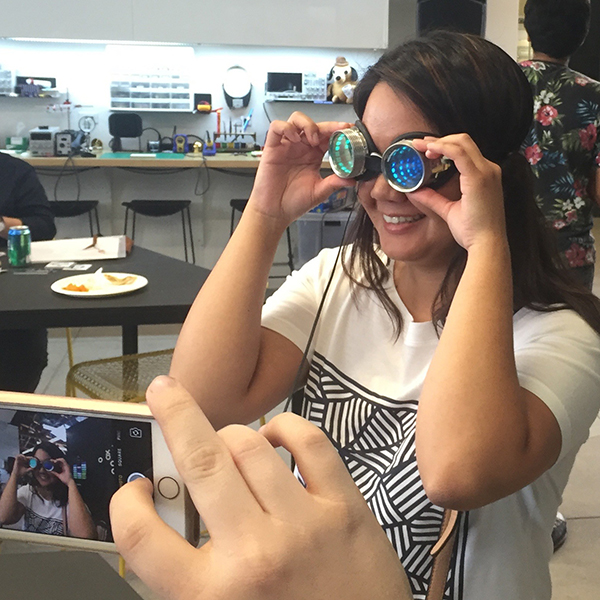
There are a ton of really talented people associated with the Design Lab, and they were out in full force on World Create Day. [Diego] from Deezmaker has been working on robot muscles and customizable linear actuators for a while, so that was obviously the focus of his World Create Day. Everyone needs mirrored LED-equipped welding/steampunk goggles, so that was [Rich Cameron]’s build, pictured to the right.

A fabulous time was had by all, but just because this was only one of three World Create Day meetups hosted ‘officially’ by Hackaday doesn’t mean it was the biggest or the best. There was plenty of fun the world over.

Amritsar, India

World Create Day is a worldwide event, so of course we had a few events in the second most populous country on Earth. [Inderpreet], [Shubham], [Simrat], and [Navjeet] put together a World Create Day event at the Department of Electronics Technology at GNDU Amritsar, their local university. A slew of people showed up, [Inderpreet] gave a talk on The Hackaday Prize, and much fun was had by all.

FabLab San Diego

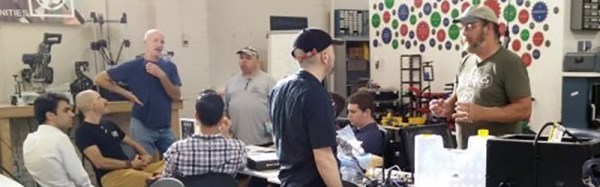
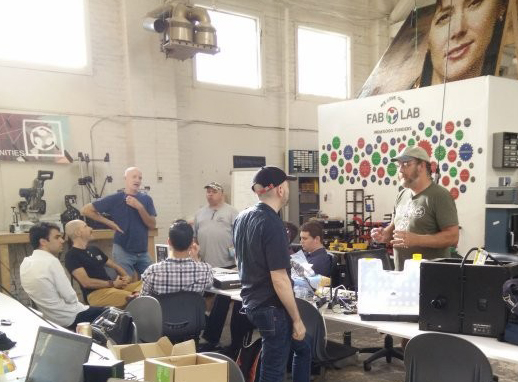
The Fab Lab in San Diego also hosted a World Create Day event, Projects that made the cut included a real time, IRL closed captioning device. Think of this one as a universal translator, but only one language, with a screen. Or a voice to text thing running on a phone. Either way. Other ideas included an improved mobility cart, an underwater autonomous robot, wireless communication nodes, pressurized algae incubators, and a whole bunch more.

The folks at the San Diego Fab Lab also produced a short video of their World Create Day activities, you can check that out below.

Continue reading “From Amritsar To Busselton; More World Create Day Stories”

Another Printer With An Infinite Build Volume

Very rarely do we see a 3D printer that is more than just a refinement of what’s currently standard practice. [Prusa]’s single-hotend, four-color printer makes the list, but that came out a while ago. The novel 32-bit controller board found in last year’s $200 Monoprice printer has the potential to change a cottage industry. Save those two exceptions, innovation in 3D printing really isn’t seeing the same gains we saw in 2010 or 2011.

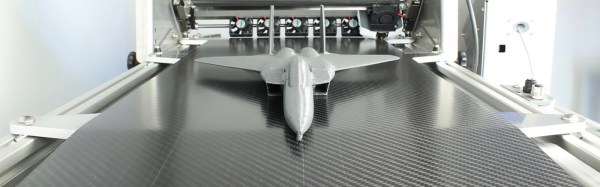
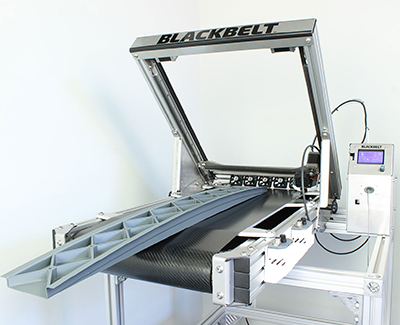
A company out of the Netherlands, Blackbelt 3D, is bringing out the most innovative 3D printer we’ve seen since last March. It’s an infinite volume 3D printer that’s built for autonomous production. This printer can produce row after row of 3D printed parts, or it can print an object longer than the build plate. If you have enough time, filament, and electricity, there’s no reason you couldn’t print a plastic beam hundreds of meters long.

The specs on this printer are about what you would expect from a large machine meant for industry or prototyping, as opposed to a machine designed to print out tugboats and fidget spinners. The Blackbelt uses interchangeable print heads for the hotend with 0.4, 0.6 or 0.8 mm nozzles. The filament feed is a Bowden with the extruder hidden under the control panel. The frame is explicitly Bosch extrusion, and the machine’s build volume is 340 mm by 340 mm by whatever. Retail price (on Kickstarter) comes in at €9,500, but for an extra €3,000 you can also get a neat stand with casters on the bottom. Of course, with an infinite build volume, you could also print a stand. Continue reading “Another Printer With An Infinite Build Volume”