Food Safe Printing Techniques

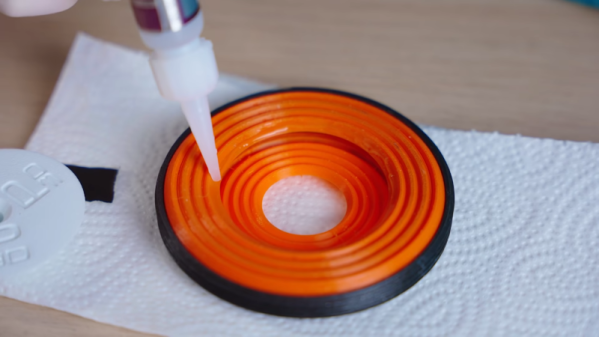
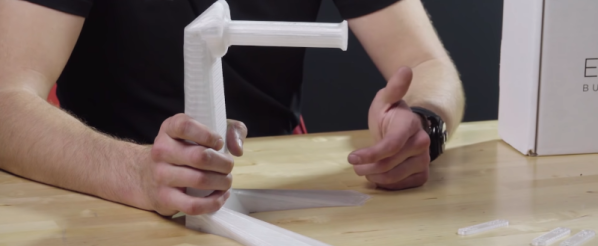
One thing that always provokes spirited debate around the Hackaday bunker is just how dangerous is it to use 3D printed plastic in contact with food. We mostly agree it isn’t a good thing, but we also know some people do it regularly and they don’t drop dead instantly, either. [Jakub] decided to do some testing and make some recommendations. There’s even a video explaining the results.

Unlike a lot of what we’ve read about this topic in the past, [Jakub’s] post is well-researched and does actual testing including growing bacteria cultures from cups used for milk. He starts out identifying the EU and US regulations about what you can call food-grade. There’s also recognition that while a base plastic might be safe for contact with food, there’s no way to know exactly what additives and other things are in the plastic to change its properties and color.

Continue reading “Food Safe Printing Techniques”

Sinclair QL Repairs And Restoration

[Noel] was in possession of two non-working Sinclair QLs and made a series of videos about his attempts to repair and restore them. If you don’t remember the QL, it was a computer by the famous Clive Sinclair and while it was ahead of its time in some ways, it didn’t become as ubiquitous as some of its siblings or the IBM PC. It did, however, develop an almost cult-like following. You can see the trilogy of videos, below.

The machine was sophisticated for its day–after all, the QL was for quantum leap. Based on a Motorola 68008 processor running at 7.5 MHz, the QL included 128 KB of RAM and could handle up to 896 KB, a respectable amount for 1984. It even had a proprietary network interface. However, it was especially well known for having a pair of microtape drives. These were nicer than cassette tapes but perhaps not as handy as floppy disks. They were, however, cheaper to put into a computer. While there was an official operating system, it wasn’t long before most QL users switched to Minerva, a better OS.

Continue reading “Sinclair QL Repairs And Restoration”

Parkinson’s Spoon Uses Control Theory For Good

When we first saw [Barqunics’] design for a self-stabilizing spoon for people suffering from Parkinson’s disease, we wondered how well something like that could work. But take a look at the video below and you’ll see this does a fine job of responding to the user’s hand movements and keeping the spoon perfectly level through a wide range of motion.

There’s at least one commercial product that attempts to stabilize a spoon in the same way so that people suffering from that affliction can retain a measure of independence. This shows that you don’t need injection molding and factory made boards to prove the concept. An MPU6050 provides sensor information and two servo motors control the spoon using PID control.

PID — short for proportional, integral, derivative — is a way to adjust something to a desired point. For example, consider trying to heat a cup of water to 95 °C. If you simply turn the heater on full blast until you get to 95 °C, the water will actually get hotter because you’ll overshoot. Using PID, the amount of heating provided will depend on how far off you are now (proportional), how far off you’ve been over the long term (integral), and how much change you’ve effected recently (derivative). The same algorithm works for spoon-balancing and many other types of controls.

This isn’t the first bootstrapped assistive spoon project we’ve seen. We even looked at the commercial version, awhile back.

Continue reading “Parkinson’s Spoon Uses Control Theory For Good”

Fans Add Reality To Virtual Driving

A few decades ago you might have been satisfied with a crude wireframe flight simulator or driving a race car with the WASD keys. Today, gamers expect more realism, and [600,000 milliliters] is no different. At first, he upgraded his race car driving chair and put on VR goggles. But watching the world whiz by in VR is you can’t feel the wind on your face. Armed with a 3D printer, some software, and some repurposed PC fans, he can now feel the real wind in virtual reality. You can see the build in the video, below.

The electronics are relatively straightforward and there is already software available. The key, though, is the giant 3D printed ducts that direct the airflow. These are big prints, so probably not for some printers, but printers are getting bigger every day. The fan parts are from Thingiverse, but the enclosures are custom and you can download them from the blog post.

Continue reading “Fans Add Reality To Virtual Driving”

Circuit VR: Squaring With Schmitt Triggers

In the fantasy world of schematic diagrams, wires have no resistance and square waves have infinitely sharp rise times. The real world, of course, is much crueler. There are many things you can use to help tame the wild analog world into the digital realm. Switches need debouncing, signals need limiting, and you might even need a filter. One of the basic elements you might use is a Schmitt trigger. In

In this installment of Circuit VR, I’m looking inside practical circuits by building Schmitt triggers in the Falstad circuit simulator. You can click the links and get to a live simulation of the circuit so you can do your own experiments and virtual measurements.

Why Schmitt Triggers?

You usually use a Schmitt trigger to convert a noisy signal into a clean square digital logic level. Any sort of logic gate has a threshold. For a 5V part, the threshold might be that anything under 2.5V is a zero and at 2.5V or above, the signal counts as a one. Some logic families define other thresholds and may have areas where the signal is undefined, possibly causing unpredictable outputs.

There are myriad problems with the threshold, of course. Two parts might not have exactly the same threshold. The threshold might vary a bit for temperature or other factors. For parts with no forbidden zone, what happens if the voltage is right at the edge of the threshold?

Continue reading “Circuit VR: Squaring With Schmitt Triggers”

Flipbook Automation Saves Your Thumb

You’ve probably seen a flipbook. That’s a book with pictures on each page. Each picture is slightly different than the last one so if you flip rapidly through the book you get a little animation. We like the German word, Daumenkino, which translates as “thumb cinema” and that seems appropriate. [Barqunics] put a decidedly new twist on this old technology. His flipbook senses a viewer and automatically flips the pages using a motor. You can see the Arduino-controlled device in the video below.

The presence detection is a ubiquitous sonar sensor. The frame is easy to make since it uses cardboard and hot glue. A DC motor like you find on many toy cars or robots provides the rotation. No 3D printing needed, but we did think it would be easy to 3D-print or laser-cut the pieces.

Continue reading “Flipbook Automation Saves Your Thumb”

Real Spectrum Analysis Goes Virtual

One of the hard things about electronics is that you can’t really see the working parts without some sort of tool. If you work on car engines, fashion swords, or sculpt clay, you can see with your unaided eye what’s going on. Electronic components are just abstract pieces and the real action requires a meter or oscilloscope to understand. Maybe that’s what [José] was thinking of when he built a-radio. This “humble experiment” pipes a scan from a software-defined radio into VR goggles, which can be as simple as a smartphone and some cardboard glasses.

The resulting image shows you what the radio spectrum looks like. Granted, so will a spectrum analyzer, but perhaps the immersion will provide a different kind of insight into radio frequency analysis.

Continue reading “Real Spectrum Analysis Goes Virtual”