Retro Gadgets: Things Your TV No Longer Needs

It is hard to imagine that a handful of decades ago, TV wasn’t a thing. We’ve talked a few times about the birth of television. After an admittedly slow slow start, it took over like wildfire. Of course, anything that sells millions will spawn accessories. Some may be great. Then there are others.

We wanted to take a nostalgic look back at some of the strange add-ons people used to put on or in their TVs. Sure, VCRs, DVD players, and video game consoles were popular. But we were thinking a little more obscure than that.

Rabbit Ears
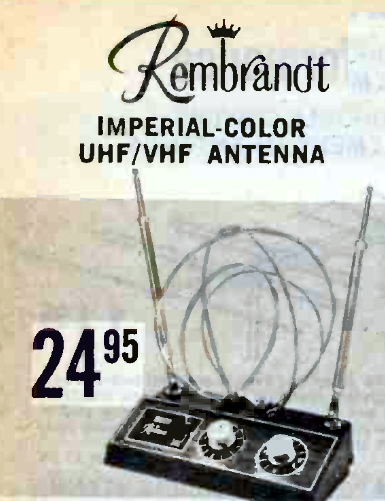
A state-of-the-art set of rabbit ears from the 1970s

Every once in a while, we see an ad or a box in a store touting the ability to get great TV programming for free. Invariably, it is a USB device that lets you watch free streaming channels or it is an antenna. There was a time when nearly all TVs had “rabbit ears” — so called because they made an inverted V on the top of your set.

These dipoles were telescoping and you were supposed to adjust them to fit the TV station you were watching but everyone “knew” that you wanted them as long as possible at all times. Holding one end of them gave it a ground and would give you a major improvement in picture. People also liked to wrap tin foil around the tips. Was it like a capacitive hat? We aren’t sure.

The better rabbit ears had knobs and switches along with multiple elements. If you lived close to a TV station, you probably didn’t need much. If you didn’t, no number of fancy add-ons would likely help you. Continue reading “Retro Gadgets: Things Your TV No Longer Needs”

Blinking An LED Passively

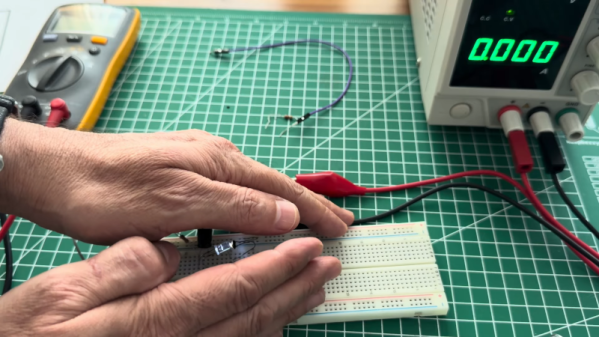
It is a pretty common first project to use an Arduino (or similar) to blink an LED. Which, of course, brings taunts of: you could have used a 555! You can, of course, also use any sort of oscillator, but [Mustafa] has a different approach. Blinking an LED with three resistors and a capacitor. Ok, ok… one of the resistors is a light-dependent resistor, but still.

In reality, this is a classic relaxation oscillator. The capacitor charges until the LED lights. This, however, causes the capacitor to discharge, which eventually turns off the LED, and the process starts again.

There is one wrinkle that could be considered a feature. In daylight, the capacitor will stay in the off state, so the blinking only occurs in darkness. Of course, the resistor also has to have a sufficient view of the LED. You might use this as a safety light that only works in the dark.

A simple circuit, but it just goes to show that we tend to forget the simple solutions in a world where a computer costs less than a dollar.

Of course, you can get a chip whose sole purpose is to blink LEDs. We always like examples of doing more with less.

Continue reading “Blinking An LED Passively”

Stretch Goal: 300X Arduino

The Faboratory at Yale University has set a number of stretch goals. We don’t mean that in the usual sense. They’ve been making, as you can see in the video below, clones of commercial devices that can stretch over 300%. They’ve done Ardunios and similar controllers along with sensors. The idea is to put computer circuits in flexible robots and other places where flexibility is key, like wearable electronics.

If you are interested in details, you’ll want to read the paper in Science Robotics. They take the existing PCB layout and use a laser to cut patterns in a paper mask over the stretchable substrate. They then apply oxidized gallium-indium to build conductors.

Continue reading “Stretch Goal: 300X Arduino”

A Universal RF Amplifier

If you need an amplifier, [Hans Rosenberg] has some advice. Don’t design your own; grab cheap and tiny RF amplifier modules and put them on a PCB that fits your needs. These are the grandchildren of the old mini circuits modules that were popular among hams and RF experimenters decades ago. However, these are cheap, simple, and tiny.

You only need a handful of components to make them work, and [Hans] shows you how to make the selection and what you need to think about when laying out the PC board. Check out the video below for a very detailed deep dive.

Continue reading “A Universal RF Amplifier”

Tech In Plain Sight: Zipper Bags

You probably think of them as “Ziploc” bags, but, technically, the generic term is zipper bag. Everything from electronic components to coffee beans arrive in them. But they weren’t always everywhere, and it took a while for them to find their niche.

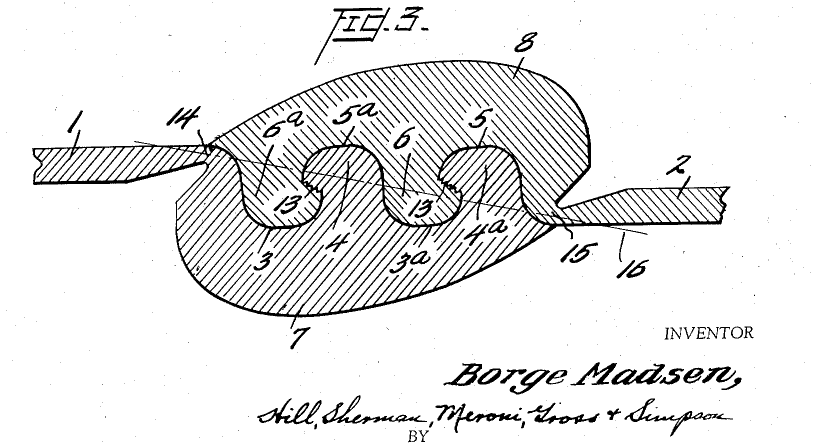
Image from an early Madsen patent

A Dane named Borge Madsen was actually trying to create a new kind of zipper for clothes in the 1950s and had several patents on the technology. The Madsen zipper consisted of two interlocking pieces of plastic and a tab to press them together. Unfortunately, the didn’t work very well for clothing.

A Romanian immigrant named Max Ausnit bought the rights to the patent and formed Flexigrip Inc. He used the zippers on flat vinyl pencil cases and similar items. However, these still had the little plastic tab that operated like a zipper pull. While you occasionally see these in certain applications, they aren’t what you think of when you think of zipper bags.

Zipping

Ausnit’s son, Steven, figured out how to remove the tab. That made the bags more robust, a little handier to use, and it also rendered them less expensive to produce. Even so, cost was a barrier because the way they were made was to heat seal the zipper portion to the bags.

That changed in the 1960s when the Ausnits learned of a Japanese company, Seisan Nippon Sha, that had a process to integrate the bags and zippers in one step which slashed the production cost in half. Flexigrip acquired the rights in the United States and created a new company, Minigrip, to promote this type of bag.

Continue reading “Tech In Plain Sight: Zipper Bags”

Replacing Selenium Rectifiers

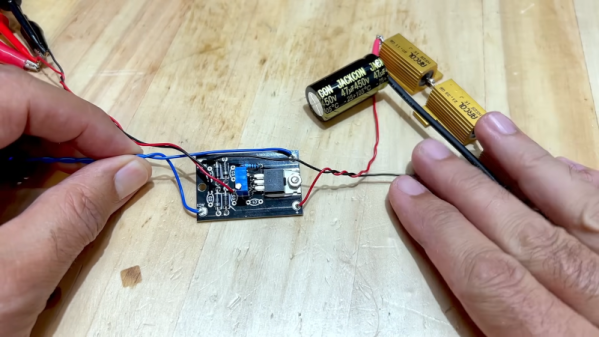
Old radios often had selenium rectifiers to convert AC to DC. The problem is that the old units, dating back to 1933, are prone to failure and to release dangerous chemicals like hydrogen selenide. [M Caldeira] has a new board made to fit a particular rectifier and also allows a varying voltage drop. The circuit consists of a few diodes, a MOSFET, and a pot for adjusting the voltage drop. An IRF840 MOSFET provides the adjustment.

Did it work? It did. The good news is that if it fails — which shouldn’t happen very often — it won’t release stinky and noxious fumes

We wondered if he should 3D print a fake case to make it look more the part. If you haven’t seen a real selenium rectifier, they were made of stacks of metal plates coated with bismuth or nickel. Then, a film of doped selenium was annealed to the surface to form cadmium selenide. Each plate could handle about 20 V and the more plates you used, the more reverse voltage the device could withstand.

Selenium was also found in old photocells. If you fancy replacing other parts of an old radio, you might consider a faux magic eye or even one of the main tubes.

Continue reading “Replacing Selenium Rectifiers”

Custom Mini-Neon Signs In 10 Minutes

Sometimes, you see a project that isn’t a technical powerhouse but just looks so good you can’t help but think about duplicating it. That’s how we felt with the mini-neon signs made by [makerverse]. From an electronics point of view, it is just some filament LEDs and a 3D-printed casing. But, as you’ll see in the video below, these look like little miniature neon signs, and they look great.

Although we might use a different set of tools to get there, the idea is to create your text in DXF, extrude it in CAD, and then print a dark shell with a light or translucent center using a filament change. Glow-in-the-dark filament is also an option. Obviously, if you are handy in any CAD tool, you could easily pull this off.

Continue reading “Custom Mini-Neon Signs In 10 Minutes”