3D Printing With A Twist

When we think about sending an STL off on the Internet for processing, we usually want someone to print it for us or we want mesh repair. But [Chuck] found an interesting project on GitHub from [Andrew Sink] that will let you add a variable amount of twist to any STL and then return it to you for printing or whatever else you use STLs for. If you don’t get what we mean, check out the video below.

The site that does the work initially loads a little gnome figure if you are too lazy to upload your own model. That’s perfect, though, because the little guy is a good example of why you might want to twist a model. With just a little work, you can make the gnome look in one direction or even look behind him.

[Chuck] shows how to use the tool for artistic effect by twisting his standard cube logo. The result is something that looks like it would be difficult to create, but could hardly be easier. The tool lets you rotate the object, too, so you can get the twist effect in the right orientation for what you want to accomplish. A great little tool for making more artistic 3D prints without learning new software. If you want some fun, you can try the version that uses sound from your microphone to control the twist.

If you’d rather twist in CAD, we can help. If you really want artsy 3D printing, you probably need to learn Blender.

Continue reading “3D Printing With A Twist”

Solar Energy Plant Creates Fuel

Normally, when you think of solar power, you think about photovoltaic cells or using the sun to generate steam. But engineers at Synhelion — a spin off from ETH Zurich — had a crazy idea. Could you reverse combustion and change waste products back into fuel? The answer is yes if you can use the sun to turn things up to 1,500°C.

The input is water, carbon dioxide, and methane into syngas. The pilot plant in Germany is set to begin operations using a thermal storage device to allow the plant to operate around the clock. The new plant is slated to produce several thousand liters of fuel a year. Future plants will produce more, and they are targeting a cost of $1 per liter of fuel. The pilot plant has a 20-meter-tall tower and around 1,500 square meters of mirrors, producing 600 kW of output. The hexagonal mirrors are very thin, and the plant uses drones to aim the mirrors quickly compared to other methods.

Syngas shows up a lot lately. Getting to 1,500 degrees is a big ask, although we’ve seen ETH Zurich get to 1,000 using solar.

3D Printing With Sublime Sublimation

[Teaching Tech] got an interesting e-mail from [Johan] showing pictures of 3D prints with a dye-sublimated color image on the surface. Normally, we think of dye sublimation, we think of pressing color pictures onto fabric, especially T-shirts. But [Johan] uses a modified Epson inkjet printer and has amazing results, as you can see in the video below.

The printers use separate tanks for ink, which seems to be the key. If you already have an Espon “tank” printer, you are halfway there, but if you don’t have one, a cheap one will set you back less than $200 and maybe even less if you pick one up used.

Continue reading “3D Printing With Sublime Sublimation”

8-Bits And 1,120 Triodes

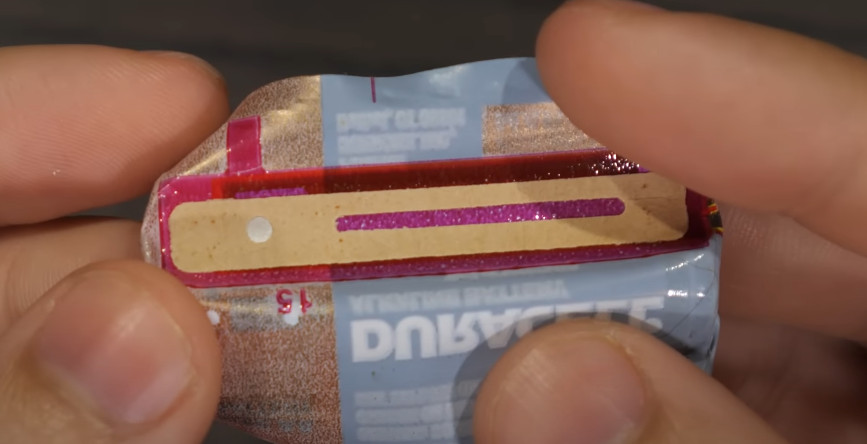
While it’s currently the start of summer in the Northern Hemisphere, it will inevitably get cold again. If you’re looking for a unique way of heating your workshop this year, you could do worse than build an 8-bit computer with a bunch of 6N3P vacuum tubes. While there are some technical details, you might find it a challenging build. But it is still an impressive sight, and it took 18 months to build a prototype and the final version. You can find the technical details if you want to try your hand. Oh, did we mention it takes about 200 amps? One of the prototype computers plays Pong on a decidedly low-tech display, which you can see below.

The architecture has 8 data bits and 12 address bits. It only provides six instructions, but that keeps the tube count manageable. Each tube has two triodes in one envelope and form a NOR gate which is sufficient to build everything else you need. In addition to tubes, there are reed relays and some NVRAM, a modern conceit.

Operating instructions are to turn it on and wait for the 560 tubes to warm up. Then, to quote the designer, “… I check the fire extinguisher is full, and run the code.” We wonder if one of the six instructions is halt and catch fire. Another quote from the builder is: “It has been a ridiculous amount of soldering and a fantastic amount of fun.” We can imagine.

If the computer seems familiar, we covered the first and second prototypes named ENA and Fred. We’ve also seen tube-base single-board computers.

Continue reading “8-Bits And 1,120 Triodes”

$3 Smartwatch Can Run Python

[Poking Technology] doesn’t think much of his new smartwatch. It is, by his admission, the cheapest possible smartwatch, coming in at about $3. It has very few useful features but he has figured out how to port MicroPython to it, so for a wrist-mounted development board with BLE, it might be useful. You can check it out in the video below.

The first step is a teardown, which reveals surprisingly little on the inside. There’s a tiny battery, a few connections, a display, and a tiny CPU board. There are, luckily, a few test pads that let you get into the CPU. What do you get? A 24 MHz Telink CPU with 512k of flash and 16k of RAM, along with all the other hardware.

Continue reading “$3 Smartwatch Can Run Python”

Decoding Meshtastic With GNU Radio

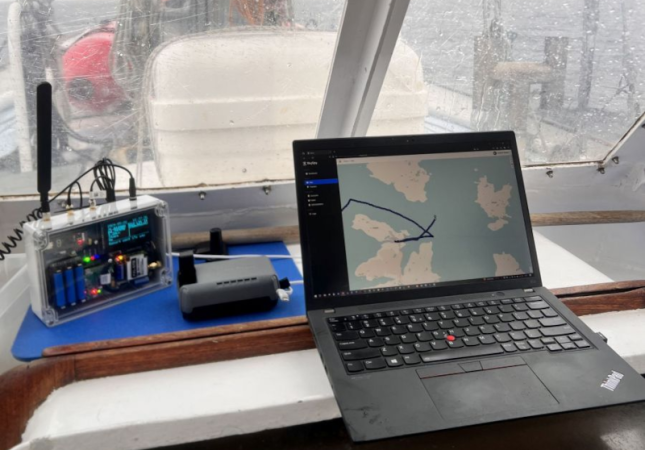
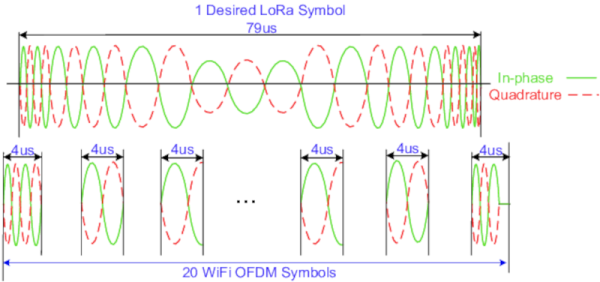
Meshtastic is a way to build mesh networks using LoRa that is independent of cell towers, hot spots or traditional repeaters. It stands to reason that with an SDR and GNU Radio, you could send and receive Meshtastic messages. That’s exactly what [Josh Conway] built, and you can see a video about the project, Meshtastic_SDR, below. The video is from [cemaxecuter], who puts the library through its paces.

For hardware, the video uses a Canary I as well as the WarDragon software-defined radio kit which is an Airspy R2 and a mini PC running Dragon OS — a Linux distribution aimed at SDR work —  in a rugged case. GNU Radio, of course, uses flows which are really just Python modules strung together with a GUI.

Continue reading “Decoding Meshtastic With GNU Radio”

Art of 3D printer in the middle of printing a Hackaday Jolly Wrencher logo

3D Printering: Adaptive Bed Leveling

Have you ever read about something and thought, “Gee whiz! Why did I never think about that?” That was my reaction to reading about a feature commonly associated with Klipper called adaptive bed leveling or adaptive mesh leveling. Too bad I don’t typically use Klipper, but it all worked out, and I’ll show you how it might work for you.

What Is It?

Time to tram your bed!

Once a luxury, most 3D printers now come with some kind of bed level sensor. The idea is that the printer can probe the bed to determine the shape of the build plate and then adjust the build plate accordingly. So if a particular spot on the bed is 0.5 mm too high, the nozzle can rise 0.5 mm when it is in that area. There are several techniques Marlin firmware uses, including what I usually use: UBL. Some people scan the bed once and hope it won’t change much. Others will do a time-consuming scan before each print.

However, adaptive bed leveling is a bit different. The idea is that the printer only probes the area where the part is going to print. If your print bed is 235 mm x 235 mm but your part is 50 mm square, you could just probe the points under the 50 mm square.

This does several things. For a given number of points, there is less motion, so it should be faster. Also, for the same number of points, you will have a much denser mesh and, thus, a better idea of what the bed is at any given point. You could even reduce the number of points based on the size of the part you are printing.

When you think about it, it is a dead simple idea. What’s not to love? For most print jobs, you’ll have less work for the printer, faster prints, and a denser mesh. But how do you do it?

Continue reading “3D Printering: Adaptive Bed Leveling”