
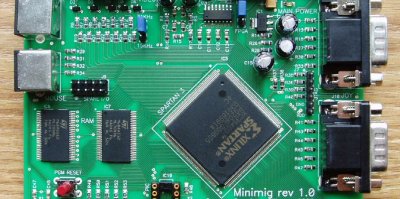
FPGA’s have become especially useful to the hacker community of late. Once upon a time, these lovely pieces of dedicated hardware were fabled to only be within reach of deep pocketed graphics card producers working to up their shader and vertex counts. Today they’re often found in the bowels of high end network gear. As reprogrammable arrays of logic gates, FPGAs represent a happy middle ground between general purpose CPUs and dedicated silicon. After the break, we’ll recount some of the more interesting FPGA projects we’ve seen, like the open source graphics card we featured yesterday.
Guitar Hero Without The Console

If you thought your Guitar Hero controller was only good for pretending to play music, think again. Yeah, lots of people have hacked the controller to achieve perfect scores, but what can you do that doesn’t require a console. Look after the break for some more creative ways of making music with a Guitar Hero controller.
DISH Wins $1050 In Satellite Cracking Case
Who doesn’t love a good corporate espionage story? We certainly don’t mind them, especially when they involve hiring a notable hacker to do the company’s dirty work. It seems this is exactly what happened in the case of Dish Networks vs NDS Group. Last month, Christopher Tarnovsky admitted he was paid $20,000 in cash to crack the security protocols used on DISH Network access cards. NDS Group claimed the reverse engineering was simply for comparative reasons while DISH is said it resulted in $900 million in damages.
The trial came to an end this week with the court finding NDS group guilty of cracking 1 card (a fine of $49.69) and liable for an additional $1000 in damages. Not quite the big payoff DISH was hoping for, but both companies have expressed feelings of vindication about the decision. DISH Networks says that the jury ruled in their favor, proving that they were right all along (just not $900 million dollars right). NDS maintains that Tarnovsky’s work was never publicly shared and that they never intended to flood the black market with cracked cards as DISH has implied.
Hacking The OLPC Now And The Future
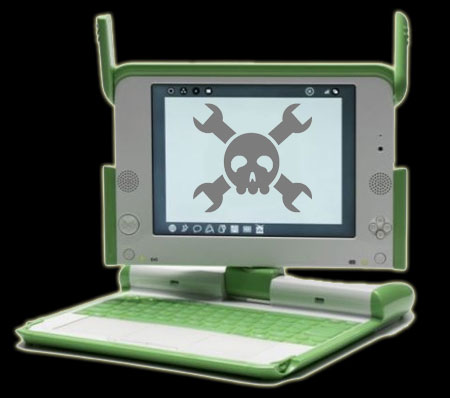
While we haven’t talked about the OLPC XO laptop much here, don’t think we haven’t had our eyes on its developments. Originally shipping last November, this unit captured the interest of many for its humanitarian goal, low cost, and potential hackability. After the break, let’s take a look at what has been done with this device and poke at the prototype for version 2.
Media Streamers: Buy Or Build?
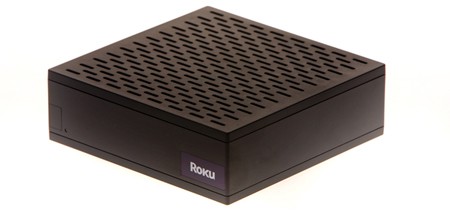
The market is flooded with new media streamers, but which one is for you? One of the cheapest and easiest options is the unambiguously titled Netflix Player. With an active account, the Netflix Player streams movies and television shows from their online library (currently around 10,000 videos). It connects to the internet via 802.11b/g WiFi or ethernet, but delivers low-quality video if your connection speed is less than 1Mbps. It costs $99 plus at least $8.95/mo for a Netflix subscription. It runs Linux so hopefully we’ll see some hacks for it soon like we did with previous Roku products. A fine device, if you want to stream movies and nothing else, but if you want to stream data from other sources, like a network, usb hard drive, or (gasp) bittorrent, you’ll have to look elsewhere.
Open Graphics Card Available For Preorder
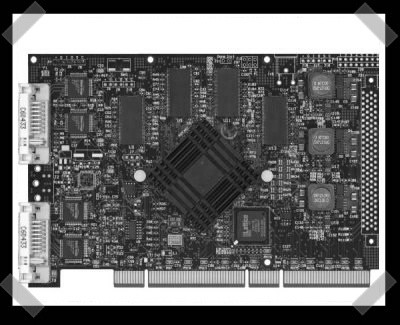
The Open Graphics Project has started accepting preorders for their OGD1, a graphics card with a completely open source design. This initial release is billed as a high-end FPGA prototyping kit specifically designed to test computer graphics architectures. The card has two DVI connectors, S-Video, 256MB RAM, and a 64bit PCI-X connector. The core of the system is a Xilinx Spartan-3 XC3S4000 FPGA. A nonvolatile Lattice XP10 FPGA is used to bootstrap the Xilinx at power up. Here’s the layout of the specific components.
An open design like this could prove very beneficial to the free software community. The open hardware makes driver development much easier; binary drivers from traditional graphics manufacturers have been very hard to work with in the past. The OGD1 could also be used with CPU architectures that wouldn’t be unsupported by normal graphics cards. An FPGA based design means that CPU intensive processes like video decoding could be offloaded to the video card without needing a dedicated chip. There is still a lot of work to be done and at $1500 we’re pretty sure most of you won’t be buying the first generation. It’s still exciting to see traditional PC hardware getting reinvented and opened up. Check out the OGD1’s FAQ for more info.
Erase An IPhone Properly

A fundamental problem with flash memory has just gone mainstream. A detective successfully recovered data from a refurbished iPhone purchased from Apple. Flash memory controllers write to blocks randomly so using standard secure erase techniques are no guarantee that all of the storage space will be written.
[Rich Mogull] has posted a method that should wipe out almost all remnants of your personal data. You start by restoring the iPhone in iTunes and turning off all the syncing options. Next you create 3 playlists large enough to consume all of the phone’s storage space. Sync each playlist in turn and your residual personal data should be obliterated. All that’s left to do is sit back and wonder when the first article about the MacBook Air SSD being impossible to securely erase will be published…









