
Imagine our surprise when we stumbled on the latest Lumenlab project: gantry style CNC. Until now the only time we ever invoked their name was for DIY projectors. The kit looks pretty interesting, and they’re taking pre-orders right now. It’s designed for a full sized router and you should be able to cut a 4′ by 8′ sheet with a feed roll. Even without, the cutting area is a large 26″ by 50″ and features 8″ of Z movement. Between their kit and an order from Online Metals, they’re projecting that you can build your own for around $1000. We’re definitely in when the final kit is released in June.
AudioCubes By Percussa

[Peter Nyboer] has written an extensive post about his experience with AudioCubes from Percussa. Aside from their unique glowing exterior, these cubes are an innovative way to control and even produce audio tracks. Four faces of each cube are equipped with IR sensors to detect distance and communicate with other cubes. The cubes also have USB, a rechargeable battery, and audio in/out. Moving your hands around the sensors changes the MIDI output of the cube. Changing the cubes’ orientation and distance from each other also changes the signal. Max/MSP and Live are both supported out of the box, but that doesn’t mean it’ll be easy to get started. [Peter] makes an important point: unlike traditional instruments, there’s no obvious way to get started. At 400euro for 2 cubes and 650euro for 4 cubes, these devices aren’t exactly being given away, but it’s great to see new interfaces being imagined. A video of [Peter]’s first experiments with the cubes is embedded below; read his full post to see more footage of the cubes in action… and naturally we’d love to see any DIY versions of this you can come up with.
Projector Hacks Roundup
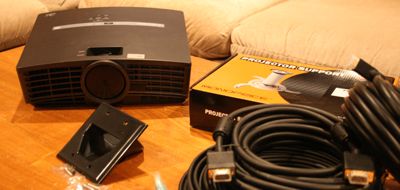
Projectors have long been a favorite toy of hardware hackers. From reactive displays to cheap home theater, there are plenty of reasons to play with photons. Seeing some cheap projector repair put us in the mood to cover some of our favorite projector projects – check em out after the break.
Twittering From The Command Line

Twitter users often have trouble explaining just exactly what the service is for. The site specifically asks “What are you doing right now?” A simple interface and multiple ways to update means people have started hooking it to different real world objects… objects that aren’t reporting what they had for lunch. After the break, we’ll cover a couple devices that have interfaced Twitter to the real world and how you can update from your command line.
What To Do With An Old Laptop?

Back in November we asked what you would do with an old unused laptop. If you have an old laptop that’s not doing much more than gathering dust, chances are you could put it to better use. You could sell it, but you probably wouldn’t get too much for it. Donating or recycling can also get it out your hair, but if you’d like to try something different, read on for some ideas.
How-To: Go Green With Lead Free Solder
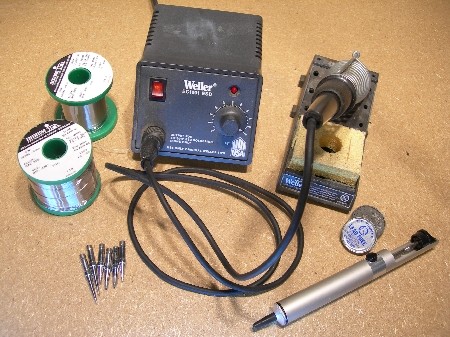
We covered many of [Jason Rollette]’s personal projects in the past and are happy to welcome him as our newest Hack-A-Day contributor.
The electronics industry has shifted to lead free compliance, but most hobbyists haven’t even considered the personal impact of using lead. Today’s How-To will cover what it takes to switch from tin/lead solder to completely lead free. Our previous posts Introduction to soldering and the follow-up still apply to lead free. You may have never considered switching to lead free before, but we hope to help you make an informed decision.
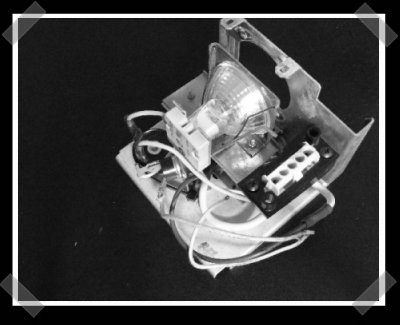
Cheap Projector Repair
[Ryan] sent in this writeup on some DIY projector repair. The write-up is a little hard to follow, but maybe it’ll inspire some future projector landfill saves. [Dissident] replaced the light bulb and ballast in an older DLP projector with some salvaged MR-16 hardware from an even older over head projector. The main trick required was to bridge the trigger leads that tell the projector that the bulb is on and working.