Processor Built With Transistor-Transistor Logic

cpu-built-from-ttl

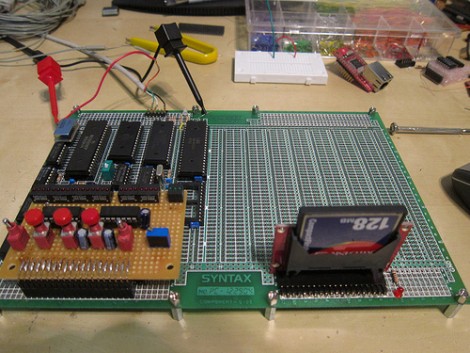
[Donn] wanted know exactly what is going on inside of a processor so naturally he built a CPU out of TTL components. He had previously built a couple of versions of a computer based on the Z80 processor. Using the troubleshooting skills he learned and a second-hand textbook, he set to work using 74LS series chips connected using the wire-wrap method we’re familiar with from other cpu projects.

The finished product runs well at 1.8 megahertz, but he also included a 2 hertz clock and a step clock for debugging. At the slower speeds, the register board (seen at the left in the picture above) lights LEDs and can be used to tell what the CPU is currently working on. Programming is accomplished through either  a dumb terminal or a PC running a terminal emulator.

His writeup is from about five years ago but that didn’t prevent us from getting that fuzzy feeling in the geek-center of our brain when we read about it. It is well written and thorough so if you’re into this kind of thing there’s plenty to enjoy.

[Thanks Raleigh]

Upgraded Atari 1024STf

atari-1024STf-case-mod

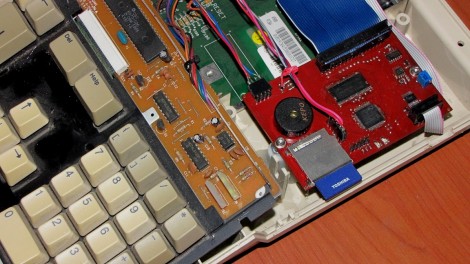
[Gerritt] wanted to give his crippled Atari 1024 STf a new purpose in life. He cracked it open and set to work filling it with some modern components. The keyboard from the nearly 25-year-old dinosaur doesn’t have all the keys we’re used to, nor did they all work, so he replaced the original with a 101 key model. The internal hardware was replaced with a microATX board, a picoPSU, Bluetooth and WiFi transceivers, a hard drive, and a slot-fed DVD drive. He even rebuilt the original mouse to use the circuitry from an optical mouse.

The final product is a 1.6GHz Pentium Mobile with one gig of ram. Now he has no need to pick up an EEE Keyboard PC when they hit the market.

Cheap And Flimsy PC Case Provides No Protection

computer-case-provides-no-protection

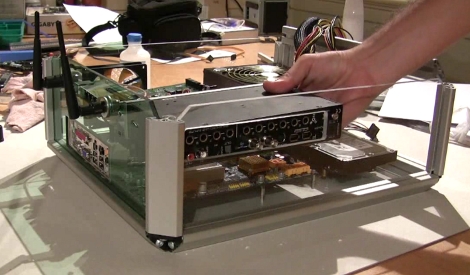
[Rafael] tipped us off about a “case mod” he completed for his PC. The email he sent provides no details and the link just shows five pictures of his computer in a “dead file” container (we’re guessing he doesn’t want to be an Internet sensation). What we get out of this is that he took a corrugated plastic box meant to house old files on shelves, and thew a set of computer parts inside of it.

This would be a great hack if [MacGyver] needed a computer to defuse a ticking bomb while trapped inside of a room built completely out of metal. The plastic provides protection from shorting out the motherboard but, other than low cost, that’s the only upside of this hack.

The downside here is obvious, there’s no protection from physical damage. In fact, a good bump might flex the box enough to slam the motherboard into the PSU housing. And what’s with the external WiFi fob? We could understand the point of this a bit better if it could blend in with a rack of archived files in the back room.

We give this one an ‘A’ for creativity, a ‘B-‘ for execution, and an ‘F’ for longevity. This should have been built in an acrylic case sized to fit perfectly in the yellow plastic box. But what does your unorthodox PC case look like? Let us know by sending in a tip.

Exploding Processors For Real

[youtube=http://www.youtube.com/watch?v=X3whIm282X0]

After we posted the “High explosives pc case” earlier we saw a resounding outcry in the comments for combustible destruction. Oddly enough, we got a submission of something along just those lines. [tazzik] has taken the heat sink off of his athlon 1400+ and covered the poor processor in potassium chlorate. As you can see in the video, this was not a very effective heat management decision. It is definitely fun, but nowhere near as explosive as our thermite shenanigans.

[thanks Steve]

High Explosives PC Case

ammo_casemod

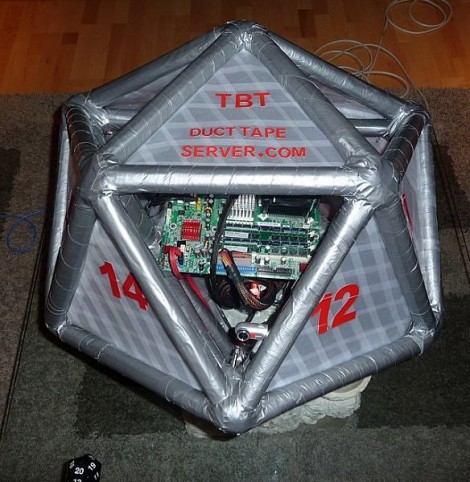
[Ilias] let us know about his new HTPC case mod.  He took a surplus Ammo-case and with a bit of work turned it into a livingroom eye-sore masterpiece. His build has some nice touches, including a slot-fed DVD player, switch-based fan control, and key-and-button “nuclear launch” type power-on controls.

A few things to learn from this project: Cleanly cutting holes in a steel case for the connectors is tough.  You can see that [Ilias] did a pretty good job with it and in several cases used rubber gaskets to cover the rough edges. Secondly, the slot fed DVD had to be mounted upside-down.  We assume this will be fine, but we’d like to hear a follow-up after a few years of heavy use. Finally, the GFAF (girlfriend acceptance factor) ran very close to critical on this build as [Ilias] didn’t clean up the metal shavings on his porch and ended up with rust stains everywhere.

Case mods are an enjoyable hobby. We hope this will inspire you to take the leap.  If you do, don’t forget to send your completed project into our tip line.

Building An IR Receiver For The Popcorn Hour C-200

IR_module

[Linuxworks] has posted a writeup on how to build an IR module for the popcorn hour c-200. We weren’t familiar with the popcorn hour c-200, so we had to look it up. It seems to be a media center pc sort of thing. We’re not reviewing the unit itself, since we’ve never used one, so we’ll just get back to the mod. The device uses an RF remote, which some people didn’t like as much. Luckily it has an expansion port which can be utilized to get IR signals into the machine. [Linuxworks] has used a cheap IR sensor and a standard headphone plug. He notes that equipment passing power through these plugs should be turned off before plugging them in or removing them as they short momentarily during insertion.

Microsoft Unveils Open Source Multi Core OS

group (Custom)

A new operating system, code named Barrelfish is being developed by Microsoft research labs and ETH Zurich in Switzerland. This operating system is being built with multi core operations foremost in priority. It is supposed to be extremely scalable and able to function on a very wide range of hardware. You can download the current snapshot of it on their site and dig into the source code, released under a 3-clause BSD style license. If you would like to learn the primary differences between this OS and Windows or Linux, you can read this PDF.

[via Engadget]