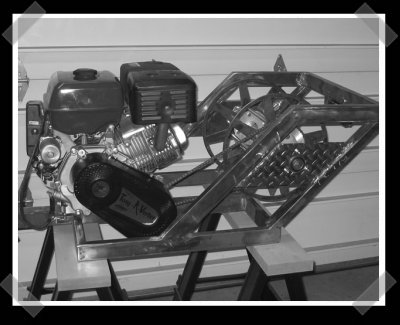
[exhaltingidiotz] is just one of the guys who’s built his own wakeboard winch. These things are pretty low tech, but using a winch to wakeboard has to be one of the most original ideas that I’ve seen in a while. Winches have some interesting advantages over boats: less fuel, no licensing and shallow water that no boat or jet ski would ever work in suddenly becomes usable. Here’s a basic design that’s typical and a simple demo video. The forums are a bit annoying to search for info, so here’s a fantastic winch build writeup.
Misc Hacks4026 Articles
Arduino Controlled Espresso Machine

The arduino is really starting to become prevalent for hardware hacking. [Nash] used one to take control of his Gaggia espresso machine. (They’re really decent little machines) He popped in a LCD display, some solid state relays to control the pump and the heating element, and an AD595 to interface a K type thermocouple. It looks like an excellent hack, but for the love of god man – get a better grinder!
He describes the original mod here, and added a small gallery of internal shots here. From the latest comments, it looks like the guys are RepRap project are even interested in the thermocouple PID control that [Nash] implemented.
Holiday Hackit: Automated Hard Drive Destruction

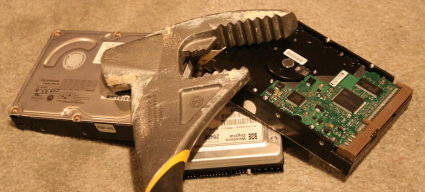
One of our recent posts took an interesting tangent: physical hard drive destruction. First, [wolf] wanted to use a 20ga shotgun shell on his hard drive. [brk] suggests an electromagnet applied to the drive while it’s still spinning. Everyone thought thermite might be interesting… Finally, [wolf] noted this commercial auto destruction drive that floods itself with an acid mist. I’ll suggest a few ideas and let you guys take it from there.
I’d suggest pneumatic injection of two part epoxy into the drive mechanism. Remove the top of the casing using the diy clean room method, add a port for the epoxy and use a cheap CO2 bike injector to force the liquid into the drive on demand.
So, got a better idea? Let’s hear it.
Silent X10 Mod (cheap SSR)

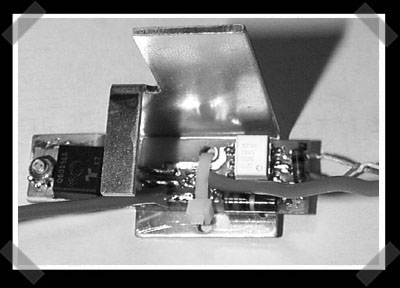
I’m feeling a bit retro for the holidays, so here’s another classic: If you’ve got a non-dimming X10 switch, you’ve experienced the incredibly loud, obnoxious sound that it makes when you switch it on or off. (Mine’s in my stairwell) There’s a simple mod to silence the thing: remove the triac relay and replace it with a solid state relay. SSRs are a bit expensive, running at least $10 each last time I checked. [Willis Dair] realized that he could build his own, inexpensive SSR with an optoisolator and an alternistor(AKA Triac). The resulting circuit runs about $3 in parts.
Autonomous Foosball! (plus)

[Shane ] sent in GATech’s senior design final projects, but his Autonomous single player foosball table is awesome. A Java app tracks player and ball via webcam. Then it acts as the opposite player by controlling servo actuated paddles. He’s copied his project to his personal server, just in case the class files get pulled next semester.
The course page is pretty ugly, but the project pages aren’t. It’s worth some time to check out the rest of the projects. The 2d iRobot based mapping system looks interesting, but lets be honest, the hand washing detector should be mandatory federal equipment at every fast food restaurant.
Open An AXA Bike Lock With A Blank Key (Doh)
[Barry] sent in his writeup and video about a serious vulnerability in the AXA bike lock. (One of the most popular locks in the Netherlands.) It turns out that quite a few of them can be opened with a blank key. [Barry] demo’s the hack, and has some comments about the lame efforts of the manufacturer. If you enjoy interesting reading, check out his blog covering lock picking and physical security.
Cornell Final Projects 2007

The latest crop of final projects from Cornell Universities ECE576 course went up a while ago. This round focuses on FPGAs. They’re all fairly impressive projects. My favorite is this real time spectrograph. With the decreasing cost of FPGAs, this Digital Oscilloscope could become a popular one. Putting this UDP network stack on a capture the flag network would probably freak out some people. Lately I’ve noticed a trend of replacing ASIC chips with FPGAs – these projects could be just the thing to get some people started with them.