Quick, Cheap, And Simple Vacuum Tweezers

[Ken] found that using traditional tweezers is a good way to lose tiny surface mount parts and so set out to make his own vacuum tweezers (PDF). He already had a small aquarium pump that he used as a bubbler for etching circuit boards. After opening up the case he found it was possible to connect tubing to the input of the pump to use as the source for the vacuum. The business end of the device is a syringe which he already had for applying oil in tight spaces. A file took off the sharp tip, and a small hole lined with a bit of soft tubing serves as a valve. Put the needle tip in place and plug the hole with your finger to pick it up. Works like a charm and will go well with our next feature, building your own reflow skillet.

We like [Ken’s] work. We just looked in on his copper clad enclosures yesterday.

Vacuum Forming At Home

A little dumpster-diving let [Nick Skvarla] build his vacuum form machine for around $5. He pulled a vacuum cleaner out of the trash, which was tossed away because of a broken power plug. He put it into a box which had been sealed with spray foam and used a piece of pegboard for the top side of the enclosure. He takes a piece of 40 mil PETG plastic from the hobby shop and mounts it in a wooden frame. That goes into the oven on broil until the entire sheet is sagging, then onto the vacuum former. Above he’s making forms out of some figurines which he’ll walk you through in the video after the break.

There’s a whole world of manufacturing processes that use these forms as a starting point. What would you use this for?

Continue reading “Vacuum Forming At Home”

Heater For Bending Acrylic

We like using acrylic in our projects but there are a couple of tricky techniques, particularly getting clean cuts for glued edges and bending the material into curves. [Giorgos Lazaridis] has a great solution to the latter, a dedicated acrylic heater. Instead of using an oven to warm the material for bending he’s using localized heat produced by a high-powered lamp pulled from an old laser printer. The next part of his solution is to keep the heated area of the acrylic as small as possible. This was achieved by creating heat sinks on either side of the bulb. The metal bars seen above have water running through them to help isolate the softening of the material to a narrow strip. See how well this system works in the video after the break.

Continue reading “Heater For Bending Acrylic”

Single LED Ultraviolet Exposure Box

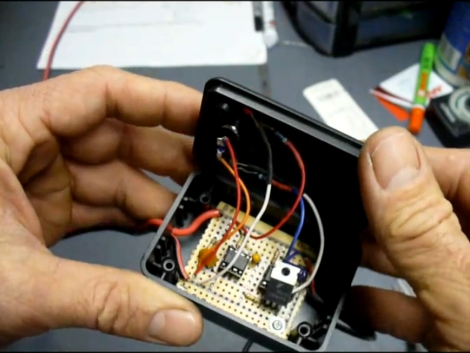
[Jacques Lebrac] built a UV exposure box for printed circuit boards using just one LED. He usually makes boards that are just a few square inches and didn’t think building a box that had upwards of 80 LEDs was worth his time. He passed by the low power LEDs for a single 5W unit. Pumping 1.5A through this LED makes for some quick exposures, but causes heat issues. To solve this, an aluminum arm was used to mount the LED, acting as mechanical support and heat sink at the same time. The voltage regulator was glued directly to the chassis, providing at least some heat dissipation.

[Jacques] came up with an eloquent solution for holding the transparency and copper clad in place. A piece of acrylic is hinged on the back using a piece of aluminum tubing. The front has a magnet glued to it, with another one in the base to hold the cover tight to the work surface during operation.

Unlocking RS232 Serial Comm On A Multimeter

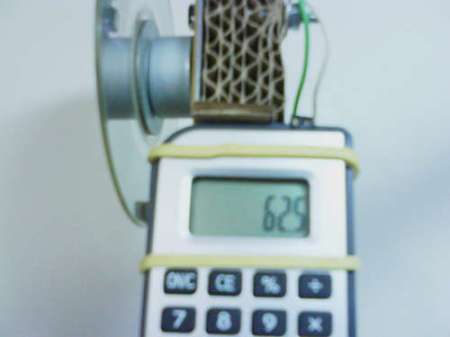
[Craig] cracked open a multimeter to unlock RS232 serial communications that can be used for data logging. There’s a couple of things that make this possible. First of all, the multimeter’s processor is not covered in a black epoxy blob, leaving the pins exposed for hacking. Second, the chip model is known and [Craig] was able to get his hands on the datasheet. One of the pins enables serial output when pulsed low. Touching it to V- even turns on an RS232 icon on the display, as seen above. To make this accessible without opening the case a momentary push button can be added, as well as connector for signal output, and a bit of parsing on the PC side to handle incoming data.

Drill Press For Through-hole PCB Manufacturing

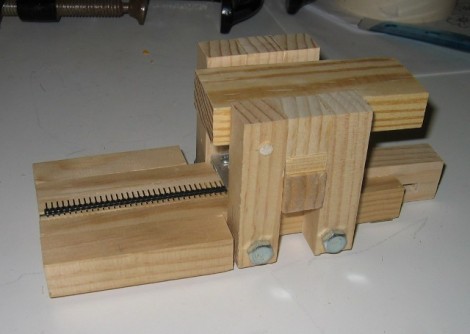
This drill press was built to drill through-hole printed circuit boards. [Rhys Goodwin] didn’t want to shell out for new equipment, so he dug through his scraps to see what he could accomplish. He already had the power drill, and there was no shortage of wood and fasteners. Once he had a mounting platform for the power tool he grabbed a pair of slides from and old rack-mount server rail. This provides smooth and precise movement, along with a tension sprint to keep the rig elevated above the work surface. Turns out the only thing he didn’t already have was the mini-chuck for gripping the 0.8 mm drill bit.

It seems as if [Rhys] is hacking up a storm lately. This drill press is for use with his Inkjet/Toner PCB process from two weeks ago. We also covered his bulk component salvaging system in Sunday’s Links post.

Double The Hertz, Double The Pleasure

[tinhead] has opened up a Tekway DST1102B oscilloscope and doubled its bandwidth to 200MHz, sharing his work in the eevblog forum. This is great news to anyone who is looking for a faster sampling rate but can’t afford the high-end models. Mind you, for a lot of us even these Hanteks and Tekways are hard to afford but there are more appropriate options for the ramen-dependent hacker.

In the hacking guide [tinhead] includes comprehensive information on the different scopes he originally considered (a Rigol, Atten and UniTrend) before settling on the Tekway, as well as links to regional distributors for the hackable scope. Good quality benchtop units are invaluable for development and troubleshooting, and it pays off to understand their inner workings. It’s heartwarming to know that even the tools of hacking can be hacked.