Programming The 6502 One Nibble At A Time

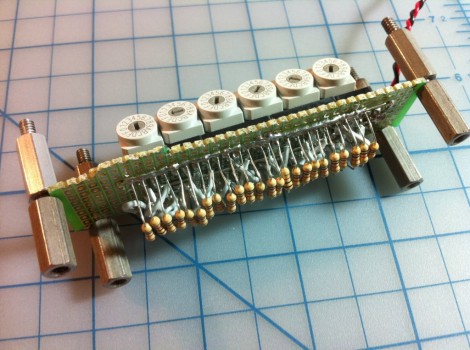
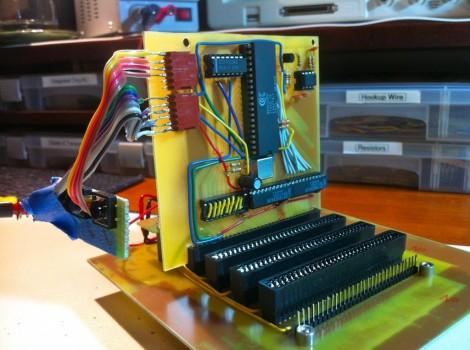
[Quinn Dunki] keeps rolling with her 6502 based computer build. This time around she’s added some memory to store the programs, but needed a way to get that code into the device. Above is her solution, a bank of hex switches used to program the 8-bit command and 16-bit address for each line of machine code.

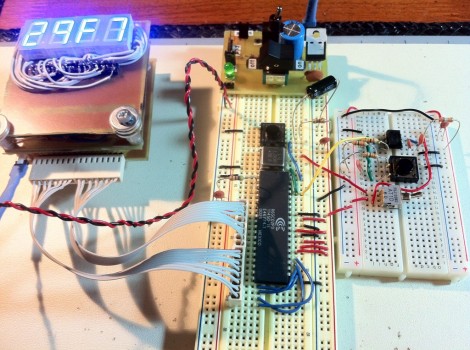
This is a continuation of her Veronica project. The last time we saw it she had hardwired the logic levels for the data bus, but that’s no fun since nothing can actually be computed. [Quinn] picked up an SRAM chip which will store the program. It’s compatible with the 6502’s memory bus, but needs a bit of extra circuitry for her to be able to hand program it with this switch bank. She used some tri-state buffers to switch between connections to the processor, and to the hex switches. This way, she disconnects the RAM from the processor using the buffers, uses the switches and push button to clock in the program, then patches the RAM back into the computer.

Seeing this process in the video after the break certainly gives you an appreciation for what an improvement the punch-card system was over this technique. Still, seeing this is a delight that we’d like to try! Continue reading “Programming The 6502 One Nibble At A Time”

Building A Computer Around A 6502 Processor

When it came time to try out some old-school computing [Quinn Dunki] grabbed a 6502 processor and got to work. For those that are unfamiliar, this is the first chip that was both powerful, affordable, and available to the hobby computing market back in the 1970’s. They were used in Apple computers, Commodore 64, and a slew of other hardware.

The first order of business in making something with the chip is to establish a clock signal. She sourced a crystal oscillator which runs at 1 MHz, but also wanted the option to single step through code. Her solution was to build two clock signals in one. A toggle switch allows her to choose the crystal, or a 555 timer circuit which uses a push button to fire each clock pulse.

Check out the video after the break to see some single stepping action. There’s no memory on board just yet. But the input pins have been hard-wired to voltage or ground to simulate data input. We wondered what she was up to with that HEX Out project which stiffs the logic on the data bus. Looks like it’s extremely useful in this project!

Continue reading “Building A Computer Around A 6502 Processor”

Hackaday Links: September 19, 2010

6502 Gate Simulator

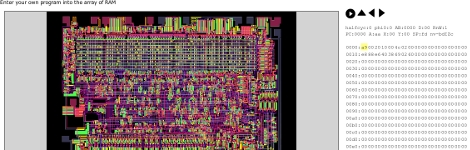
Ever wondered what’s going on inside that chip as the program executes? Now you can take a look at the die itself with this visual gate simulator for the 6502 processor. [Thanks Puli and Svofski]

Copper corrosion

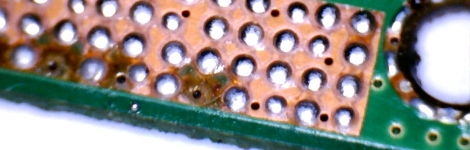
[Moogle] cracked open his DockStar to find corroded copper. It seems that Seagate left a portion of the ground plane unprotected and it reacted badly with the shielding metal. If you have one of these devices you might want to crack it open and tin the exposed copper so that it will hold up over time.

Segway kickstand

Don’t want your Segway to flop over when you park it? Follow [Paul’s] lead in building a kickstand for the self-balancer. You can just make it out in the image above. It’s a dumbell that folds down from the handlebar tube when you’re not on board.

Tesla makes everything better

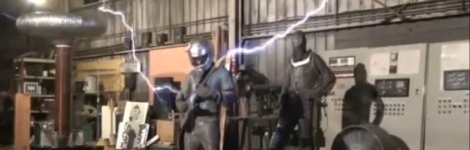
Do you like the song Iron Man? We think it’s better when our friend Nikola takes part.

No Smoking

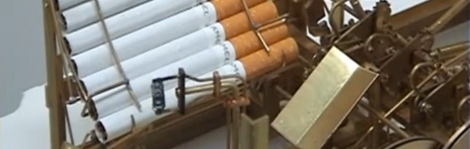
Smoking is really quite bad for you. Plus you can’t chain smoke nearly as efficiently as this mechanical smoking machine can so don’t even try. [Thanks Ferdinand]