
Going Old School With An 8051

A while back, [Matt] bought a few 8051 MCUs and tucked them away for a future project. He just found these fabulous little chips in a component drawer and decided it was time to figure these guys out. Eventually, [Matt] stumbled across this awesome resource for 8051 programming.

The 8051 featured a still reasonably respectable 4k of ROM and 128 bytes of RAM – not too dissimilar from an ATtiny of today until you realize this 30-year-old chip has 32 IO pins. This microcontroller, along with its bigger brother the 8052, served as the de facto microcontroller standard for 20 years. You’ve no doubt taken a ride in a car that used one, and was even put to use doing low-level grunt work in early PCs.

[Matt] says he couldn’t find a Hackaday project featuring this 30-year-old microcontroller (not true, here’s one of those tilty mazes and an electronic toll booth), but even we have to admit we don’t feature much outside of the usual AVRs and PICs. Even though it’s 32 years old, the 8051 family still has some tricks up its sleeve like playing audio CDs. If you’ve got an 8051 project lying around, send it in on the tip line and we’ll probably throw it up.

Chatbox Wireless IM Client

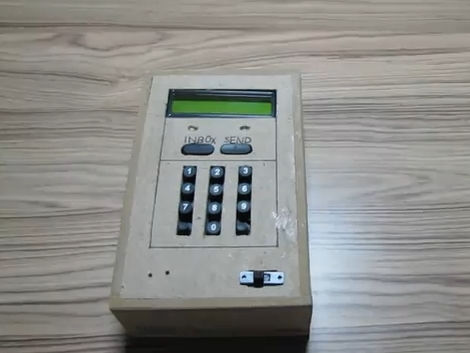
[Utpal Solanki] wanted to do some text chatting from the comfort of the couch. He built this wireless chat client that he calls Chatbox using a microcontroller, a character LCD screen, and a keypad that he built himself.

The device communicates via an Infrared emitter and receiver. It pairs up with an Arduino using an IR shield that [Utpal] built. The handheld unit flashes a pair of white LEDs whenever it receives a message from the Arduino. You can then hit the Inbox button and scroll through to read what was received. To reply  just type on the keypad the same way you would with a cellphone, then hit the send button to shoot that message back to the Arduino.

On the computer side of things the messages are being relayed to and from the Arduino over a USB connection. Early on in the video demonstration (embedded after the break) [Utpal] shows his Chat Box program communicating via the handheld unit in the same way that other messenger programs work.

Looks to us like he’s built his own non-pink version of what the IM-ME was originally intended to do.

Continue reading “Chatbox Wireless IM Client”

Electronic Tolling System

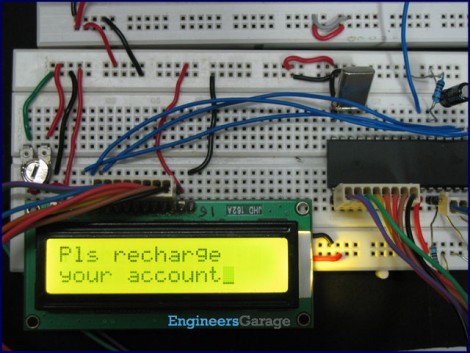
For us the hardest part of any project is coming up with the seminal idea. Once in a while you just need to cheat by recreating an existing product. That’s what EngineersGarage did with this toll plaza project. If you take a look around the various tabs at the top of that article you’ll see that they’ve used an 8051 microcontroller to bring together a character LCD, RFID reader, and a keypad. From there it’s a slew of coding to add the functionality for reading multiple tags, looking up stored value, and creating a replenishment system. Sure, it’s not really of much use in this form, but it’ll give you something to do with those shiny parts you have sitting around, and it might just lead you down a path to something more meaningful. As usual, there’s a demonstration video of this after the break.

If this doesn’t float your boat, perhaps this other RFID access system is more your thing.

Continue reading “Electronic Tolling System”

Maze Solving

[youtube=http://www.youtube.com/watch?v=63Txt5rLSWU]

[Mitchel Humpherys] and his fellow developers didn’t just develop a maze-solving algorithm, they also built a ping-pong ball maze platform that is computer controlled. Using a webcam the computer picks up the high-contrast maze by peering down from above, calculates the solution, and moves the ping-pong ball to the goal using two different tilt servos controlled by an 8051 microcontroller. But wait, there’s more! Why have the computer solve it when you can make a game out of a maze? Once the PC was thrown into the mix it was pretty easy to add Wii remote and Wii balance board control too. See these alternative inputs in action after the break.

Continue reading “Maze Solving”







